

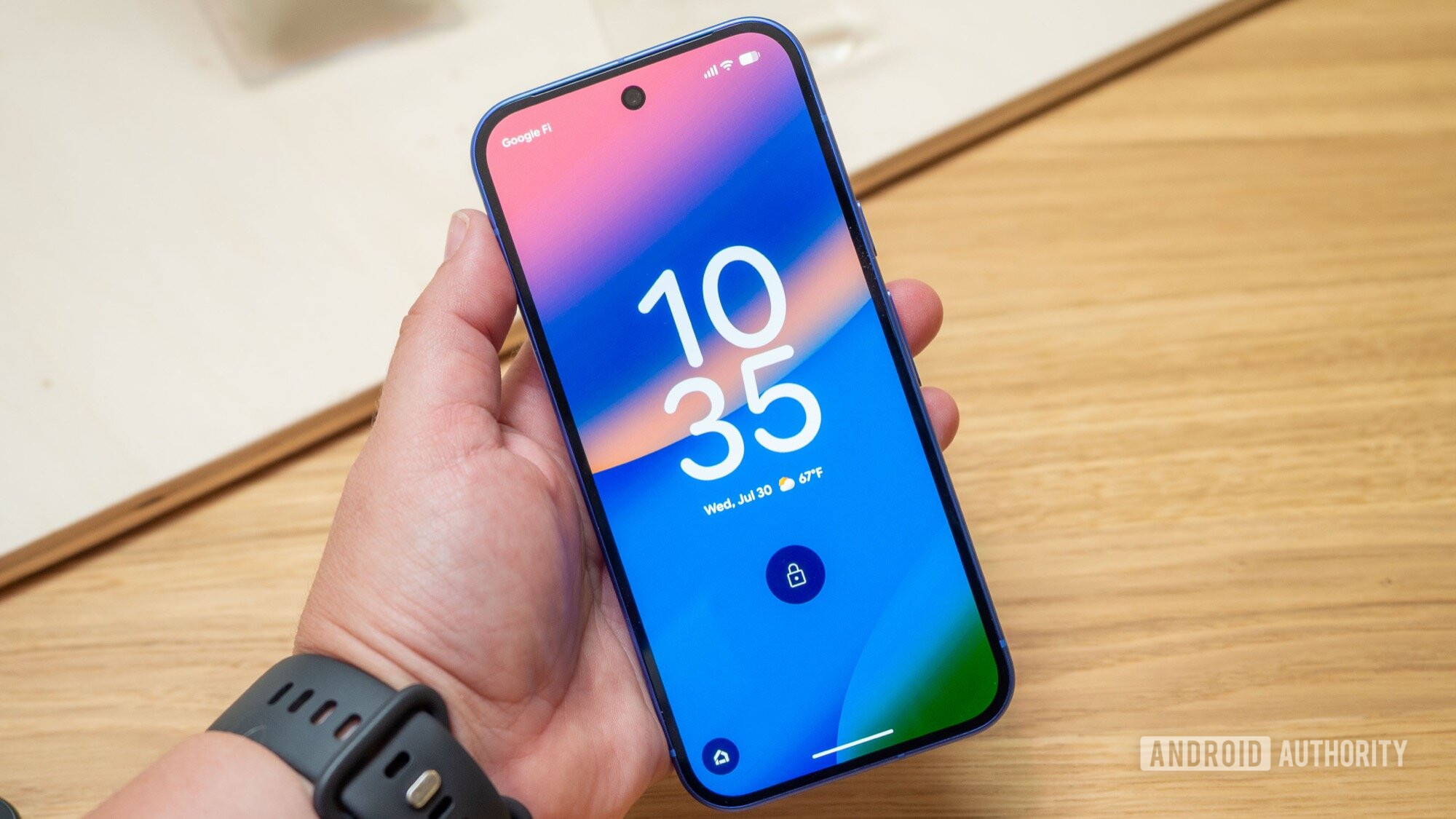
Google appears to be developing a new AI-powered personalization tool for Android that could change the way people customize their lock screens. Based on code found in the latest Android Canary 2608 build, the company is preparing to let users create custom lock screen clocks using natural language prompts. The feature, which seems aimed at Pixel phones and possibly expected as part of Android 17, would join a growing suite of generative AI tools across Google's mobile ecosystem.
Key facts at a glance
- The latest Android Canary 2608 build contains UI elements for an AI-generated lock screen clock.
- Users will be able to create custom clock styles using AI prompts.
- The feature includes an Ideas button for suggestions.
- Users can upload an image as a reference for the prompt.
- Submitting a prompt currently shows an error: Service not connected.
- This is likely a server-side feature Google will enable later.
What's new in Android Canary 2608?
The Android Canary 2608 build is primarily known for introducing a Quick Settings layout editor, but it also contains hidden UI elements for the AI clock generator. The Quick Settings editor gives users more control over the arrangement of tiles, brightness slider, and media player. However, the AI clock feature is arguably the more intriguing discovery, as it points to a future where lock screen designs aren't just chosen from a preset list but generated on demand.
The UI includes an entry point for creating a lock screen clock with AI, plus an Ideas button that could provide inspiration for users who don't know what style they want. In addition to text prompts, the feature appears to support image uploads, allowing users to upload a photo to serve as a visual reference for the clock design. That could make the tool more flexible than simple text-to-image generation, since users could point the system at a color palette, a piece of art, or a personal photo.
Despite the UI being present, the feature isn't functional yet. When users try to submit an AI prompt, the app returns an error: Service not connected. That strongly suggests the actual generation happens on Google's servers rather than on-device. The client-side interface is ready, but the backend service hasn't been switched on. That's common for unreleased features, especially those that rely on cloud-based AI models.
The growing role of AI in Android personalization
Google has steadily been integrating generative AI into Android and Pixel devices. The company's larger AI efforts have already influenced features like Magic Eraser in Google Photos, call screening, and more recently, the ability to create custom wallpapers using text prompts. Adding AI-generated lock screen clocks would continue that trend by giving users yet another way to express themselves through their devices.
Custom lock screen clocks, specifically, have been a popular request among Android enthusiasts for years. Stock Android has offered a limited set of clock styles, and while launchers and third-party apps have provided more options, they often require workarounds or don't integrate deeply with the system. A built-in AI generator would put powerful customization directly into the operating system, potentially making every Pixel phone feel more personal.
The use of AI prompts also suggests that Google is trying to make customization more accessible. Rather than designing a clock face in a complex editor, users would simply describe what they want. The system would then interpret the description and produce a clock that matches. This aligns with a broader industry shift toward natural language as a user interface, where people can accomplish tasks through conversation instead of menus and settings.
How the feature could work
While Google hasn't officially detailed the feature, the UI hints at a straightforward workflow. Users would likely navigate to the lock screen settings, select the clock option, and then choose a new AI-generated style. From there, they could type a prompt like neon orange clock with a futuristic font or minimalist white clock inspired by Scandinavian design. The system would generate a clock graphic that fits the description.
The Ideas button could be particularly helpful for users who aren't sure what to type. It might display example prompts or style suggestions that can be used as starting points. Users could then tweak the text or use the suggestion as-is. The image upload option would add another layer of input: instead of writing a detailed description, users could upload a photo and let the AI infer a matching clock design. For instance, a picture of the ocean might produce a flowing, blue clock with wave-like numerals.
It's also possible that the feature will offer multiple variations for each prompt, letting users swipe through generated options before selecting one. That would be consistent with how other generative AI tools work, where models produce multiple outputs and the user picks the best result. However, until Google enables the backend service, the exact behavior remains speculative.
Why this matters for Android 17
The discovery comes at a time when the Android community is anticipating Android 17. Google has been working on several quality-of-life improvements, and the Quick Settings layout editor already suggests that the next version will focus on deeper customization. The AI lock screen clock could be one of the flagship features, especially if Google wants to showcase the practical benefits of on-device and cloud AI integration.
Although the AI clock is likely to debut on Pixel devices first, features like this often make their way to other Android manufacturers over time. Some Pixel-exclusive features remain exclusive, though, so it's hard to predict whether the new clock generator will spread beyond Google's own phones. If it does become an Android platform feature, it could be one of the most visible uses of AI in the operating system.
Google has also been working on making Android more expressive with the Material You design language, which lets users adjust colors based on wallpaper choices. An AI-generated lock screen clock would complement that system nicely. Instead of being limited to colors from a wallpaper, users could create an entire lock screen aesthetic from scratch.
Potential limitations and concerns
Generative AI features often raise concerns about privacy, moderation, and reliability. If the clock generator uses cloud-based processing, prompts and uploaded images will likely be sent to Google's servers. Users who prefer on-device processing might be wary, although Google has been increasingly using on-device models too. The error message Service not connected suggests the heavy lifting is done remotely, at least for now.
There's also the question of quality. AI-generated numerals can sometimes be inconsistent, especially with unusual fonts or intricate designs. A clock is a functional element, not just decoration; users need to be able to read the time at a glance. Google will need to ensure that generated clocks maintain legibility across different styles and backgrounds. If the AI produces beautiful but unreadable clocks, the feature could become a novelty rather than a practical tool.
Moderation is another issue. Because users can upload images and type free-form prompts, Google would need appropriate safeguards to prevent harmful or inappropriate content. The company already has content policies for its other AI products, so it's likely the clock generator would apply similar rules. That could include filters for text prompts and image scanning before generation is allowed.
The bigger picture: AI as a design tool
The move to AI-generated lock screen clocks is part of a larger trend in consumer technology. Companies like Samsung and Apple have also begun incorporating generative AI into their devices. Samsung Galaxy AI offers generative editing for photos, while Apple has been integrating AI across iOS with features like notification summaries and image generation. Google's approach with Android seems focused on enabling user creativity through natural language and personalized output.
For years, smartphone customization has been limited to themes, icon packs, and wallpapers. AI has the potential to remove those limits by generating assets on the fly. Users may no longer need to search online for a perfect clock design or pay for a third-party app. Instead, they can simply ask their phone to create something unique.
The lock screen is one of the most visible parts of a smartphone, so it's a natural place for this kind of feature. Every time a user picks up their phone, they'd see a clock that was designed for them, based on their own words or images. That kind of personalization could strengthen the emotional connection between users and their devices.
It's also worth noting that Google has been experimenting with AI-generated wallpapers on Pixel devices, so the clock feature would build on existing infrastructure. The two features could eventually work together: a user could generate a wallpaper and a matching clock style in one session, creating a cohesive look without any manual design skills.
What's next
As of now, the AI clock feature is still in an early stage. The presence of UI elements in a Canary build doesn't guarantee a public release, and Google could change or delay the feature at any time. The error message Service not connected indicates that backend infrastructure needs to be deployed before users can test it. Whether the feature will be ready for the official Android 17 release or arrive later through a Pixel Feature Drop remains unknown.
Android Canary builds are intended for developers and early testers, so features found there are fluid and often incomplete. Still, the fact that Google is actively building an AI lock screen clock is a strong signal that the company sees value in making lock screen customization more intelligent. If the feature performs well, it could also lay the groundwork for other AI-generated UI elements in future Android versions.
For now, users who are tired of the same old clock styles will need to wait. Google hasn't offered a timeline, and the backend service is clearly not ready. But with the UI already in place, it's likely only a matter of time before the feature becomes accessible to a wider audience. The development is still in flux, so Android enthusiasts should watch for upcoming beta releases and official announcements from Google.
Source:Android Authority News