

Overview
Framework has built its reputation on a simple but powerful idea: laptops that are meant to be repaired, upgraded, and customized by the user. The Framework Laptop 13 Pro, the company's latest release, takes that concept to a new level with refined hardware, a superb display, and a user-replaceable LPCAMM2 memory module. But it arrives at a time when the global memory market is in turmoil, leading to an extraordinary $800 price increase before the first unit even shipped. This review dives deep into what makes the 13 Pro special—and why its cost may be its biggest flaw.
Design and Build
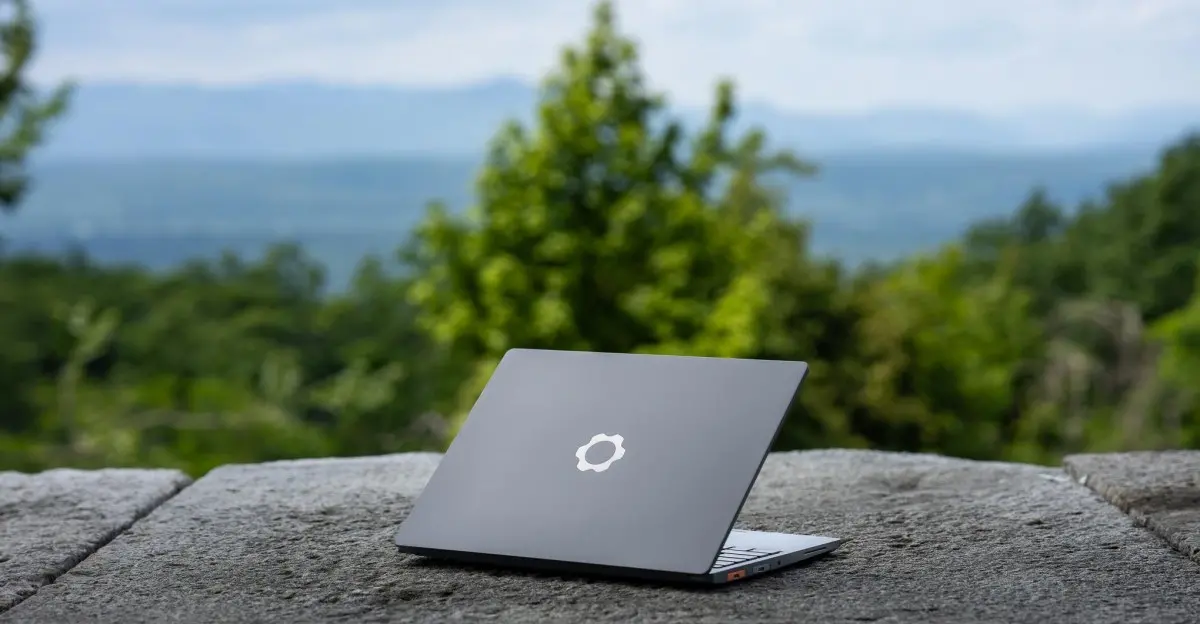
The Laptop 13 Pro is an all-black machine with an exquisite matte finish that actually looks black instead of some variation of dark gray. It feels rigid and well crafted, far from the hodgepodge erector set of its bigger cousin, the Laptop 16, or the good but slightly lower-quality build of the standard Laptop 13. Inside the 13 Pro are new Intel Panther Lake chips with LPCAMM2 RAM, or it can be optioned with last-gen AMD processors and slower SODIMM DDR5 memory. Our prebuilt review unit has a 16-core Intel Core Ultra X7 358H CPU with a 12-core Arc B390 integrated GPU, 32GB of RAM, 1TB SSD, and four modular USB-C ports. Unlike other Framework laptops, each port supports Thunderbolt 4, DisplayPort 2.1, and up to 140W charging, so you can freely mount your modular expansion cards without any restrictions. Everything is really well put together. There’s no flex or give to the chassis or keyboard deck, even though everything’s easily disassembled with a handful of simple screws. The keyboard itself is great to type on. It maintains the nice 1.5mm key travel and tactility of the regular Laptop 13, but feels ever-so-slightly better thanks to a new one-piece aluminum frame. The 1080p webcam is a holdover from the regular model, maintaining its solid performance—it’s pretty sharp, if just a touch grainy in some lighting.
The big upgrades to the 13 Pro’s components are the new haptic trackpad and touchscreen LCD. This is the best non-Apple haptic trackpad I’ve ever used. It’s very responsive to “clicks” from corner to corner, and it feels and sounds just right. The new screen is still a 13.5-inch matte-finish 120Hz IPS panel with 2880 x 1920 resolution for that excellent 3:2 aspect ratio, but it’s brighter (700 nits) and touch-enabled. Until now, a touchscreen on a Framework was only found on the cheaper Laptop 12. The side-firing stereo speakers are the weakest point. They sound a little thin and treble-y with minimal bass, though third-party software like FxSound can improve them—but that’s only available on Windows.
Performance and Battery Life
The Intel Core Ultra X7 358H, paired with LPCAMM2 memory, delivers exceptional power efficiency and solid performance. Framework claims up to 17 hours of active web usage at 250 nits brightness. In real-world testing with over a dozen Chrome tabs, Slack, Signal, and occasional Apple Music streaming at 80-100% brightness, the laptop lasted around 10.5 hours from full charge to 12%—an outstanding result. In raw performance, the 13 Pro holds its own against competition, though it doesn’t quite match Apple’s M5 MacBooks in CPU tasks. However, the integrated Arc B390 GPU is a major improvement over previous Framework models, handling 1080p gaming at medium settings with 50-60 fps in titles like Cyberpunk 2077, Battlefield 6, and Helldivers 2 when using Intel’s XeSS upscaling. It can even push to native resolution with frame generation for single-player experiences. The laptop does get hot under load, with chassis temperatures briefly hitting 57°C near the hinge, but keyboard hot spots remain comfortable for typing and gaming.
The RAMageddon Impact
Framework raised prices on all devices, and the 13 Pro wasn’t spared. Last week, the company bumped preorders from 32GB to 16GB and increased prices by up to $800. The review unit, originally set at $2,299, now costs $3,099. This price spike is directly tied to the global DRAM shortage, often called “RAMageddon.” Skyrocketing costs have already forced other tech companies to cancel devices or exit markets. Framework’s most loyal fans are canceling orders, and the long-term viability of niche modular laptops is under threat. The Laptop 13 Pro is the company’s most complete laptop yet, but it arrives at a time when its core value proposition—affordable upgradability—is undermined by external market forces.
Modularity as a Silver Lining
Perhaps the one saving grace is that existing Framework Laptop 13 owners can buy many of the 13 Pro’s parts a la carte and upgrade to the specific components they care about—from the Intel mainboard with LPCAMM2 to the brighter touchscreen and haptic trackpad. That doesn’t make these upgrades cheap, but it beats buying a whole new laptop. This is the entire point of Framework in the first place. Non-upgradeable laptops like the MacBook Pro may offer better performance per dollar, but they remain whatever configuration you bought on day one. The 13 Pro, by contrast, can grow with you—provided you can afford the entry fee.
In a world where most laptops are sealed, glued, and outdated within a few years, the Framework 13 Pro stands as a beacon of repairability and sustainability. Its design, display, trackpad, and keyboard are among the best in any 13-inch laptop. But the astronomical price tag—driven by forces beyond Framework’s control—makes it a tough recommendation. If the memory market stabilizes, this laptop could become a classic. For now, it’s a painful preview of what happens when hardware ideals collide with economic reality.
Source:The Verge News