

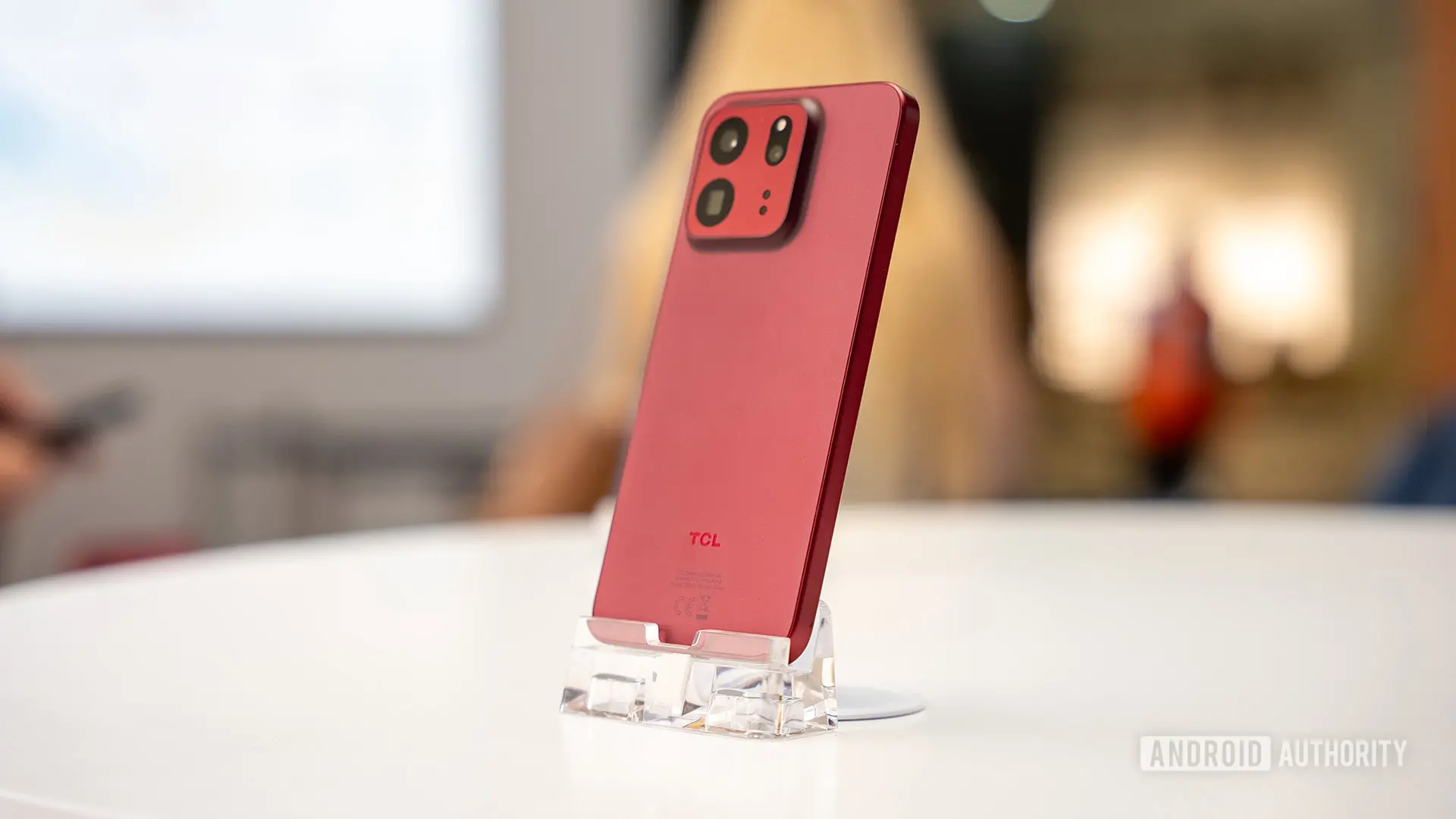
TCL has positioned the P80 Series as a range that refuses to make buyers choose between everyday performance and distinctive innovation. With the arrival of the P80 Ultra, TCL is making a strong argument that a phone can deliver genuinely interesting display technology without sacrificing the fundamentals that make a smartphone reliable for years.
The P80 Ultra sits at the top of the new lineup, but the P80 Pro and P80 carry many of the same strengths further down the range. All three phones are aimed at the midrange segment, yet the Ultra in particular includes hardware that compares more than favourably against widely recommended rivals. The company has also used its display know-how to create an exclusive NXTPAPER experience on the Ultra and Pro, which goes far beyond a simple screen mode.
Key facts at a glance
- The TCL P80 Ultra has a 50MP periscope telephoto camera with 3x optical zoom.
- It also has a 50MP main camera with a 1/1.56-inch sensor, OIS, EIS and Dual Native ISO.
- The phone features a 6.83-inch 1.5K AMOLED display with up to 3,200 nits of peak brightness and a 120Hz refresh rate.
- NXTPAPER technology is available on the P80 Ultra and P80 Pro.
- The Dimensity 7400 Elite chipset powers the Ultra, alongside 8GB of RAM and up to 512GB of storage.
- The 5,800mAh battery supports 45W Super Fast Charging.
- TCL promises up to four OS upgrades and seven years of security updates.
When a phone has a flashy feature, it can often distract attention from mediocre components. That is not the case here. The P80 Ultra builds its personality on a solid foundation, starting with a camera system that already gives it a clear advantage over some of its closest competitors.
The headline camera spec is a 50MP periscope telephoto lens with 3x optical zoom, which is unusual in this part of the market. It is joined by a 50MP main camera with a large 1/1.56-inch sensor, and the combination means users get genuine optical image quality at both 1x and 3x. They also gain extra reach for shots such as 6x portraits, where the telephoto lens can bring subjects closer without the softness that comes from digital cropping. Neither the Samsung A57 nor the Redmi Note 15 Pro Plus includes a dedicated telephoto camera at this level, according to the comparison provided by TCL, so the P80 Ultra has an immediate edge for anyone who values photography.
The main camera also benefits from an f/1.88 aperture, optical image stabilization (OIS), electronic image stabilization (EIS), and Dual Native ISO. Those additions should help the sensor produce clearer photos in challenging conditions, from fast-moving subjects to scenes with mixed lighting. In practical terms, TCL wants the P80 Ultra to be a camera that does not ask the user to carry a separate device for zoom or low-light situations.
After the camera, attention naturally falls on the display. The P80 Ultra has a 6.83-inch AMOLED panel with 1.5K resolution. The pixel density comes to 447 pixels per inch, which is roughly 16 percent higher than the 385 PPI on the Samsung A57. The difference will be visible in small text and fine details, especially when reading web pages or editing photos.
Peak brightness is another eye-catching number. The screen reaches up to 3,200 nits, while the Samsung A57 tops out at about 1,900 nits. Although real-world usage rarely comes close to those maximum figures, the extra headroom helps maintain visibility when sunlight is strong or when watching HDR content. The display also supports a 120Hz refresh rate, covers up to 100 percent of the DCI-P3 color space, and reduces side bezels to 1.38mm, making the front look modern and immersive.
TCL has paid attention to the physical design as well. The P80 Ultra's ultra-slim and lightweight form was co-created with Chris Lefteri, an expert in materials and CMF (color, material, finish). The colors and in-hand feel were refined through consumer testing in cities around the world, and the result is available in Sunlit Gold, Midnight Blue, and Burgundy. It is a reminder that a smartphone's design is about more than just a nice-looking back panel; it affects how natural the device feels during daily use.
Performance is just as serious. The phone runs on the 4nm MediaTek Dimensity 7400 Elite, a chipset built for efficient midrange performance. It comes with 8GB of RAM, expandable by up to 16GB through TCL's RAM Expansion feature, and up to 512GB of internal storage. Those specifications should be enough for heavy multitasking and long-term media storage.
Battery life is supported by a 5,800mAh cell, which is larger than the batteries found in many competing midrange phones. When it is time to recharge, 45W Super Fast Charging helps return the phone to a useful level quickly. TCL also promises up to four OS upgrades and up to seven years of security updates, which puts the P80 Ultra in line with brands that have historically offered some of the longest software support in the industry.
On the software side, the phone comes with Google Gemini, Circle to Search, AI Smart Translator, and other smart tools. These additions give the P80 Ultra an extra layer of usability that goes beyond the hardware. It is not simply a phone with a pretty screen; it has a set of features that can help with productivity, translation, and creative tasks right out of the box.
NXTPAPER gives the P80 Ultra and Pro a real edge
The P80 Ultra could already make a compelling argument based on conventional hardware. But NXTPAPER is the feature that really sets it apart. Available on the P80 Ultra and P80 Pro, the latest generation of NXTPAPER is the result of TCL's experience in display manufacturing. It combines a hardware-based Natural Soft-light System, Nano Crystal Shield Glass, and 24-hour Proactive Eye Comfort Technology.
The benefits are immediately noticeable. Nano-etched anti-glare technology reduces reflections in bright environments, so the screen remains readable under harsh lighting. Hardware-level low-blue-light and flicker-free dimming make low-light viewing more comfortable and reduce eye strain during longer sessions. Nature-inspired Light Conversion technology uses up to 95 percent circular polarization, which helps the screen stay clear outdoors even when the user is wearing polarized sunglasses.
There is also a dedicated NXTPAPER Key, which adds a physical control to switch the phone into e-reader mode. Paper Mode gives users four paper-like display styles, while Max Ink Mode turns the screen into a distraction-free black-and-white display. For anyone who regularly reads articles, documents, or e-books on a phone, this feature is a game-changer. It turns a phone that already performs well into a device that can also replace a dedicated e-reader for many tasks.
NXTPAPER is not a novelty that was developed overnight. TCL says it represents ten years of technology expertise and five generations of innovation. The P80 Ultra is also the first smartphone to combine NXTPAPER with an AMOLED display, which brings the benefits of high contrast and vivid colors together with the eye comfort features of NXTPAPER. This combination was not possible in earlier NXTPAPER phones, which used LCD screens, so the Ultra marks a meaningful step forward.
Series-wide appeal
The P80 Ultra is obviously the flagship of the series, but the P80 Pro and P80 also offer strong value in their respective segments. The P80 Pro shares the same best-in-segment AMOLED Sunlight Display as the Ultra, and its 5,800mAh battery is larger than the 5,000mAh cell found in the Samsung A37. The Pro also includes NXTPAPER, meaning that the eye comfort features are not limited to the most expensive model.
The standard P80, meanwhile, compares well with the Samsung A27. It brings a 1.5K display and 45W charging, while the Samsung A27 offers a full HD resolution and 25W charging. The P80 is also said to be 22g lighter, which can make a subtle difference when holding the phone for extended periods. These comparisons show that TCL is not saving all its best ideas for the top model; even the entry point in the series gains substantial upgrades over comparable devices from other brands.
What makes the P80 Series interesting is that the unique features do not come at the expense of standard smartphone qualities. The Ultra has a competitive camera system, a high-resolution AMOLED screen, long battery life, fast charging, and extended software support. On top of that, the NXTPAPER technology provides a reason to choose TCL over a rival that might otherwise offer equivalent specs. It is a combination that should make the P80 Series an attractive choice for buyers looking for something different without feeling like they are making a compromise.
Source:Android Authority News