

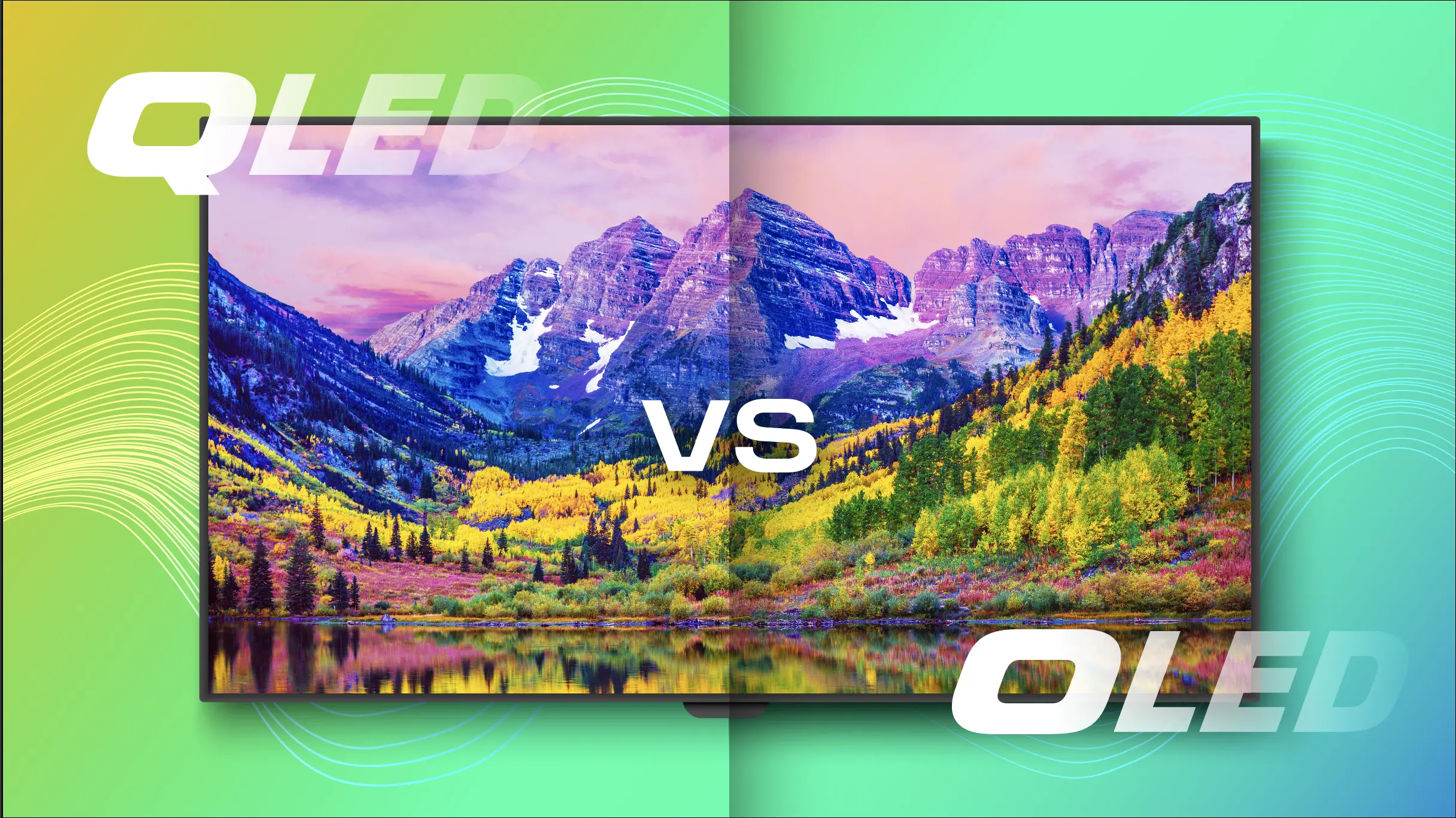
When buying a new television, terms like QLED and OLED can be confusing. Both are premium display technologies, but they work differently and offer distinct advantages. Understanding these differences ensures you pick the right TV for your needs and budget.
What Is QLED?
QLED stands for quantum dot LED TV. Despite the name, QLED is actually a variation of LCD technology. It uses a standard LED backlight and incorporates a layer of quantum dots—microscopic molecules that emit different colors when struck by light. This layer improves color volume and brightness compared to regular LCD TVs. Samsung has been the main proponent of QLED, branding most of its LCD TVs with this label since 2017. Other manufacturers like TCL also produce QLED TVs. Because QLED relies on a backlight, it is considered a transmissive display: light travels through the liquid crystal layer to form the image.
What Is OLED?
OLED stands for organic light-emitting diode. Unlike QLED, OLED is an emissive technology—each pixel produces its own light. This eliminates the need for a backlight and allows perfect black levels: when a pixel is off, it emits no light, resulting in infinite contrast. OLED TVs are known for superior picture quality, excellent viewing angles, and uniform screens. LG has long dominated the OLED market, but Samsung now also produces OLED panels using QD-OLED technology, which combines quantum dots with OLED to boost brightness and color gamut.
Key Differences in Picture Quality
Contrast and Black Levels
OLED wins handily on contrast. Because individual pixels can turn off completely, OLED achieves absolute black. Even the best QLED/LCD TVs with local dimming cannot match this, though recent technologies like TCL’s Halo Control have narrowed the gap.
Brightness
QLED TVs, particularly those with mini-LED backlights, can reach much higher brightness levels than OLED. This makes QLED a better choice for bright rooms where glare is a concern. However, modern OLED TVs have become significantly brighter, especially with new panel structures like the 4-stack in LG’s latest models.
Viewing Angles and Uniformity
OLED performs better from off-center positions. LCD-based QLED TVs suffer from color shift and contrast loss when viewed from an angle. OLED screens also have near-perfect uniformity, while QLED/LCD sets may show backlight bleed or uneven brightness across the screen.
Color and Video Processing
Both technologies can produce accurate, vibrant colors. QD-OLED, used in Samsung’s OLED TVs, offers especially wide color gamuts. In standard QLED, quantum dots enhance color volume. Neither technology has a major inherent advantage in video processing, which depends on the TV’s chipset and brand.
Sizes and Pricing
QLED TVs come in a wider range of sizes, from 32-inch models up to 115-inch giants. OLED TVs are typically available from 42 inches to 97 inches, with fewer options below 55 inches. Larger OLEDs are significantly more expensive than comparable QLEDs. For example, a 77-inch OLED costs well over $2,000, while many 75-inch QLEDs can be found for under $1,500. If you want the largest screen for the least money, QLED is the better value.
Burn-In Risk
OLED screens are more susceptible to burn-in—permanent image retention from static elements like channel logos or news tickers. However, modern OLEDs have built-in mitigation features such as pixel refresher and logo luminance adjustment. For casual mixed usage, burn-in is unlikely to be a problem. QLED/LCD TVs do not suffer from burn-in at all, making them safer for static content like news or gaming HUDs.
Which Should You Choose?
For absolute picture quality in a dark room, OLED is the winner. Its infinite contrast, perfect blacks, and wide viewing angles create a cinematic experience that QLED cannot replicate. However, if you watch in a bright room or need a very large screen on a budget, QLED is a strong contender. Many QLED models also offer excellent brightness and good contrast, especially those with full-array local dimming. Ultimately, the best choice depends on your specific viewing environment, content, and budget. Both technologies continue to evolve, with microLED and direct-view quantum dots on the horizon, but for now, OLED holds the crown for enthusiasts while QLED offers practicality and brightness.
Frequently Asked Questions
What does QLED stand for?
QLED is an acronym for “quantum dot LED TV,” although it is essentially an LCD TV enhanced with a quantum dot layer.
What does OLED stand for?
OLED stands for “organic light-emitting diode,” a self-emissive display technology.
Which lasts longer, QLED or OLED?
Both can last many years with normal use. OLED has a potential burn-in risk if static images are displayed for long periods, but modern preventative measures make it less of an issue. QLED/LCD panels are more resistant to permanent image retention.
Is OLED worth the extra cost?
For those who prioritize picture quality and can control lighting, yes. However, if you want the biggest screen for the least money, QLED offers a better price-to-size ratio.
Source:CNET News