

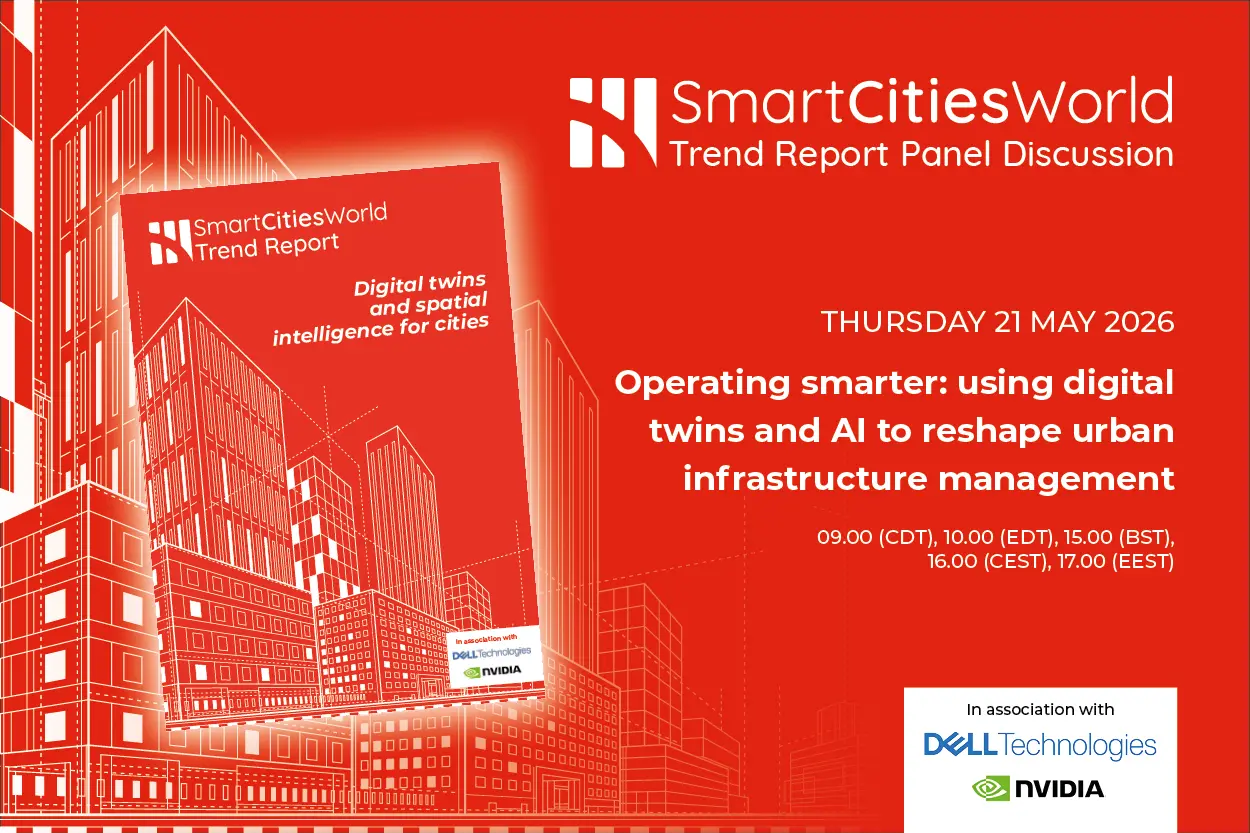
Cities worldwide are facing a new era of infrastructure management, one defined by ageing assets, climate pressures, and rapid technological change. In response, a growing number of local authorities are turning to digital twins and artificial intelligence to not only monitor their assets but to anticipate failures, allocate resources more efficiently, and ultimately build more resilient communities. A 2026 virtual panel discussion brought together experts to explore how cities can shift from reactive maintenance to a more strategic, risk-based approach to infrastructure resilience.
A Strategic Shift to Risk-Based Resilience
The traditional model of infrastructure management is no longer sufficient. For decades, cities have relied on routine inspections and reactive repairs, often addressing problems only after they become visible or disruptive. This approach is costly, inefficient, and increasingly untenable as weather patterns become more extreme and urban populations grow. The virtual panel underlined the urgent need for a paradigm shift toward risk-based management, where investments are prioritized based on the likelihood and consequence of asset failure, and where data-driven insights guide every decision.
Digital twins—virtual replicas of physical assets, systems, and processes—are proving to be a cornerstone of this transformation. By integrating real-time sensor data, geospatial information, and historical records, digital twins allow city officials to simulate scenarios, test interventions, and optimise performance without disrupting daily operations. AI adds another layer by identifying patterns and predicting future conditions, enabling proactive maintenance and smarter resource allocation. The panelists noted that this combination empowers cities to allocate scarce budgets where they matter most, extending asset lifecycles and enhancing service reliability.
Empowering Local Energy Systems
A related discussion focused on how energy systems can be shaped by local authorities through renewables, flexibility, storage, and smarter networks. As cities strive to meet net-zero emissions targets, the need to decarbonise energy infrastructure has become critical. Local governments are uniquely positioned to drive this transition, not only by installing renewable generation on public buildings but also by creating regulatory frameworks that encourage private investment and community participation.
Flexibility is at the heart of modern energy management. With AI-powered forecasting, cities can better balance supply and demand, encourage consumers to shift usage to off-peak hours, and integrate distributed energy resources such as rooftop solar and battery storage. The panel highlighted successful examples where smart grids adjust in real time to fluctuations in renewable output, reducing reliance on fossil fuel peaking plants. In this way, energy systems become more resilient, affordable, and sustainable, directly supporting the broader climate ambitions of city governments.
Case Study: Sunderland’s Connected Ambition
One of the most compelling examples of smart city transformation comes from Sunderland, a city in the north-east of England. Sunderland’s smart city programme is delivering measurable economic, social, and public-service benefits, according to new research. The city’s success rests on three pillars: long-term connectivity investment, civic leadership, and trusted partnerships. By laying a robust digital infrastructure backbone, Sunderland has attracted technology companies, supported local businesses, and improved access to public services.
The city is repositioning itself as a leading smart city, using digital infrastructure and low-carbon innovation to build a resilient, future-focused economy. Projects include intelligent lighting, sensor-based waste management, and a city-wide data platform that enables better decision-making. Community engagement has been central to this work, ensuring that the benefits of digital transformation are shared equitably. Sunderland’s experience demonstrates that a clear vision, sustained investment, and collaboration across public, private, and voluntary sectors can turn digital ambition into real impact.
Glasgow’s Climate Leadership Legacy
Glasgow, Scotland’s largest city, has long been recognised as a global leader in local climate action. Much of that reputation is owed to Susan Aitken, the Leader of Glasgow City Council, who announced she is stepping down after nine years at the helm. Aitken has often spoken about how leadership, courage, and community have combined to make the city a “global superpower” of local climate action. Under her guidance, Glasgow launched an ambitious city-wide energy masterplan, invested in active travel, and pioneered innovative retrofitting programmes.
The city’s approach goes beyond energy efficiency. It has developed a digital twin of its district heating network, allowing engineers to optimise heat distribution and reduce emissions. Glasgow has also used AI to model flood risk and inform land-use planning, protecting vulnerable communities from climate impacts. Aitken’s tenure shows that political will and community buy-in are essential for implementing long-term sustainability strategies. As she prepares to leave office, her legacy offers a blueprint for other cities seeking to translate climate pledges into tangible outcomes.
Dublin’s Digital Twin-Driven Innovation
Dublin, the capital city of Ireland, is another standout example of how digital twins can drive urban innovation. The city has launched several digital twin projects aimed at improving experiences and services for its communities. One notable initiative involves a digital twin of the city centre, which is used to model traffic flows and test interventions to reduce congestion and improve air quality. Planners can simulate the impact of new cycle lanes, pedestrianised zones, or public transport changes before implementation, saving both time and money.
In addition to transportation, Dublin is using digital twins to support economic growth. By visualising property data, planned developments, and environmental conditions, the city can make more informed planning decisions and attract investment. The city’s open data strategy ensures that these digital tools are accessible to businesses, researchers, and citizens, fostering an ecosystem of innovation. Dublin’s experience reinforces that digital twins are not just for large-scale infrastructure, but can also enhance the day-to-day lives of residents through smarter urban management.
Smart Lighting as a Secure Foundation
Among the most immediately deployable smart city technologies, intelligent street lighting stands out. The “Cities Thriving on Lighting” webinar series explores how global cities are approaching smart lighting and the related cybersecurity risks today. Streetlights are ubiquitous infrastructure, and converting them into networked, sensor-enabled assets creates a platform for a wide range of services—from energy-efficient illumination to air quality monitoring and traffic detection.
However, the move to connected lighting introduces new cybersecurity challenges. The same network that allows remote control and data collection can become a target for malicious attacks. The webinars outline the technology and considerations behind turning existing streetlight networks into secure, interoperable, and future-proof infrastructure. This includes selecting hardware with built-in security, segmenting networks, and following industry best practices for encryption and access control. Cities that approach smart lighting with a security-first mindset can unlock long-term benefits while protecting critical services.
AI and Data in Transport Operations
Transport agencies are increasingly turning to AI to improve services, but the greatest opportunities will depend on strong data foundations, workforce readiness, and responsible governance, according to Microsoft’s Katherine Flesh. Her insights echo across the industry: AI engines require high-quality, well-governed data to produce reliable predictions and recommendations. Many cities possess vast datasets—from traffic sensors, GPS on public vehicles, and ticketing systems—but these are often disaggregated and of variable quality.
Integrating these data sources into a unified platform, with clear standards and security protocols, is the first step toward AI-driven transport management. The next is investing in workforce skills so that staff can interpret AI outputs and make informed decisions. Responsible governance ensures that algorithms are transparent, fair, and accountable, protecting citizens from biases and privacy violations. When these foundations are in place, AI can optimise bus schedules, predict maintenance needs, and even recommend multimodal routes that reduce congestion and emissions.
The virtual panel also addressed the role of local authorities in shaping energy systems through renewables, flexibility, storage, and smarter networks. This holistic view—linking transport, energy, and digital infrastructure—is crucial for achieving the efficiency and resilience that modern cities need.
The Importance of Partnerships and Community Engagement
Across all these case studies and discussions, a common thread emerges: successful digital transformation requires strong partnerships. Municipalities rarely have the internal resources or expertise to build and operate sophisticated AI and digital twin systems alone. Collaboration with universities, technology vendors, and other cities accelerates learning and innovation. Trusted partnerships also extend to citizens, who must be consulted and engaged to ensure that new technologies meet real needs and respect privacy.
Sunderland’s experience highlights how long-term connectivity investment, civic leadership, and trusted partnerships are turning digital ambition into real impact. The city’s research results show that a coordinated approach delivers tangible economic benefits, improved social outcomes, and more efficient public services. Similarly, Glasgow’s leadership in climate action grew from a collaborative ecosystem of community groups, businesses, and academic institutions, all aligned around a shared vision.
Ecomondo, a key event in the sustainability calendar, has discussed the priorities shaping healthier, more sustainable cities and why a global summit offers a valuable platform for sharing practical solutions and building new connections. This spirit of knowledge exchange is vital as cities around the world confront similar challenges. By learning from pioneers like Sunderland, Glasgow, and Dublin, and by engaging with the latest research on topics such as smart lighting and AI in transport, local authorities can accelerate their own journeys toward smarter infrastructure management.
The upcoming virtual panels and webinars, including those focused on unlocking value in buildings, data, and AI, as well as transforming transport operations, are set to provide further insights into how technology can be harnessed for the public good. As these discussions demonstrate, the path to resilient, sustainable cities is not a straight line, but a continuous cycle of data collection, analysis, and adaptation. With digital twins and AI, cities have the tools to operate smarter—not just today, but well into the future.
Source:Smart Cities World News