

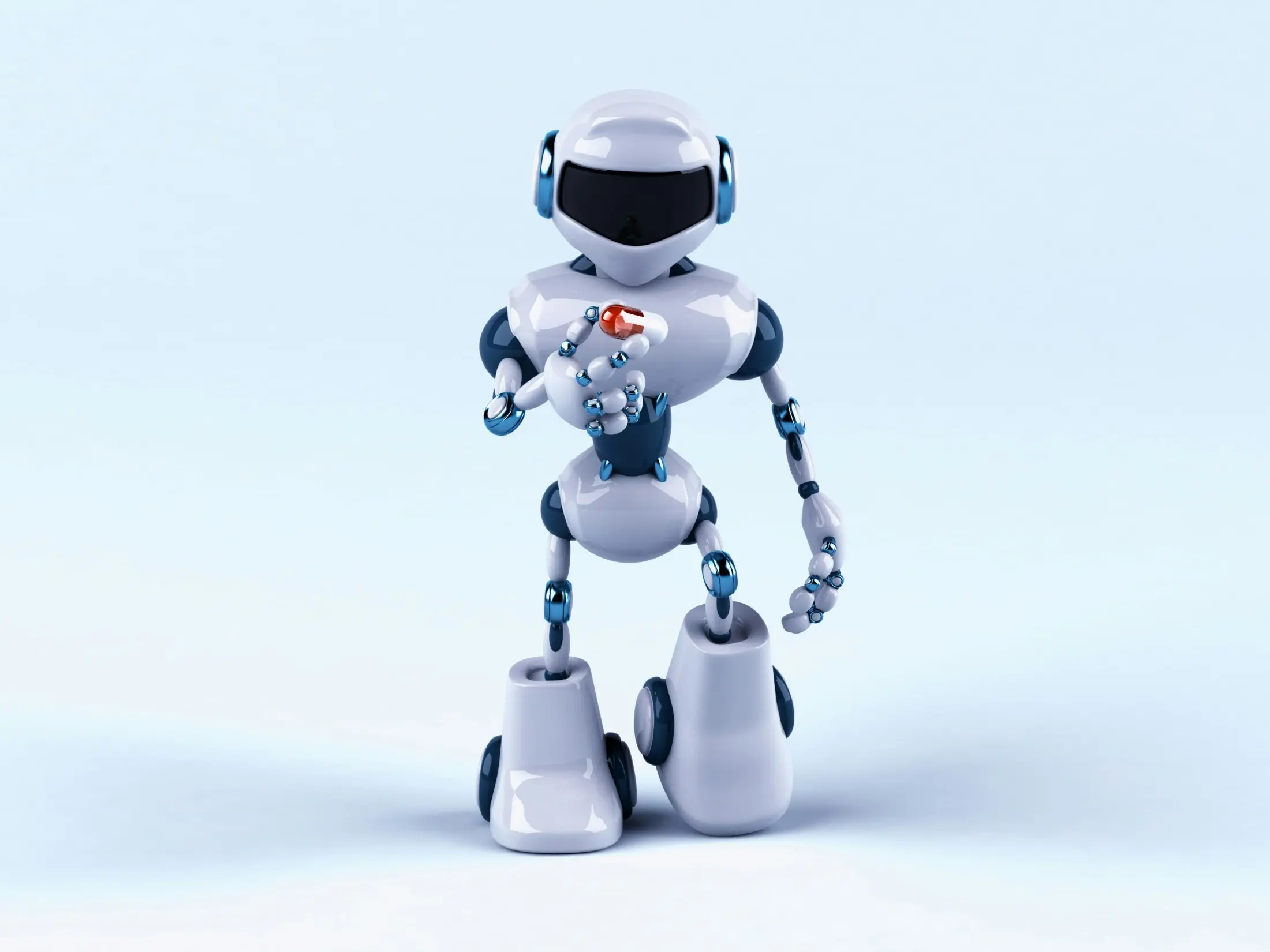
Healthcare robotics holds immense promise—from precision surgical assistants to robotic nurses that help with daily tasks. Yet one stubborn bottleneck has slowed progress: a shortage of high-quality training data. Unlike autonomous vehicles, which can log millions of miles, healthcare robots operate in highly sensitive environments where real-world experimentation is limited by patient safety, privacy regulations, and the high cost of failure. Nvidia, the AI computing giant, believes it has found a solution in what it calls “physical AI” — a combination of simulation, generative models, and digital twins designed to produce vast, realistic, and safe training datasets.
What is physical AI and why does healthcare robotics need it?
Physical AI refers to AI systems that can understand, interact with, and operate in the physical world. For robotics, this means training models not only on real sensor data but also on synthetic data generated by simulators that model physics, lighting, object interactions, and even human behavior. In healthcare, the need for such simulation is acute. Collecting thousands of examples of a robot performing a delicate suturing task or a nurse assisting a patient out of bed is expensive, time-consuming, and ethically fraught. Simulators can generate millions of variations cheaply and instantly.
Moreover, real-world data often suffers from class imbalance and rare edge cases. A surgical robot might encounter an unexpected bleeding scenario only once in a thousand operations. In simulation, that edge case can be generated thousands of times with different parameters. This not only improves model robustness but also accelerates the development cycle from years to months.
Nvidia's core platforms: Omniverse and Isaac Sim
Nvidia’s bet on physical AI for healthcare robotics rests primarily on two platforms: Nvidia Omniverse, a platform for building and operating 3D virtual worlds, and Nvidia Isaac Sim, a robotics simulation toolkit built on Omniverse. Omniverse enables the creation of digital twins—precise virtual replicas of real-world environments like hospital rooms, operating theaters, and labs. These digital twins can be populated with simulated patients, medical instruments, and lighting conditions that match a specific hospital's layout.
Isaac Sim extends this with robotics-specific features: physics simulation, sensor modeling (cameras, LiDAR, tactile sensors), and AI training pipelines. Developers can import a digital twin of a hospital, place a robot model inside, and begin collecting training data immediately. The system supports domain randomization—randomly changing colors, textures, lighting, and object positions during training to make the final model robust to real-world variation.
Nvidia also provides pretrained AI models and tools like Replicator, a data generation engine that can output fully annotated synthetic images and depth maps. This synthetic data can be used to train perception models (e.g., detecting surgical tools or patient skin) and control policies (e.g., moving a robotic arm to avoid collisions).
Addressing the data problem in healthcare robotics
The data problem in healthcare robotics is multidimensional. First, the volume requirement is high: training a deep neural network for manipulation tasks often requires hundreds of thousands of episodes. Second, the variety requirement is high: robots must generalize across different patient body types, hospital layouts, lighting conditions, and surgical techniques. Third, safety constraints limit real-world deployment of untrained robotic systems. Physical AI tackles all three.
For instance, consider a robotic system designed to assist in laparoscopic surgery. In the real world, providing thousands of examples of the robot performing a cholecystectomy (gallbladder removal) on live patients is unrealistic. But with a digital twin of the abdominal cavity, generated from CT scans or generic anatomical models, the robot can practice the procedure millions of times. The sim can vary the anatomy, the position of instruments, the presence of bleeding, and even the surgeon’s movements. The result is a model that generalizes far better than one trained exclusively on limited real data.
Another example is rehabilitation robotics. A robot arm that helps stroke patients perform limb exercises must adapt to each patient’s range of motion and strength. Simulating thousands of virtual patients with different disabilities allows the robot’s control algorithm to learn adaptive strategies before ever touching a real person.
Nvidia's partnerships and real-world use cases
Nvidia has forged several key partnerships to bring physical AI to healthcare robotics. Perhaps the most prominent is with Medtronic, a leading medical device company. Together, they are working on AI-powered surgical robotics. Medtronic uses Nvidia’s platforms to train deep learning models for tasks like instrument segmentation and anatomy classification in real-time. The partnership leverages the Isaac Sim environment to generate synthetic data for rare surgical scenarios that would be difficult to capture in live surgeries.
Similarly, Nvidia has collaborated with researchers at the University of California, San Francisco (UCSF) to develop a prototype robot that can autonomously perform an ultrasound scan. The robot was trained almost entirely in simulation, learning to adjust its probe pressure and angle based on virtual patient models with different body shapes. When deployed in a real clinic, the robot performed nearly as well as a human sonographer, thanks in part to the robustness gained from simulated training.
Other startups like Surgical Robotics and Vicarious Surgical are also using Nvidia's simulation tools. Smaller companies that cannot afford to run thousands of real-world trials can now leverage affordable cloud-based simulation to develop their products. Nvidia’s Jetson platform, a series of AI computing modules, then runs the trained models on the robot in real time, closing the loop between simulation and deployment.
Overcoming the simulation-to-reality gap
One of the greatest challenges in using physical AI for robotics is the sim-to-real transfer: models trained solely in simulation often fail when they encounter the unpredictable nuances of the real world. Nvidia addresses this through high-fidelity physics simulation, domain randomization, and continuing to fine-tune on small amounts of real data when available. Isaac Sim uses Nvidia’s PhysX engine for accurate dynamics, and Omniverse supports RTX ray tracing for realistic lighting.
Furthermore, some healthcare applications emphasize safety so strongly that even small sim-to-real gaps are unacceptable. Nvidia encourages a hybrid approach: start with massive simulated training to achieve broad competency, then collect a small set of real-world demonstrations to adjust the model. Isaac Sim also supports reinforcement learning in simulation, where the robot can learn optimal behavior through trial and error without harming anyone. This learned policy can then be transferred to the physical robot using techniques like domain adaptation or fine-tuning.
Future implications and industry adoption
The long-term vision is that physical AI will transform healthcare robotics from a niche, high-cost field into a scalable industry. As simulation tools become more accessible, the barrier to entry for robotics startups will lower. Regulatory bodies may even begin to accept evidence from simulation-based validation as part of the approval process, speeding up FDA clearance for novel robotic systems. The potential impact on patient care is enormous: semi-autonomous surgical robots could help reduce surgeon fatigue, physical therapy robots could provide consistent, personalized rehabilitation, and hospital delivery robots could reduce staff workload and contamination risks.
Nvidia’s strategy also includes education. The company offers free courses and resources on using Isaac Sim and Omniverse for healthcare robotics. By training the next generation of engineers in physical AI, Nvidia hopes to create a virtuous cycle: more skilled developers → more applications → more data → better AI. This is not just a product play; it is a platform play to make Nvidia GPUs and software the de facto standard for medical robotics development.
Of course, challenges remain. Simulation cannot yet perfectly replicate the complexity of human tissue deformation, fluid dynamics of blood, or the non-rigid behavior of organs. But Nvidia is continuously improving its models with specialized physics solvers and generative AI. The company is also investing in research on latent-space models that can bridge the sim-to-real gap even further. As of 2025, several pilot projects are in clinical trials, and the first wave of Nvidia-powered healthcare robots is expected to receive regulatory clearance within the next two to three years.
In summary, Nvidia is making a clear bet: by providing the tools to generate unlimited, safe, and realistic training data, physical AI will unlock the next generation of healthcare robotics. The company’s integrated stack—from simulation to edge deployment—offers a compelling solution to the industry's most persistent bottleneck. As the technology matures, the era of truly autonomous medical robots, trained in the cloud and deployed at the bedside, moves closer to reality.
Source:AI News News