

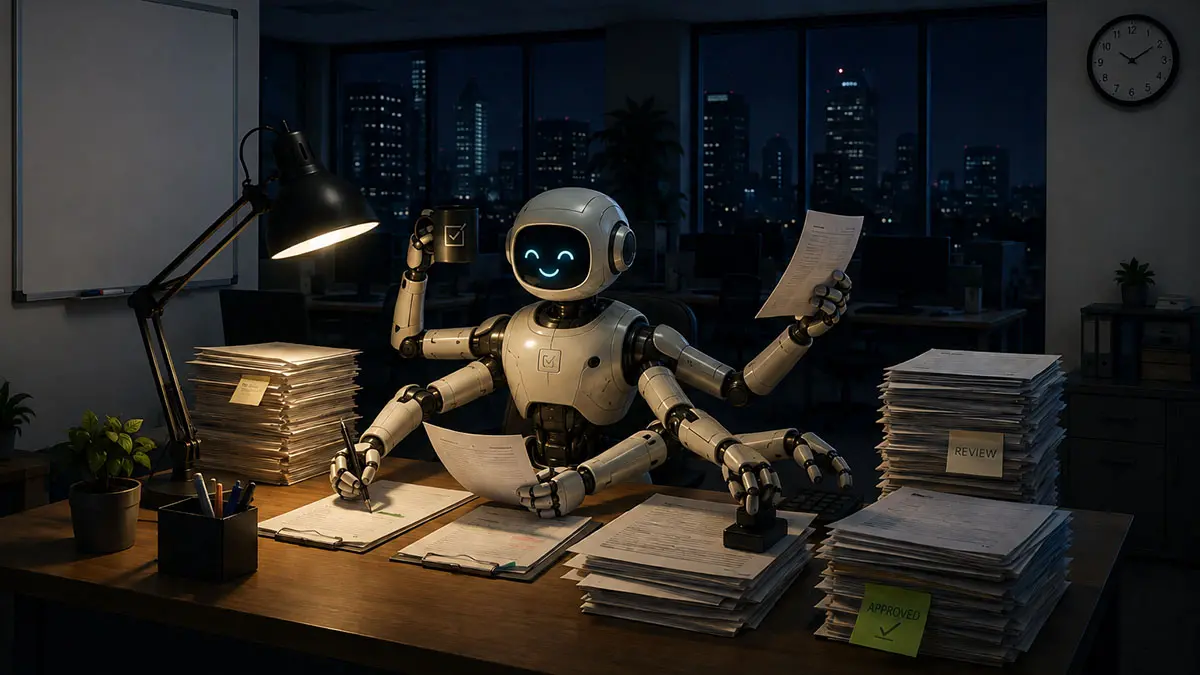
SpaceXAI, Elon Musk’s artificial intelligence company, has officially launched Grok Bot, a new autonomous agent designed to function as an always-on worker. Unlike conventional chatbots that wait for prompts and then respond, Grok Bot is engineered to continuously monitor tasks, make decisions, and execute actions without requiring human intervention at every step. The announcement positions SpaceXAI at the forefront of a growing trend: turning AI from a tool that answers questions into a digital workforce that never sleeps.
What Is Grok Bot?
Grok Bot is an AI agent built on the same underlying technology as the Grok conversational model, but with significantly expanded capabilities. While Grok the chatbot is known for its real-time knowledge and informal tone, Grok Bot is designed for persistence. It can set its own priorities, work through multi-step processes, and even recover from failures without waiting for a human to reset the workflow. Musk’s team has described it as a “virtual employee” that can handle everything from data entry and email triage to more complex processes like supply chain monitoring and software testing.
The idea of always-on AI agents is not entirely new. Companies like Microsoft, Google, and OpenAI have all experimented with autonomous agents that can perform tasks across applications. What distinguishes Grok Bot, according to SpaceXAI, is its deep integration with Musk’s broader corporate ecosystem. That means Grok Bot may one day work seamlessly with Tesla’s manufacturing systems, X’s social media platform, xAI’s research tools, and potentially even SpaceX’s internal operations, despite the company’s current branding as SpaceXAI.
Key Features of the New Agent
SpaceXAI has not yet released a full technical specification, but early demonstrations and product briefings point to several key features. First, Grok Bot is designed to handle asynchronous tasks. Instead of asking a question and waiting for a response, users can assign a goal—such as “monitor competitor announcements and summarize them every morning”—and the bot will run behind the scenes, checking sources, filtering information, and delivering updates on a schedule.
Second, the bot is built with a memory layer that allows it to maintain context over long periods. This means it can remember previous conversations, user preferences, and ongoing projects without requiring repetitive explanations. The memory feature is essential for the “always-on employee” concept, since a worker that forgets everything after each interaction cannot truly function autonomously.
Third, Grok Bot appears to support tool use and integration with third-party software. Early reports suggest it can interact with databases, send messages through X, create calendar events, and trigger automated workflows in cloud services. This makes it far more useful than a simple natural-language interface. Instead of merely suggesting an action, Grok Bot can take action.
A Shift Toward Autonomous Work
The launch of Grok Bot comes at a time when the AI industry is increasingly focused on agents rather than chatbots. OpenAI has introduced tools that can browse the web and perform actions, while Google has integrated agent-like features into its search and assistant products. Anthropic, Microsoft, and others have also released systems designed to complete tasks with minimal oversight.
The key difference with Grok Bot is its positioning. SpaceXAI is not presenting this as a productivity aid or a coding assistant. It is presenting Grok Bot as a replacement for the concept of a regular work shift. An AI agent does not need breaks, vacation days, or sleep. It can process information around the clock, respond to customer inquiries at 3 a.m., and continue working on a high-priority project while human employees are offline.
For businesses, the appeal is obvious. Labor costs are among the largest expenses for most companies, and an always-on digital worker could reduce the need for overnight staff or after-hours support teams. Grok Bot’s ability to work across time zones also makes it attractive for global operations. A company with clients in Europe, North America, and Asia could deploy Grok Bot to handle routine communications without worrying about who is awake in which office.
Potential Impact on Jobs and the Workforce
The launch inevitably raises questions about employment. Automation has already changed manufacturing, logistics, and back-office operations. Grok Bot and similar agents target knowledge work, administrative tasks, customer service, and software workflows—areas that were once considered safe from automation because they required language understanding and judgment. With AI agents now able to make decisions, draft communications, and update records, the boundary continues to shift.
Some economists argue that AI agents will create new roles, such as AI supervisors, prompt engineers, and workflow designers. Others warn that the pace of adoption could outpace job retraining programs. For now, SpaceXAI is framing Grok Bot as a collaborator rather than a replacement. The company says the bot is designed to handle repetitive tasks so that human workers can focus on creative and strategic work. But the language of “always-on workers” suggests that the eventual goal is much broader.
Reliability and the Problem of Errors
One of the biggest challenges for always-on AI agents is reliability. Even the best large language models sometimes produce incorrect information or make illogical decisions. When a model is running autonomously, a small error can cascade into a serious problem. For example, an email draft with a wrong attachment could be sent to a client, or a database update could overwrite important records.
SpaceXAI says Grok Bot includes safeguards such as confidence thresholds, audit logs, and escalation paths. If the bot is not confident about a decision, it can stop and ask a human for confirmation. It also records every action it takes so users can review what happened. These measures may help build trust, but they do not eliminate all risks. Autonomous systems are only as good as their training data and the guardrails their developers put in place.
Privacy, Security, and Data Governance
There are also serious security and privacy implications. An always-on AI agent needs access to a broad range of data sources: emails, calendars, documents, internal databases, and possibly customer information. That kind of access creates a tempting target for hackers. If an attacker compromises Grok Bot, they could potentially steal sensitive data or use the bot to spread malicious instructions across an organization.
Musk has previously been vocal about data privacy and AI regulation, sometimes offering conflicting views. His involvement with X, formerly Twitter, has also raised concerns about how user data could be used to train AI models. With Grok Bot deeply integrated into X, some experts worry that private messages, posts, and interactions could be used to improve the bot’s performance without clear consent.
SpaceXAI has stated that Grok Bot will support enterprise-grade security features, including end-to-end encryption for certain communications and granular access controls. Companies will be able to define exactly which files and systems the bot can access. Still, many corporate IT leaders will likely approach the always-on agent concept with caution, demanding rigorous independent security audits before allowing the bot near mission-critical systems.
The Competitive Landscape Heats Up
Grok Bot enters an increasingly crowded market. OpenAI, Microsoft, Google, Amazon, and a host of startups are all racing to build general-purpose AI agents. Microsoft has integrated its Copilot agent across Windows and Office, while Google has been embedding agent-like functions into Workspace and the Gemini assistant. Amazon has launched new models designed to build and execute multi-step tasks, and startups like Adept have focused on AI that can operate web browsers and software interfaces directly.
SpaceXAI’s edge may come from its founder’s ability to move quickly and leverage multiple companies. Musk has access to vast amounts of data from X, Tesla’s real-world driving data, and the engineering resources of SpaceX. Grok Bot could learn from all of those data streams, although privacy constraints may limit how data is shared across corporate borders. Still, the sheer reach of Musk’s business empire gives SpaceXAI a unique advantage when it comes to deploying and testing always-on agents in real-world environments.
Infrastructure and Always-On Computing
The phrase “always-on” also has implications for computing infrastructure. Running AI agents continuously requires significant processing power. Instead of occasional queries that produce quick answers, these agents need to listen, reason, and act over extended periods. That means cloud data centers must allocate more GPUs and TPUs to each user, which drives up costs. SpaceXAI has not published pricing for Grok Bot, but industry observers expect a subscription model with different tiers based on usage, storage, and the number of autonomous tasks.
There is also a question about energy consumption. Every request to a large AI model consumes electricity, and always-on agents could increase demand dramatically. Companies like SpaceXAI are investing in more efficient chips and algorithms to offset this impact, but the exponential growth in agent usage could still put pressure on power grids in regions with many data centers. As AI agents become more common, renewable energy and battery storage may need to expand just to keep pace.
Real-World Use Cases
SpaceXAI has suggested several practical applications for Grok Bot. In customer service, the bot could monitor support inboxes, identify urgent requests, and send follow-up responses while human agents handle only high-complexity issues. In sales, it could research leads, draft proposals, and schedule meetings with potential clients. In software development, it could triage bug reports, review code, and run automated tests overnight so developers start the day with a clean report.
The bot could also be useful in supply chain management. It could track inventory levels, monitor shipping status, and order supplies when stock drops below a certain threshold. For financial teams, Grok Bot might analyze transaction patterns, flag anomalies, and generate monthly reports without requiring a human to prepare the data. In healthcare administration, it could handle appointment reminders, insurance verification, and patient intake forms, effectively acting as a virtual front-office coordinator.
Early Reactions From Industry Analysts
Some industry analysts have welcomed the launch as a natural step in the evolution of AI. They note that large language models are already capable of reasoning over text, summarizing documents, and generating code. Adding memory and autonomous action simply extends these capabilities into the realm of ongoing work. Others are more skeptical, pointing out that many previous attempts at AI automation have failed in unpredictable environments.
One commonly cited concern is the difficulty of validating long chains of autonomous actions. A single wrong decision early in a process can be very difficult to trace after the bot has taken many subsequent steps. SpaceXAI’s audit logs may help, but auditing is a reactive measure. The bot still needs to make the right choices in the first place, and no AI system is perfect.
The announcement also raises a broader philosophical question about the role of human workers. If AI agents can work 24 hours a day, seven days a week, with no breaks and no overtime, what happens to the notion of a fair workday? For now, companies may use Grok Bot to augment their existing teams, but the long-term trajectory points toward a leaner human workforce supported by autonomous digital assistants. That transition will require careful management, new regulations, and perhaps a rethinking of social safety nets.
Meanwhile, Grok Bot is already available to select enterprise customers through SpaceXAI’s early access program. The company says it will roll out broader access over the coming months. Musk has hinted that future versions of the bot could work in physical settings, controlling robots in Tesla factories or assisting with logistics at SpaceX facilities. For now, the digital version is focused on the world of information, where it can send messages, update databases, and coordinate tasks without ever closing its virtual eyes.
Source:Techopedia News