

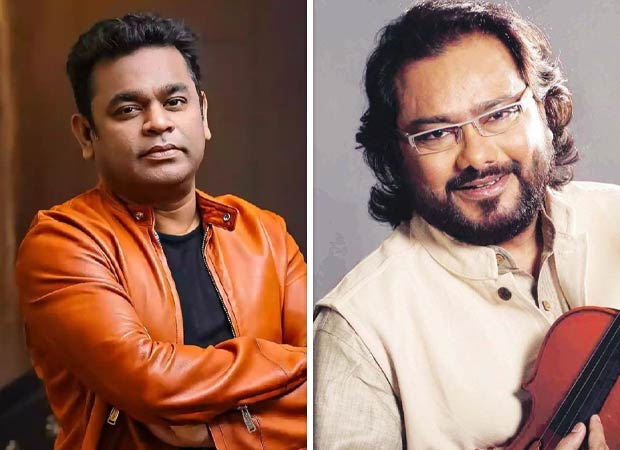
A.R. Rahman has always been generous with his appreciation for fellow musicians, but his latest words for Ismail Darbar carry a special warmth. After listening to Darbar’s new musical offering titled Uss Khuda Se, Rahman took note of the composer’s return and publicly expressed his admiration. The Oscar-winning musician was quoted as saying, “We need you more in the Hindi film music scene.” That comment has become one of the most talked-about moments in Indian music circles, not only because of the composer it was directed at, but because of what it says about the current state of Bollywood music.
The Significance of Rahman’s Praise
Rahman’s statement carries a special weight because it comes from one of the most influential film composers in the world. For decades, Rahman has defined the sound of Indian cinema with scores for films such as Roja, Bombay, Dil Se, Lagaan, and Slumdog Millionaire. His appreciation for Darbar is not casual courtesy; it is an acknowledgment of a distinctive musical voice that Bollywood has missed. The words also serve as a gentle reminder that the industry needs composers who bring a strong sense of melody, orchestration, and cultural depth to the table.
In an era dominated by song snippets and viral audio trends, Rahman’s endorsement stands out. It suggests that there is still respect for composers who create music with long-form emotional arcs, thematic consistency, and instrumental richness. By saying that the Hindi film music scene needs Darbar, Rahman is also signalling that the industry should open its doors to veteran talents who have not always had a place in the fast-changing market.
Ismail Darbar’s Musical Journey
Ismail Darbar first rose to prominence with Sanjay Leela Bhansali’s Hum Dil De Chuke Sanam in 1999. The film’s music was a phenomenon, and songs such as Nimbooda, Dholi Taaro Dhol Baaje, and Tadipar became anthems. These tracks were celebrated for their folk-derived rhythms, lush string arrangements, and theatrical sweep. Darbar’s work on the film established him as a composer who could combine Gujarati folk music, Indian classical forms, and western orchestration in a way that felt both authentic and cinematic.
He followed that success with another spectacular score for Bhansali’s Devdas in 2002. That soundtrack featured songs such as Silsila Ye Chaahat Ka, Dola Re Dola, and Kaahe Chhed Mohe, showcasing his ability to craft melodies of immense emotional grandeur. The music of Devdas was intrinsic to the film’s larger-than-life storytelling, and it further cemented Darbar’s reputation as a composer with a rare theatrical vision.
Before those two landmark scores, Darbar had been working in the Gujarati film and theatre circuit, honing his skills and building a deep understanding of traditional Indian music. His training in Hindustani classical music gave him a strong foundation, but his real gift lay in adapting that foundation for the big screen. He could take a classical raga or a folk tune and place it inside a lavish film production without losing its soul. That ability made him one of the most distinctive voices in Hindi cinema during the late 1990s and early 2000s.
What Is Uss Khuda Se?
Now, after a considerable time away from the mainstream spotlight, Darbar returns with Uss Khuda Se. The title, which can be translated roughly as “From That God,” suggests a deeply spiritual and devotional theme. While specific details about the song’s origin, lyricist, and performers have yet to be widely discussed, the track appears to be a heartfelt composition that echoes Darbar’s signature style: soaring melodies, dramatic build-ups, and an emotional core. Rahman’s response to the track suggests that the composition retains the qualities that made Darbar one of the most exciting names in Indian film music two decades ago.
The choice of a devotional subject matter is also notable. Spiritual music has a long and rich history in the Indian subcontinent, and many celebrated composers have turned to it at significant points in their careers. In Darbar’s case, Uss Khuda Se might represent both a personal expression of faith and a musical statement of intent. It signals that he is returning to the roots of his creativity while also offering something fresh to listeners who have been waiting for his voice again.
A Changing Hindi Film Music Landscape
Rahman’s shout-out has also been interpreted as a broader comment on the homogenisation of Hindi film music. In recent years, the industry has leaned heavily on remixes, recreations, and short-form songs designed for social media platforms. Original, orchestral, and melody-driven compositions have become rarer in commercial cinema. Many of the biggest film soundtracks now feature quick hooks, electronic beats, and hip-hop aesthetics, which are perfectly suited to reels and short videos but often leave little room for the kind of elaborate musical development that defined earlier film scores.
During the 1990s and 2000s, composers like Ismail Darbar, Jatin-Lalit, Nadeem-Shravan, and others shaped the romantic and folk-driven sound of Bollywood. Darbar’s work was particularly distinctive because of his love for live orchestration. His sessions often involved large ensembles, and his compositions gave playback singers room to explore complex emotions. In an industry that has increasingly moved toward synthetic textures and production-led songwriting, Darbar’s return is a reminder of the value of acoustic warmth and melodic nuance.
That said, the musical ecosystem is not limited to Bollywood. Streaming platforms have opened new avenues for independent musicians and veteran composers alike. An artist can now release a devotional song, a non-film album, or a thematic project without waiting for a film producer’s approval. This is likely why Rahman’s words matter so much at this moment. They validate the idea that a composer like Darbar does not need to fit into a narrow commercial mould in order to be relevant. He can create music that speaks to the heart, and listeners will find it if the industry and the platforms make room for it.
Rahman and Darbar: Different Styles, Shared Passion
It is worth noting that Rahman and Darbar represent different schools of film composition. Rahman brought a revolutionary synthesis of Indian and western electronic music, world music textures, and unconventional instrumentation. His early work changed the way Indian film music was produced and appreciated. Darbar, on the other hand, remained closer to the classical and folk traditions, with a sound rooted in large-scale orchestration and dramatic vocal lines. The fact that these two composers respect each other is a reminder that Hindi film music is big enough for many voices.
Source:Bollywood Hungama News