

Apple's iPhone 18 Pro Camera Innovations Go Beyond Megapixels and AI
At Apple's September 2026 launch event, the spotlight was expected to fall on the long-rumored folding iPhone Duo. Yet for photographers and videographers, the more consequential announcement was the overhaul of the iPhone 18 Pro and iPhone 18 Pro Max camera systems. The updates are not simply another bump in resolution or another layer of artificial intelligence processing. Instead, Apple has introduced a variable aperture, expanded manual Pro controls, persistent subject tracking, a signed Reference mode, and new photographic style tools that together bring the iPhone closer to a dedicated camera than ever before.
That shift matters because smartphone camera development has spent years chasing megapixels and computational tricks. Higher-resolution sensors can capture more detail, and AI can brighten dark scenes or clean up noise. But those approaches often come with trade-offs: smaller pixels, aggressive sharpening, unnatural textures, and limited optical control. Apple's iPhone 18 Pro updates suggest a different priority: giving photographers actual optical and manual tools rather than relying entirely on software.
Key Facts
- Apple announced the iPhone 18 Pro and Pro Max with a variable aperture Main Fusion camera.
- The aperture can switch among f/1.48, f/1.8, f/2.8, and f/4.0.
- Updated Pro controls add manual aperture, ISO, shutter speed, white balance, and a histogram.
- Persistent subject tracking can follow a person through crowds and brief obstructions.
- A signed Reference mode creates an unalterable reference image for comparison.
- The camera array includes 48MP Main Fusion, 48MP Fusion Ultra Wide, and 48MP Fusion Telephoto cameras.
Variable Aperture Finally Arrives on iPhone
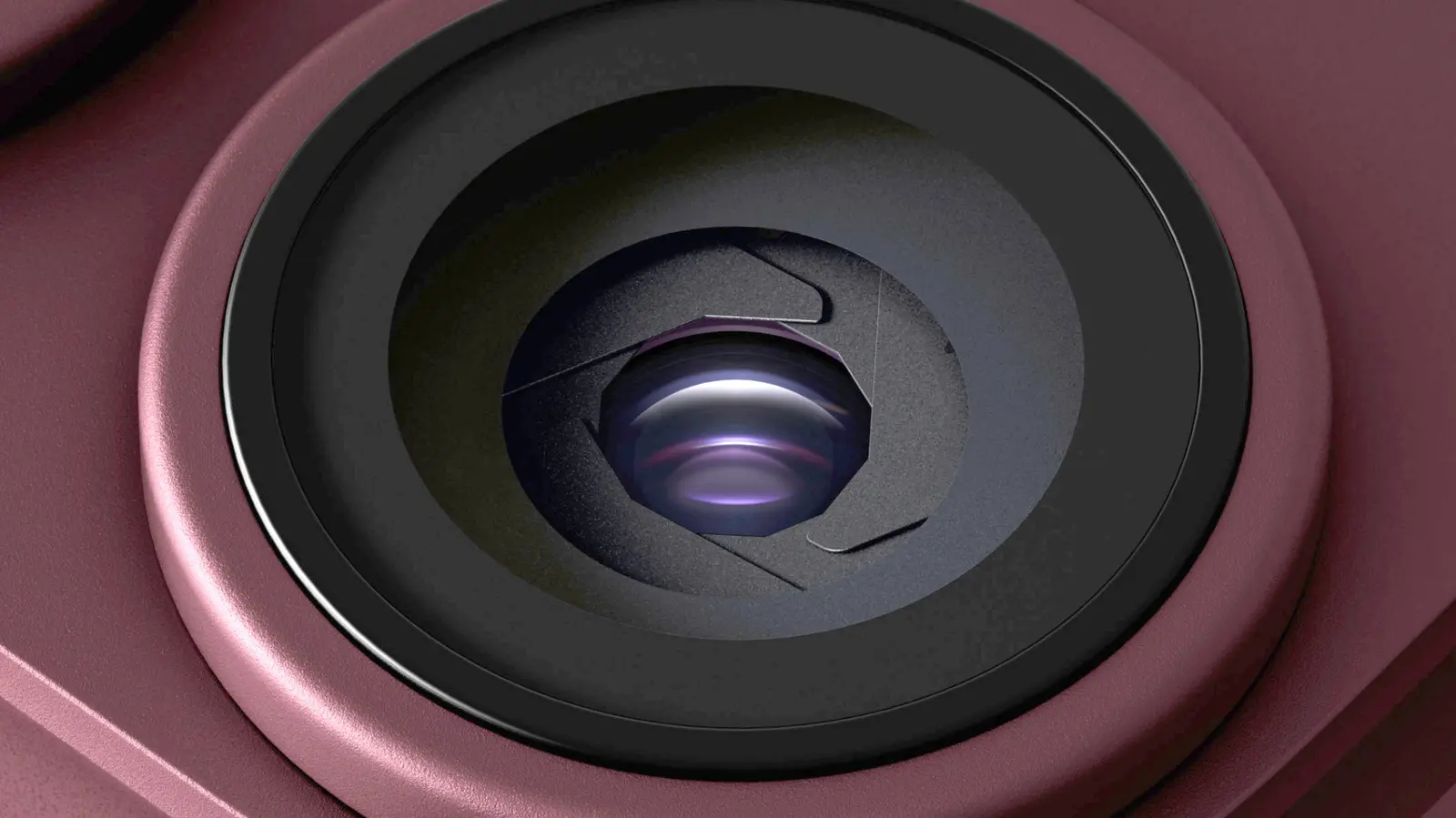
The headline addition is a variable aperture on the Main Fusion camera. Apple did not merely add a software simulation or a fixed dual-aperture switch. The company described a system that uses laser-cut aperture blades designed to move smoothly between settings. Implementing a variable aperture in a phone is difficult because the sensor is small and the mechanical parts must be tiny, precise, and durable. The blades need to open and close without sticking, and they must do so quickly enough to support both still photography and video.
In automatic exposure mode, the variable aperture can adjust how much light reaches the sensor without forcing a change in shutter speed. That has practical benefits for action photography. If a subject is moving in lower light, the camera can open the aperture to gather more light while keeping the shutter speed fast enough to freeze motion. It can also reduce the ISO setting, which helps avoid grainy photos and noisy video. The result is a cleaner image with more detail and fewer computational artifacts.
For manual shooters, the iPhone 18 Pro offers four aperture settings: f/1.48, f/1.8, f/2.8, and f/4.0. A wider aperture, such as f/1.48 or f/1.8, produces a shallower depth of field. That means portraits can have more background blur, helping separate a subject from a busy scene. A narrower aperture, such as f/4.0, increases depth of field so that foreground and background elements can both remain in focus. Landscape photographers, street shooters, and anyone who wants more of a scene sharp can benefit from that control.
Apple demonstrated how the new aperture and Pro controls can work together. Imagine wanting a blurred foreground with cars or people passing in front of a sharp background. On earlier iPhones with a wide-open aperture, achieving that effect in daylight would require an extremely slow shutter speed, which is impractical without a tripod and neutral density filters. With the aperture stopped down to f/4, the camera can use a more reasonable shutter speed while still creating the desired depth-of-field effect.
Variable aperture is not entirely new to smartphones. Samsung introduced a dual-aperture system on the Galaxy S9, and Xiaomi has offered smoother aperture ranges on some models. However, Apple's implementation is notable because it is paired with a broader set of professional controls and a computational pipeline designed to take advantage of the hardware. The feature also arrives on a mainstream flagship phone, which could push other manufacturers to adopt similar optical systems.
Pro Controls Move Beyond Exposure
The updated Pro mode gives photographers control over aperture, ISO, and shutter speed. It also allows adjustments to white balance and includes a histogram for checking exposure levels. A histogram is a standard tool on dedicated cameras, but it is rare on smartphones. It shows the distribution of tones in an image, helping photographers avoid clipped highlights or crushed shadows. For serious shooters, that kind of feedback is essential when lighting is tricky or when a scene has high contrast.
Manual white balance is another important addition. Automatic white balance is usually good, but it can be fooled by mixed lighting. A photographer who wants consistent color across a series of shots can set white balance manually and avoid shifts from frame to frame. Combined with manual aperture, ISO, and shutter speed, the iPhone 18 Pro begins to resemble a compact camera with a full set of exposure controls.
These tools also change how photographers approach iPhone video. Manual control over aperture and shutter speed allows for more consistent motion blur and exposure. Instead of letting the camera choose settings that might change mid-scene, a videographer can lock in a look. That is especially useful for interviews, narrative work, and any situation where lighting or subject movement could otherwise cause the camera to adjust automatically.
Persistent Subject Tracking
Another major update is persistent subject tracking for both photos and video. The camera can lock onto a person and continue tracking them even if they move through a crowd or briefly disappear behind someone else. That kind of tracking has long been a hallmark of advanced mirrorless cameras. Canon, for example, introduced a similar capability on the EOS R5 II, a $4,500 full-frame mirrorless camera. Bringing comparable tracking to a smartphone suggests how quickly mobile imaging is advancing.
Persistent tracking is useful in everyday situations. At a concert, a parent might want to keep focus on a child in a busy school play. At a sporting event, a photographer might track a runner who passes behind other athletes. In video, vloggers can move through a crowd while the camera maintains focus on their face. The feature reduces the need to tap the screen repeatedly and helps ensure that the intended subject remains sharp.
The tracking is likely powered by a combination of sensor data and machine learning, but Apple's emphasis is on the result rather than the algorithm. For users, the benefit is simple: fewer missed shots and more reliable focus. For professionals, it is another sign that smartphone cameras are becoming credible second cameras or even primary tools in some workflows.
Photographic Styles and Cinematic Effects
Apple also updated Photographic Styles with new texture and grain controls. These adjustments move beyond simple color filters and allow for a more film-like look. The controls are reminiscent of compact cameras such as the Fujifilm X100 VI, which is known for its film simulations and in-camera recipes. Being able to adjust grain and texture directly in the camera gives photographers more creative options without needing to edit on a computer.
For video, Apple added the ability to apply Cinematic effects after capture to videos shot at up to 60 frames per second. That means users can change the look of a video after recording and then post it to social platforms more easily. The feature is aimed at creators who want cinematic depth-of-field effects but also want flexibility in post-production. It reflects a broader trend in mobile video: capture now, refine later, publish quickly.
Reference Mode and Image Authenticity
One of the more unusual new features is Apple Reference Image. When shooting in Reference mode, the camera captures signed sensor data. Private Cloud Compute then develops that data into what Apple calls an unalterable reference image. The reference image can be viewed in the Photos app alongside the main image, similar to a digital negative. Photographers can compare the two to check for unauthorized edits or alterations.
This feature addresses a growing concern in the age of generative AI: how can viewers know whether an image is authentic? A signed reference image does not prevent someone from editing a copy, but it provides a verifiable original that can be used to detect changes. For journalists, documentarians, and copyright holders, that could be valuable. If a photo is stolen or altered, the reference image can help establish what the original looked like. It is a practical response to the erosion of trust in digital imagery.
Hardware and Computational Imaging
The camera hardware remains high-end. The iPhone 18 Pro and Pro Max include a 48MP Main Fusion camera with the variable aperture, a 48MP Fusion Ultra Wide camera with an f/2.2 lens, and a 48MP Fusion Telephoto camera with an f/2.8 lens. That combination covers wide, ultra-wide, and telephoto focal lengths, all with high resolution. The main camera also benefits from a new computational imaging pipeline that Apple says produces sharper, more detailed shots.
Notably, Apple spent little time talking about AI during the camera presentation. The company mentioned computational imaging, but it did not frame the camera updates as an AI revolution. That restraint is refreshing. For years, smartphone launches have leaned heavily on AI terminology, sometimes obscuring the fact that hardware improvements were modest. The iPhone 18 Pro's camera story is different: the variable aperture, manual controls, subject tracking, and Reference mode are tangible features that affect how photos and videos are captured.
This does not mean AI is absent. Computational photography still plays a major role in tone mapping, noise reduction, detail enhancement, and image fusion. But the emphasis has shifted. The iPhone 18 Pro uses AI as a supporting tool rather than the headline attraction. The result is a camera system that gives photographers more control while still offering the convenience and automation that make iPhone photography popular.
What It Means for Smartphone Photography
The iPhone 18 Pro's camera updates arrive at a time when smartphone photography is maturing. Resolution increases have slowed in importance because most users already have more than enough pixels for social media, prints, and even professional work. The next frontier is control: aperture, shutter speed, ISO, white balance, focus tracking, and authenticity. These are the areas where smartphone cameras can still learn from dedicated cameras.
Apple's variable aperture is particularly significant because it is an optical feature, not a software effect. Software-generated background blur can look convincing, but it often struggles with fine details like hair, glasses, and complex edges. A real aperture change affects the entire optical path, producing more natural depth of field. For portrait photographers and videographers, that difference can be substantial.
The persistent subject tracking also points to a future where smartphones handle complex focus tasks as well as dedicated cameras. As processors become faster and sensors more capable, the gap between phone cameras and traditional cameras will continue to narrow. The iPhone 18 Pro does not replace a full-frame mirrorless system for every task, but it makes the case that a phone can be a serious creative tool.
Meanwhile, the folding iPhone Duo may capture headlines for its form factor, but the camera improvements are likely to have a deeper impact on how people shoot. A foldable phone changes the shape of the device; a variable aperture and pro controls change what the device can capture. For photographers, the latter is more important.
Apple's message with the iPhone 18 Pro is clear: the next phase of smartphone camera competition will not be won by megapixels alone. It will be won by optical innovation, manual control, reliable tracking, and tools that help verify authenticity. The iPhone 18 Pro camera system delivers on all those fronts, and it does so without relying on AI hype. That combination may prove more influential than any single spec.
Source:Engadget News