

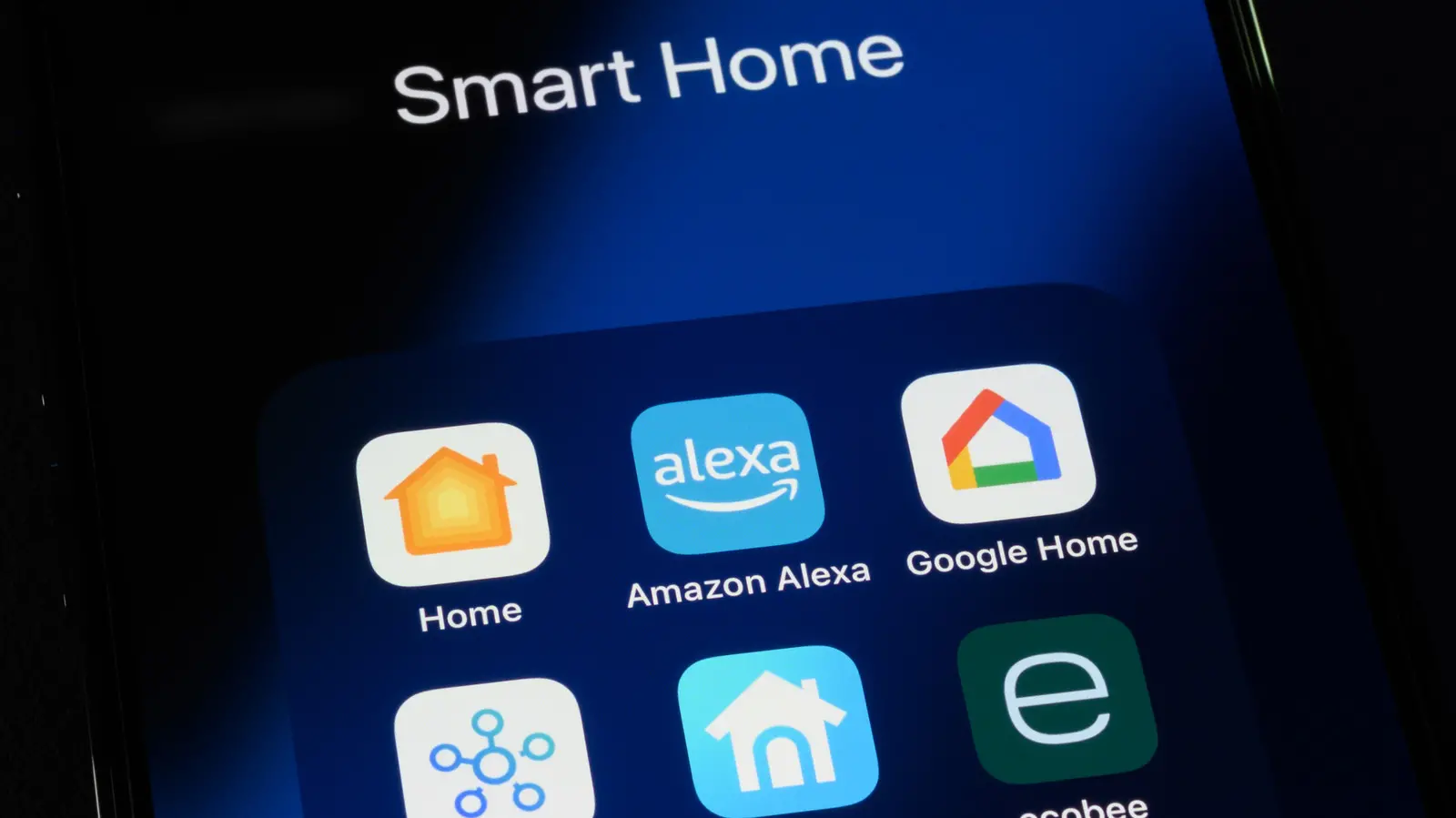
If you're seeking a smart home platform through which you can conveniently control all your home's smart devices, Google Home might be a tempting option. Google is an established and reputable brand, and it makes sense to assume its smart home platform will offer the same degree of reliability and consistent performance as other Google products. However, it's worth thoroughly researching your options before committing to a platform, as users have identified several issues with Google Home that suggest it might not be ideal for everyone.
Be aware that smart home automation generally offers several major benefits. With the right smart home setup, you can save time and boost comfort in your living space. Using a single platform to control all your devices theoretically enhances these benefits by centralizing them within one system. You just want to be confident the platform you opt for will work as intended. For various reasons, Google Home may not be as strong a choice as you assume. This article explores four specific downsides that current and former users have reported, providing insight into the potential frustrations you might encounter.
Google Home Is Becoming Increasingly Unreliable
Complaints from current and former Google Home users can provide a glimpse into the frustrations you might face if you chose this product as your smart home platform. Consider the issues users bring up when discussing the topic in popular online communities like the Google Home subreddit. Their primary complaints suggest the Google Home app performs inconsistently. For example, users state that the app may stop performing tasks it could once perform reliably. Some of these consist of relatively minor tasks, such as playing radio stations. But even minor tasks can become major annoyances when you expect a simple voice command to work and instead encounter silence or an error message.
In other cases, users state that the Google Home app might stop controlling smart home devices that it had previously been able to control. This is particularly troubling because the entire purpose of a smart home hub is to provide reliable, centralized control. If the app loses the ability to manage your lights, thermostats, or locks, you are left with the inconvenience of switching back to manual operation or juggling multiple proprietary apps. Similarly, some who've tested Google Home's reliability have found that devices that are connected to the internet and thoroughly powered up may nevertheless appear as offline in the Google Home interface. This false offline status can lead to wasted time troubleshooting devices that are actually working perfectly fine.
Even if Google Home ultimately performs a task, getting it to do so can be a chore. In the age of Google Assistant, some users complained that it could be so difficult to get the platform to recognize and respond to voice commands that they essentially determined they may have been better off just performing the tasks on their own. A smart assistant that requires repeated attempts, rewording of commands, or manual backup is not truly smart. It defeats the purpose of convenience that draws many people to smart home technology in the first place.
Google Home has been phasing out Google Assistant in favor of its AI chatbot, Gemini. This transition was intended to bring more advanced conversational abilities and contextual understanding to the platform. Unfortunately, users have found that AI tech hasn't necessarily made the product more reliable. In fact, some have argued that it has introduced new quirks and regressions. For instance, Gemini has told at least one user it can't set an alarm, despite this being a standard smart device and smart home platform feature. Alarms are among the most basic functions of any digital assistant, so a failure to handle this simple task raises serious questions about the platform's preparedness for broader smart home management.
The reliability issue is not merely a software glitch that can be fixed overnight. It reflects a broader trend in which Google is iterating quickly on its AI models while sometimes leaving core smart home functionality behind. Users who invested in Google Home-compatible devices may find themselves stuck with a platform that becomes less dependable over time, not more. For those who rely on smart scheduling, remote monitoring, or voice-activated routines, this inconsistency can be a significant drawback that undermines the entire smart home experience.
Google Home May Become Increasingly Expensive
The shift to Gemini corresponds with a greater overall emphasis on offering Google Home users AI-based features. Some might consider this a welcome development, as AI can provide more conversational interactions, smart suggestions, and automated routines based on behavior patterns. The problem is that accessing many of these features requires subscribing to Google Home Premium. While Google has offered various tiers for extra features in the past, the integration of Gemini has pushed premium subscriptions further into the spotlight.
Some argue that the features Google is asking users to pay for are too basic to justify an added cost. For example, extended automation history, more advanced routines, and higher-resolution camera footage for Nest devices may have historically been included or available at lower price points. Now, these features are increasingly gated behind monthly or annual fees. For users who have already spent significant money on smart speakers, displays, sensors, and other hardware, the prospect of paying a recurring subscription simply to unlock the full potential of those devices can feel like an unwelcome additional expense.
It's too early to tell what this means for the future of Google Home. However, it may indicate that Google is increasingly prioritizing a subscription-based model, in which users will have to regularly pay to leverage the full value and potential of the platform. This is a common strategy among tech companies: offer a base product that works reasonably well, then reserve the most useful features for paying subscribers. But smart home platforms are different from streaming services or cloud storage. Users expect a certain degree of functionality from a hub they purchase, and a paywall on essential controls can be particularly frustrating.
Keep this in mind when researching smart home automation systems. If you bristle at the idea of adding yet another subscription to your monthly or annual expenses, you may be happier with an alternative that allows you to access all the key features at one fixed price. Remember, if user complaints are to be believed, even if you're willing to pay for Google Home Premium, that doesn't necessarily guarantee the product or service you're getting will be worth what you spend on it. Some users have reported bugs even in premium features, leading to dissatisfaction and a sense that they are paying for an unfinished experience.
Additionally, as Google continues to develop Gemini and integrate it deeper into Google Home, there is a risk that more standard features will eventually migrate to the Premium tier. What is available for free today might not be tomorrow. This uncertainty makes it difficult for consumers to plan long-term budgets for smart home ownership. For those who value predictable, one-time costs, this trend is definitely a downside.
Google Home Might Not Be the Ideal Platform for Users Who Value Privacy
Another factor to account for when looking into smart home platform options is privacy policies. Depending on how much you care about protecting your sensitive data, you might determine that Google Home's policy doesn't align with your priorities. Privacy is a growing concern in the age of connected devices, and smart speakers and hubs are among the most intrusive types of technology because they are always listening for wake words and may capture audio without explicit action from the user.
Google Home's default settings store various forms of information about an individual user's activity in the My Activity section of an individual user's Google account. For example, Google Home will store voice recordings users make. This means that every time you issue a command or have a conversation that the device picks up, the audio clip may be archived and associated with your account. While Google suggests it does so with the goal of optimizing its products, it's certainly understandable if a user decides they're not comfortable with their data and activity being saved this way. Voice recordings can contain sensitive information, such as personal conversations, financial details, or private health discussions, especially in a home environment where multiple people may be present.
It's important to understand that Google does give users the option to review and delete their stored Google Home voice recordings. It would be unfair to claim that Google completely prevents users from exercising any control over how their data is stored and used. Users can go into their Google Account settings, navigate to the My Activity section, and delete individual recordings or bulk delete audio history. They can also set up automatic deletion rules that remove audio data after three months or eighteen months. These features provide some level of control, and privacy-conscious users can take advantage of them to minimize lingering data.
Regardless, you might not want to have to manually delete every sensitive recording Google Home has automatically saved when you could instead find a platform that doesn't harvest your data to the same extent. The inconvenience of constant deletion is compounded by the fact that Google Home integrates deeply with other Google services, linking your smart home activity to your search history, location history, and overall Google profile. This creates a comprehensive data profile that some users find unsettling. Even if you enable deletion features, you have to trust that Google fully purges the data from its servers and that no other data sharing occurs with third-party partners.
Furthermore, Google's privacy policy has changed over time, and the introduction of AI features may involve even more data processing. Voice commands may be analyzed by AI models to improve natural language understanding, and these analyses could involve human reviewers or automated systems that further process your recordings. While Google claims to anonymize data, there have been notable instances in the past where voice recording leaks have occurred with various tech companies, leading to public outcry. For individuals who place a high premium on privacy, these uncertain factors can be enough to steer them away from Google Home altogether.
Regional Limitations and Compatibility Issues May Limit Google Home's Value to Some Users
None of this is meant to suggest that no one should use Google Home. Rather, it's meant to demonstrate how there is no one smart home automation platform that's universally right for every user. Again, exploring your options can help you find the system that matches your goals, needs, and preferences. A platform that works perfectly for one person may be a poor fit for another due to regional differences, device ecosystem choices, or personal values.
For example, Google Home isn't compatible with all smart home products and apps. While the platform supports Google Nest devices, Chromecast, and a wide range of third-party products from brands like Philips Hue, TP-Link, Lutron, and others, there are still gaps. Some devices use proprietary protocols or have chosen not to integrate with Google Home. Additionally, newer smart home standards like Matter have been adopted by Google, but not every legacy device supports Matter. If you wish to use apps or products Google Home doesn't support, you'll have to look elsewhere to find the right platform. This can be particularly challenging if you have invested in devices from a brand that is not supported or if you rely on a niche smart home product that lacks Google Home compatibility.
Luckily, Google does provide information about the devices Google Home is compatible with. The Google Home Help Center includes a list of partner devices and services, which can be useful when planning a smart home setup. However, this list is not always exhaustive, and compatibility can change with software updates. A device that works today might lose functionality tomorrow if Google updates its platform or the device manufacturer discontinues support. This dynamic environment means that users need to continuously monitor compatibility to avoid surprises.
In addition, while U.S.-based users can typically access all the features Google Home offers, outside the country, that's not always the case. In some regions, while users may access the same services as American Google Home users, those services may not offer all the same features. For example, certain Google Assistant commands, streaming services, or smart home integrations that are available in the United States may be disabled or unavailable in other countries due to licensing agreements or local regulations. This can be frustrating for users who see demos online and assume that their devices will be able to do the same things.
Additionally, some services may be unavailable altogether. Google Home's capabilities can vary significantly from country to country. Language support is another issue: Google Home supports multiple languages, but voice recognition accuracy may vary, and some languages have fewer features or third-party integrations. If you're not based in the U.S., research how this particular disadvantage may or may not apply to your region before deciding Google Home is the platform for you. Checking Google's official support pages and community forums for your specific country can give you a better idea of what to expect.
For international users, the regional limitations go beyond just features. Product availability itself can be a barrier. Some Google Home-compatible hardware is only sold in certain markets, and warranty or customer support can be harder to access in other countries. This can lead to longer resolution times for technical issues and fewer options for device replacement. Moreover, power plugs, voltage standards, and building infrastructure differ by region, which can further complicate the setup of certain smart devices.
Even in regions where Google Home is fully supported, compatibility issues can arise with certain internet service providers or routers. Since smart home devices rely on a stable Wi-Fi network, network configuration can impact performance. Google Home requires a compatible router and may have issues with certain mesh networks or routers that use strict firewall settings. Advanced networking setups, such as VLANs or guest networks, can also prevent devices from being discovered or controlled. Users who are not tech-savvy may find these networking challenges even more daunting than the lack of device compatibility.
All that said, even the right platform won't make a big difference on your smart home experience if you don't have the right products. That's why, just as it's important to research smart home platforms, it's also helpful to research smart home devices. With the right system and products, your smart home can genuinely deliver the convenience you want and expect. For those who are willing to accept Google Home's limitations or who live in a region and have a device ecosystem that aligns well with Google, it can still be a viable option. But for many users, the combination of reliability concerns, escalating subscription costs, privacy trade-offs, and compatibility restrictions makes it worthwhile to compare competitor platforms such as Amazon Alexa, Apple HomeKit, and Samsung SmartThings before making a final decision.
Source:SlashGear News