

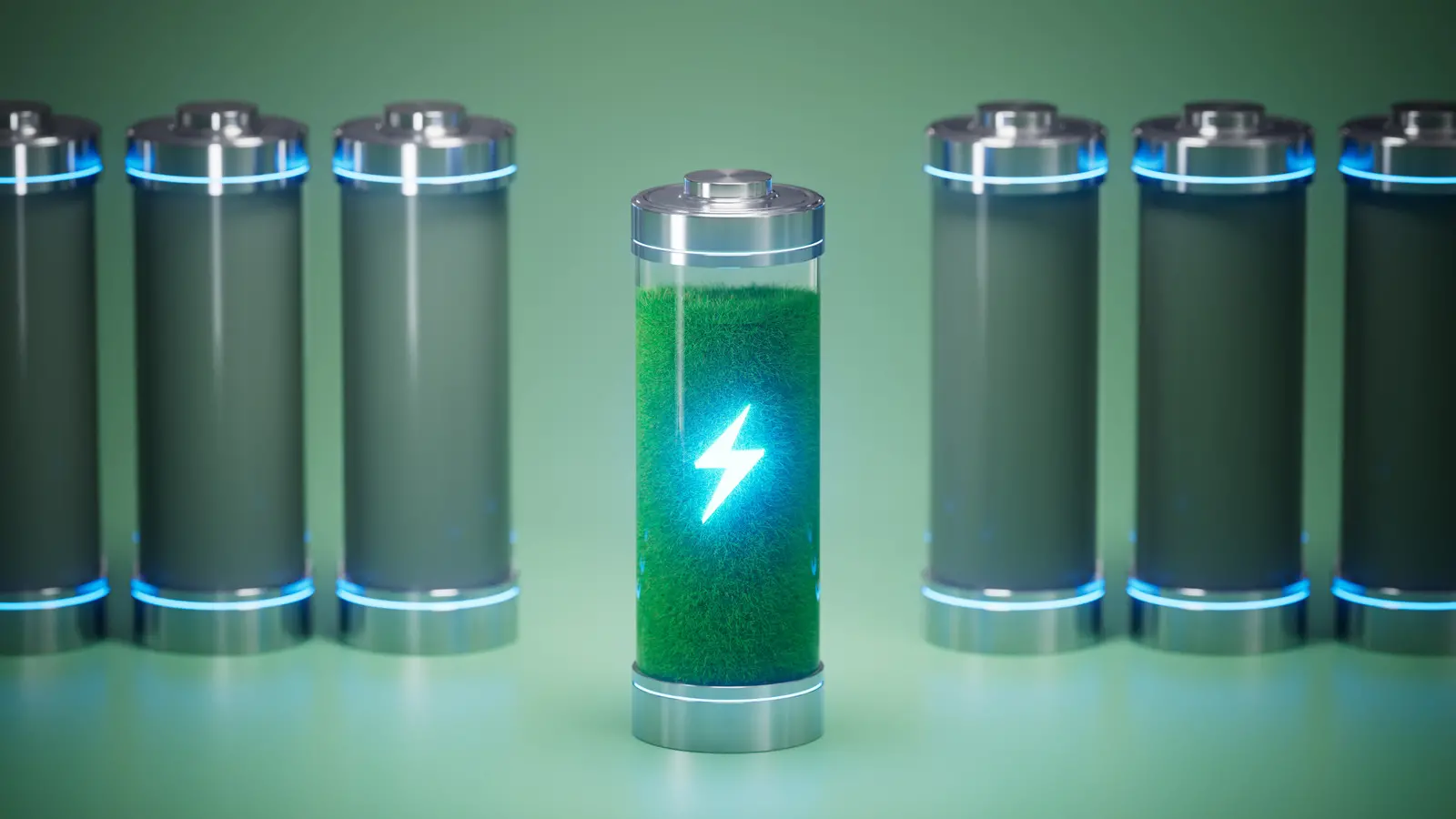
While everyone's eyes are on the AI race, another equally fierce and competitive race is unfolding: the race for new battery technology. Most people are aware that the lithium-ion batteries powering modern devices—from smartphones to electric vehicles (EVs)—have significant limitations. We need energy-dense batteries that do not lose potency after a few years and do not pose a fire risk. In the quest for a lithium-ion replacement, scientists and companies have pioneered a variety of alternatives. Some could become mainstream, depending on how development progresses.
Whenever news breaks about a new battery technology, it often seems far from mass production. Yet some recent innovations have already reached the market, though they have not completely replaced lithium-ion. This article takes a broad view of the most exciting battery technologies—new chemistries, evolving manufacturing processes, and recent breakthroughs—that, if successful, could make the years from 2030 onward a golden age for rechargeable devices.
Solid-state batteries
Solid-state batteries (SSBs) are often hailed as the holy grail of battery tech. They replace liquid electrolytes with solid ones, offering higher energy density, faster charging, greater longevity, and improved safety due to reduced risk of thermal runaway. However, SSBs have faced persistent challenges: dendrite formation in the solid electrolyte can cause short circuits, and manufacturing costs remain high. Companies like Factorial and Stellantis have begun real-world testing in road vehicles, and China's Changan targets a Q3 2026 rollout of solid-state EVs. At CES 2026, solid-state-powered devices were showcased, indicating that SSBs are edging closer to commercial reality. When they arrive, they will likely transform everything from smartphones to electric cars.
Silicon-carbon
Silicon-carbon batteries are lithium-ion batteries with a silicon anode instead of graphite. They offer significantly higher capacity, enabling two-day battery life, but at the cost of reduced longevity and higher expense. These batteries are already common in many Chinese smartphones, giving them a battery advantage over U.S. brands. Major manufacturers like Apple and Google are hesitant due to the technology's immaturity and potential risks. Nevertheless, Chinese brands are iterating to improve safety and lifespan. Silicon-carbon could serve as a stepping stone between lithium-ion and more advanced batteries like solid-state.
Beta-voltaics
Nuclear batteries, or beta-voltaics, use radioactive isotopes to generate electricity by capturing beta particles with a semiconductor. They can last up to 50 years and are incredibly small, making them ideal for low-power devices that should not require frequent battery swaps. They are safe for human use and environmentally friendly, as demonstrated by their former use in pacemakers. However, they produce only tiny amounts of power, so they will not appear in smartphones. Recently, SpaceX has incorporated beta-voltaics into some satellites, showing their potential for long-term space applications.
AI battery management
Artificial intelligence is improving battery management systems (BMS). Smartphones already use adaptive battery modes to optimize usage, and EVs can leverage AI to better estimate charge state, battery health, and prevent thermal runaway. Tesla has implemented AI-aided BMS, and further advancements could significantly extend battery life and safety across devices. As AI algorithms become more sophisticated, they will help squeeze every drop of performance from existing and future battery chemistries.
New recycling techniques
Lithium is a critical mineral with supply chain vulnerabilities and environmental costs. Efficient recycling is essential to reduce dependence on mining and minimize waste. Techniques like hydrometallurgy can recover up to 93% of lithium and 99% of cobalt from spent batteries. However, recycling remains challenging because batteries are not designed for easy disassembly. Researchers are working to make the process more scalable and economically viable, which would help manage the growing number of retired lithium-ion batteries until solid-state alternatives become widespread.
Dry electrodes
Manufacturing electrodes is a major cost in battery production. The dry electrode process eliminates solvents, reducing cost, energy use, and environmental harm while potentially increasing energy density and temperature tolerance. Tesla uses dry electrodes in its 4680 battery cells. If this method can be scaled and applied to various cathode and anode materials, it could make lithium-ion and solid-state batteries cheaper and more efficient.
Glass batteries
Pioneered by the late John B. Goodenough, glass batteries are a solid-state design using a doped glass electrolyte. They promise high energy density, fast charging, and low cost from abundant materials. However, the concept has faced significant criticism, with some physicists arguing it violates fundamental principles. Since the initial announcement around 2017, there has been little public progress, though patents have been filed and collaboration with Hydro-Québec continues. A working prototype would revolutionize the industry, but many are skeptical until concrete demonstrations emerge.
Sodium-ion
Sodium-ion batteries offer an alternative to lithium-ion using abundant sodium. They have lower energy density, greater expansion, and shorter cycle life but are cheaper, safer (less prone to thermal runaway), and perform better in cold temperatures. Sodium-ion is already on the market and could serve as a bridge until solid-state batteries mature, especially for grid storage and applications where cost and safety are paramount. Recent studies suggest that energy density improvements may be on the horizon.
Lithium-sulfur
Lithium-sulfur batteries use a sulfur cathode to achieve very high energy density—potentially 2,600 Wh/kg compared to lithium-ion's 250 Wh/kg. Sulfur is abundant and inexpensive, and the batteries can charge faster and weigh less. Their main drawback is shorter cycle life. Researchers have made advances that could make lithium-sulfur commercially viable, and the technology could allow for flexible form factors in devices. If mass-produced, they could dramatically extend the range of EVs and the runtime of portable electronics.
Lithium-air
Lithium-air batteries operate by oxidizing lithium with oxygen from the air, offering theoretical energy densities up to ten times that of lithium-ion—comparable to gasoline. This could eliminate range anxiety for EVs. After years of challenges, including achieving room-temperature operation, progress has been made. Reports suggest lithium-air batteries may debut in the Chinese EV market soon. If successful, they could be a game-changer for transportation, though past promises have often been delayed.
Iron-air
Iron-air batteries leverage the oxidation (rusting) of iron to release electricity. They have low energy density but are very safe, cheap, and have long lifespans, making them ideal for grid-scale energy storage. The Netherlands has already integrated iron-air storage into its grid, and California is following suit. These batteries can store excess renewable energy for days, providing a stable baseline for electricity networks. They are not intended for consumer devices but are crucial for a sustainable energy future.
Structural batteries
Structural batteries combine energy storage with load-bearing functionality. Carbon fiber composites can serve as both battery and structural component, reducing overall weight. Tesla's structural battery pack is an early example, and drones have been tested with structural parts. Challenges include replacement at end of life and crash safety. However, the concept could revolutionize EVs, aircraft, and ships by integrating batteries into the chassis itself, improving efficiency and range. Research at institutions like Chalmers University continues to advance this promising idea.
Source:SlashGear News