

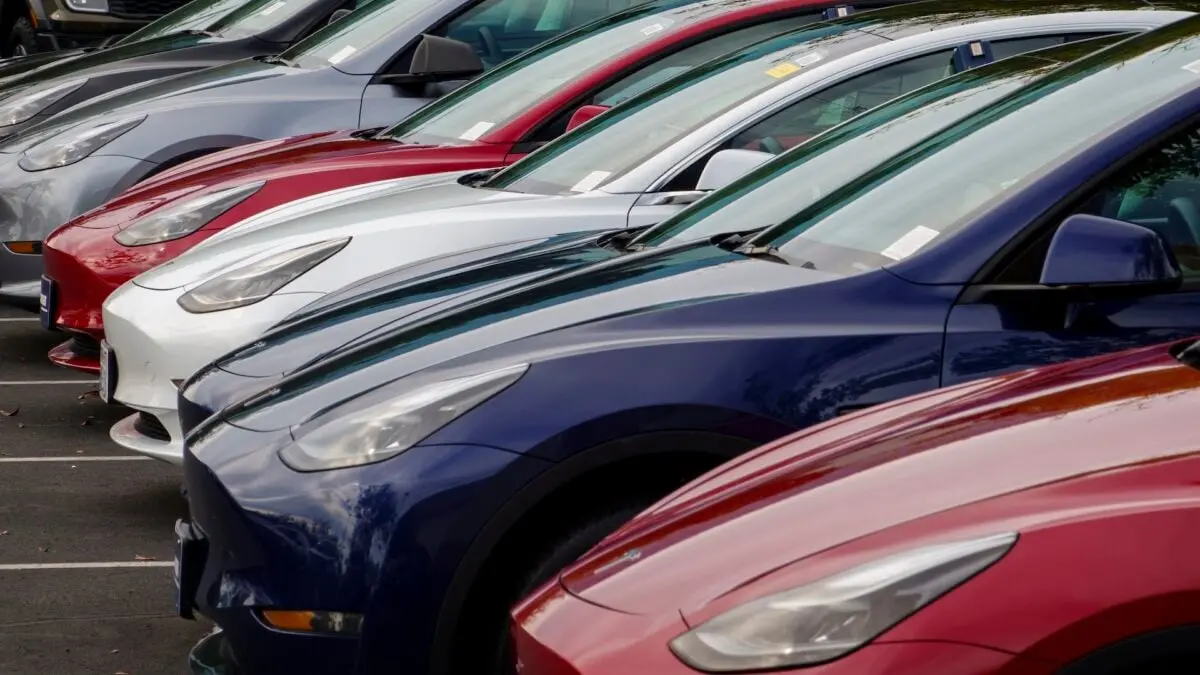
Tesla's fortunes in Europe appear to be reversing after a tumultuous 2025, when sales plummeted amid political backlash against CEO Elon Musk's controversial actions. Registrations soared 57% in the first five months of 2026 compared to the same period last year, according to data from the European Automobile Manufacturers' Association. The rebound has prompted Tesla to announce plans to hire 1,000 additional workers at its Gigafactory near Berlin and boost production to 7,500 vehicles per week by October, as reported by Electrek. This follows a previous hiring round of 1,000 workers earlier this year, when the company targeted 6,000 vehicles per week by June.
The German factory, which opened in 2022 with a target capacity of 500,000 vehicles per year, is now on track to produce roughly 390,000 units annually. While still below its original goal, the expansion signals confidence that European buyers are returning despite the political headwinds. Tesla declined to comment on the latest developments.
The 2025 Collapse and Its Causes
Last year, Tesla's European sales took a nosedive as Musk's hardcore conservative politics, direct involvement in the Department of Government Efficiency (DOGE), and personal ties to President Donald Trump alienated many customers. Trump's threats to annex Greenland and imposition of tariffs on European goods further soured transatlantic relations. Meanwhile, Musk actively promoted far-right and anti-immigrant movements, including Germany's AfD party, and faced accusations of inciting violence following posts related to anti-immigrant demonstrations in Belfast.
The backlash was severe. European consumers, already wary of American tech dominance, began boycotting Tesla en masse. Sales figures for 2025 reflected a steep drop, with some analysts questioning whether the brand could recover in a market increasingly skeptical of Musk's persona.
Drivers of the Rebound
Several factors explain the turnaround. Rising fuel costs across Europe have made electric vehicles (EVs) more attractive, and Germany introduced new government incentives for zero-emission vehicles. These financial carrots have helped offset consumer reluctance linked to Musk's politics. Additionally, Tesla's competitive pricing and expanding Supercharger network continue to appeal to practical buyers.
Yet the rebound comes at an awkward time for European leaders, who have spent much of 2026 talking about the need to reduce dependence on U.S. technology companies. French President Emmanuel Macron declared at the Munich Security Conference in February: “In this new geopolitical environment, Europe has to become a geopolitical power. It's ongoing, but we have to accelerate and clearly deliver all the components of a geopolitical power, in defence, in technology, and in the derisking vis-à-vis all the big powers in order to be much more independent.”
France has already taken concrete steps, such as ditching American video conferencing platforms like Microsoft Teams and Zoom in favor of the French alternative Visio. The French armed forces also signed a deal to use Mistral's AI models and software. In June, the European Commission unveiled a “tech sovereignty package” aimed at strengthening the bloc's digital autonomy, focusing on semiconductors, AI, cloud computing, and open-source software. The Commission also announced that Amazon Web Services and Microsoft Azure should be regulated as “gatekeepers” under the Digital Markets Act, the EU's sweeping antitrust law for large digital platforms.
The EV Sector: A Missed Opportunity for European Autonomy
Electric vehicles represent one of the easiest sectors for Europe to break its dependence on American tech. Unlike cloud computing or social media, Europe boasts several homegrown automakers with strong EV offerings: Volkswagen's ID series, BMW's i models, and Stellantis's Peugeot and Opel EVs. Chinese manufacturers like BYD are also gaining ground with innovations in driving range and charging speed, offering European consumers ample alternatives to Tesla.
Yet the latest sales data suggests that many European buyers are returning to Tesla, undermining the narrative of technological sovereignty. This has led to criticism that Europe is surrendering its easiest front in the war on American Big Tech. While governments push for digital independence, consumers continue to vote with their wallets—and for now, they are choosing a brand led by a polarizing figure who openly challenges European values.
The contradiction is not lost on industry observers. “If Europe can't compete in a sector where it already has strong domestic players, what hope is there for cloud or AI?” asked one analyst, speaking on condition of anonymity. The question resonates particularly in Germany, where Tesla's factory faces ongoing labor disputes and environmental protests, yet the government still depends on the automaker for jobs and green transition goals.
Broader Implications for American Big Tech
Tesla's resurgence is a microcosm of a larger challenge for European regulators. Despite aggressive rhetoric about tech sovereignty, American companies continue to dominate key markets. Apple's iPhone maintains a strong foothold, Google's Android powers the majority of smartphones, and American social media platforms like Facebook and X (formerly Twitter) remain widely used. Even in cloud computing, where Europe has tried to promote local providers like OVHcloud and Gaia-X, AWS and Azure still command over 70% of the market.
The EU's Digital Markets Act has forced changes—Apple now allows alternative app stores, and Google faces restrictions on self-preferencing—but these regulatory tweaks have not yet shifted consumer behavior. Similarly, Tesla's comeback suggests that brand loyalty and product appeal can outweigh political considerations, especially when incentives and fuel costs align.
For now, Tesla seems confident that European customers will continue returning to its showrooms. The company's production ramp-up in Germany is a bet that the 2025 boycott was a temporary blip, not a structural shift. Whether that bet pays off will depend on how long European leaders can sustain their push for technological independence in the face of persistent consumer demand.
As the EU unveils its tech sovereignty package, the contrast is stark: European governments are investing billions in homegrown alternatives, yet their citizens are flocking to the very companies they seek to reduce dependence on. The tension between policy ambition and market reality is unlikely to resolve soon, and Tesla's European renaissance is the most visible symbol of that struggle.
Source:Gizmodo News