

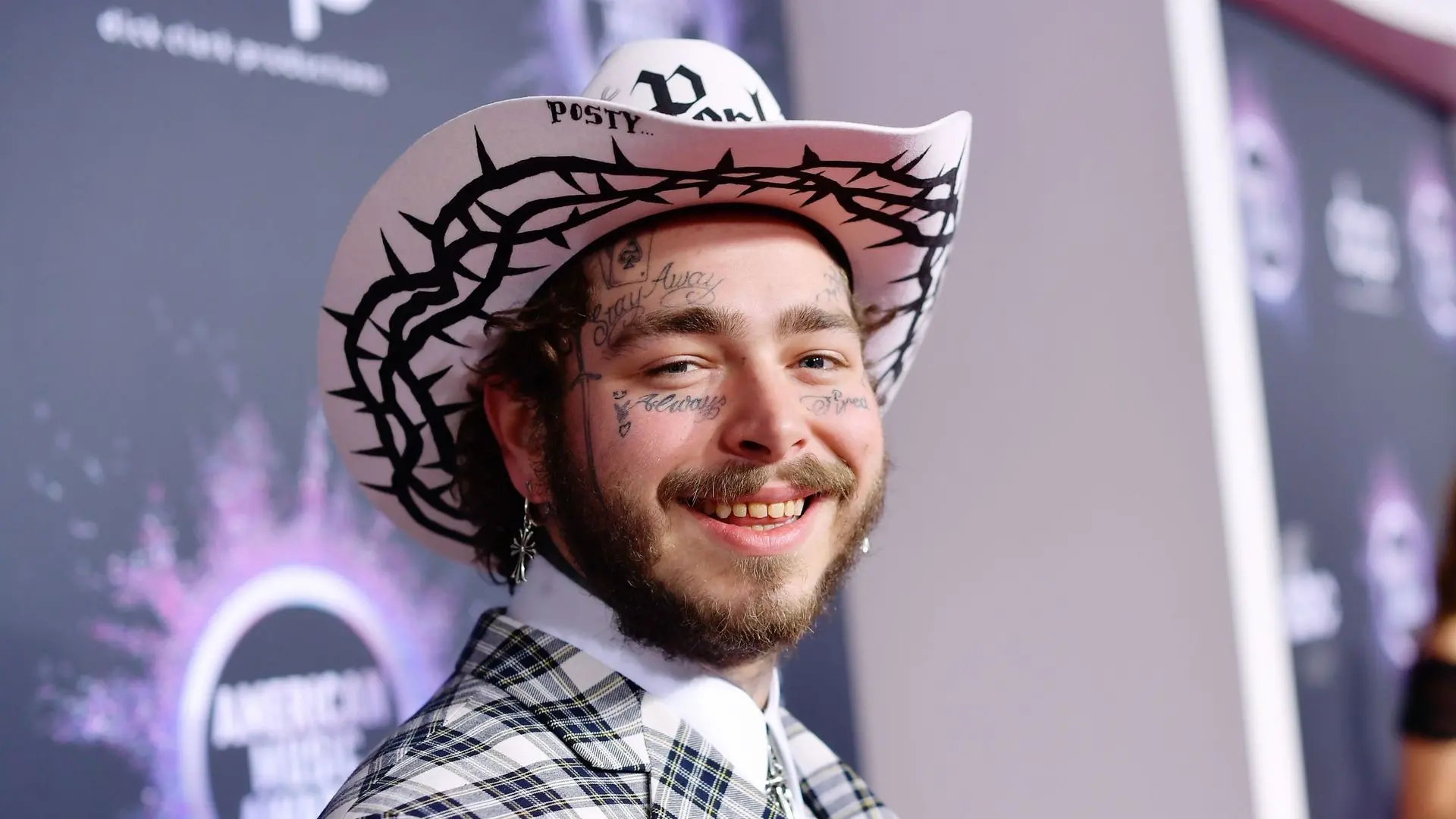
The 2026 FIFA World Cup final is shaping up to be more than just a football match. With a sprawling pre-match concert, a halftime show modeled on the Super Bowl, and the addition of Post Malone to an already star-heavy lineup, organizers are pulling out all the stops for the showcase game at MetLife Stadium in New York/New Jersey.
Post Malone, the 31-year-old artist born in Syracuse, New York, will open the closing ceremony with a full set 90 minutes before kickoff, local time. That places his performance at 1:30 p.m. ET. He arrives at the event in the middle of his “The Big Ass World Tour,” which includes Don Toliver as a supporting act. For the football world, his presence adds another layer of crossover appeal to a final that already promises to be a global cultural event.
A program already packed
Earlier announcements revealed a long list of celebrities involved in the final festivities. Robbie Williams is expected to appear, as is Tom Cruise, the Hollywood actor known for his love of spectacular stunts. Online sensation IShowSpeed, a wildly popular streamer and YouTuber, has also been mentioned as part of the evening’s entertainment. The list points to an ambition to fuse football with mainstream pop culture in a way rarely attempted at a World Cup.
The halftime show will be the centerpiece of the celebration. According to rumors, the interval will include a giant performance with Justin Bieber and Madonna, among others. One report described a production comparable to the Super Bowl halftime show, with a stage built into the pitch and dozens of dancers. The spectacle is being designed to capture the attention of a worldwide audience that for one afternoon will be tuned into the final, whether they are football fans or simply there for the show.
Halftime debate
That level of production has raised a question that football purists do not want to ignore. A traditional World Cup halftime lasts exactly 15 minutes. If the show requires a longer interval, it would break with the sport’s established rhythm and could create issues for the players’ physical preparation. Coaches often use the break to give tactical instructions, adjust formations, and manage injuries. Extending the interval could also interrupt the mental flow of a match, especially one as high-stakes as a World Cup final.
FIFA and the three host countries — the United States, Canada and Mexico — have been reported to be in talks about a longer halftime for the final. Supporters of the idea argue that the exposure generated by a massive halftime show is worth the extra minutes. Detractors insist that the sport’s integrity must come first. The debate is reminiscent of what happens every year around the Super Bowl, where the halftime break is significantly longer than in a regular National Football League game. But in football, the rules are more rigid, and any exception for a final would set a precedent.
The situation is made even more delicate by the fact that the players themselves have not been consulted publicly. Some former professionals have already spoken out, saying that a longer break could cool down muscles and increase the risk of injury. Others point out that television broadcasters are already used to extended halftime shows for major finals in other sports. With billions of viewers expected, the pressure to deliver on the entertainment side is immense.
Post Malone: from Syracuse to the global stage
Post Malone’s inclusion is the most recent twist in an already eventful build-up. Born Austin Richard Post in 1995, he grew up in Syracuse before moving to Texas as a teenager. He first gained recognition with the single “White Iverson” in 2015, a track that showcased his talent for blending hip-hop, rock and pop into a commercial sound that would define a generation of streaming-era music.
His debut album, “Stoney,” went platinum and included hits like “Congratulations” and “Go Flex.” But it was his second album, “Beerbongs & Bentleys,” that turned him into a global superstar. Released in 2018, it broke streaming records and featured the chart-topping singles “Rockstar” and “Psycho.” Since then, he has released several albums, including “Hollywood’s Bleeding,” “Twelve Carat Toothache,” and “Austin.” In 2024, he surprised many by embracing country music with the album “F-1 Trillion,” which featured collaborations with some of Nashville’s biggest names.
His song “Sunflower,” recorded with Swae Lee for the soundtrack of “Spider-Man: Into the Spider-Verse,” remains one of his most recognizable hits. The track received Grammy nominations, spent weeks atop the Billboard charts, and has been streamed billions of times. It is the kind of song that instantly resonates across age groups and nationalities, which makes it an ideal addition to a World Cup celebration.
The “Big Ass World Tour” he is currently on has been described as one of the largest stadium tours of his career. With Don Toliver as a guest, the tour has been drawing enormous crowds across North America and Europe. That experience of performing in massive venues will be useful in front of a global audience at MetLife Stadium. For Post Malone, the performance will be a career highlight and a chance to connect with football fans who may not be familiar with his catalog, as well as with his dedicated fan base.
A football match at the center
In the middle of all the showbiz, there is a football match with enormous sporting significance. Spain and Argentina will meet in the final, a matchup that pits together two of the most decorated national teams in the history of the sport. Spain won the World Cup in 2010 with a generation that changed football, while Argentina lifted the trophy in 1978, 1986 and 2022. A match between them at the 2026 final would be a meeting of styles, cultures and histories.
Spain enters with a reputation for possession-based football, technical precision, and a deep pool of young talent. Argentina brings the weight of its recent World Cup victory in Qatar, a passionate fan base, and a squad that has learned how to win the most difficult matches. The final is also a personal duel between the most influential figures in the modern game: Lionel Messi, who has carried Argentina for years, and the younger generation of Spanish stars who grew up idolizing the likes of Andrés Iniesta and Xavi. This narrative will only add to the drama on the pitch, regardless of what happens before kickoff.
MetLife Stadium: a stage built for the occasion
MetLife Stadium, located in East Rutherford, New Jersey, is not a typical New York City venue, but it is widely considered part of the greater New York metropolitan area. The stadium opened in 2010 and has a seating capacity of more than 82,000, making it one of the largest venues in the NFL. It has hosted numerous major events, including concerts, international football matches, and Super Bowl XLVIII in 2014. For the 2026 World Cup, it was chosen as the site of the final, beating out other iconic stadiums in Dallas, Miami and Los Angeles.
The choice of MetLife Stadium reflects a desire to stage the final in the country’s most important media market. New York remains the world’s largest television market, and the surrounding region is home to a diverse international population. For FIFA and the broadcast partners, a final in the New York area guarantees maximum visibility, and the surrounding infrastructure, including hotels, airports and entertainment venues, is well suited to accommodating the massive influx of fans, journalists and tourists.
Hosting the final is also a symbolic moment for football in the United States. While the NFL remains the dominant sport, soccer has grown significantly in popularity over the past two decades. The 2026 World Cup, with matches across the United States, Canada and Mexico, was seen as an opportunity to capitalize on that momentum. The final at MetLife Stadium will be the culmination of that effort, and the entertainment program has been designed to showcase the United States’ ability to stage global events.
Looking toward 2030
The final at MetLife Stadium will also mark the end of a tournament that has stretched across three countries and multiple time zones. This will be the first World Cup to feature 48 teams, up from 32, and it will be one of the most logistically complex editions in history. Matches will be played in cities as far apart as Vancouver, Mexico City, Toronto, Miami, Dallas and Los Angeles, creating a unique atmosphere of a continental football festival.
When the final whistle blows in New Jersey, the attention will immediately shift to the 2030 World Cup, which will be co-hosted by Spain, Portugal and Morocco. This will be another historic tournament, as it will mark a century since the first World Cup was played in Uruguay. That edition will begin in South America — with matches in Argentina, Uruguay and Paraguay to commemorate the centenary — before moving to the Iberian Peninsula and North Africa for the rest of the competition.
The handover ceremony at MetLife Stadium is expected to include a symbolic passing of the torch, and the presence of Post Malone and the other entertainers ensures that this moment will be seen by billions of people around the world. For the players on the pitch, however, the focus will be on winning the most coveted trophy in sport. The pre-match concert and the halftime show will fade quickly; the result of the match will be remembered for decades.
Source:RTBF News