

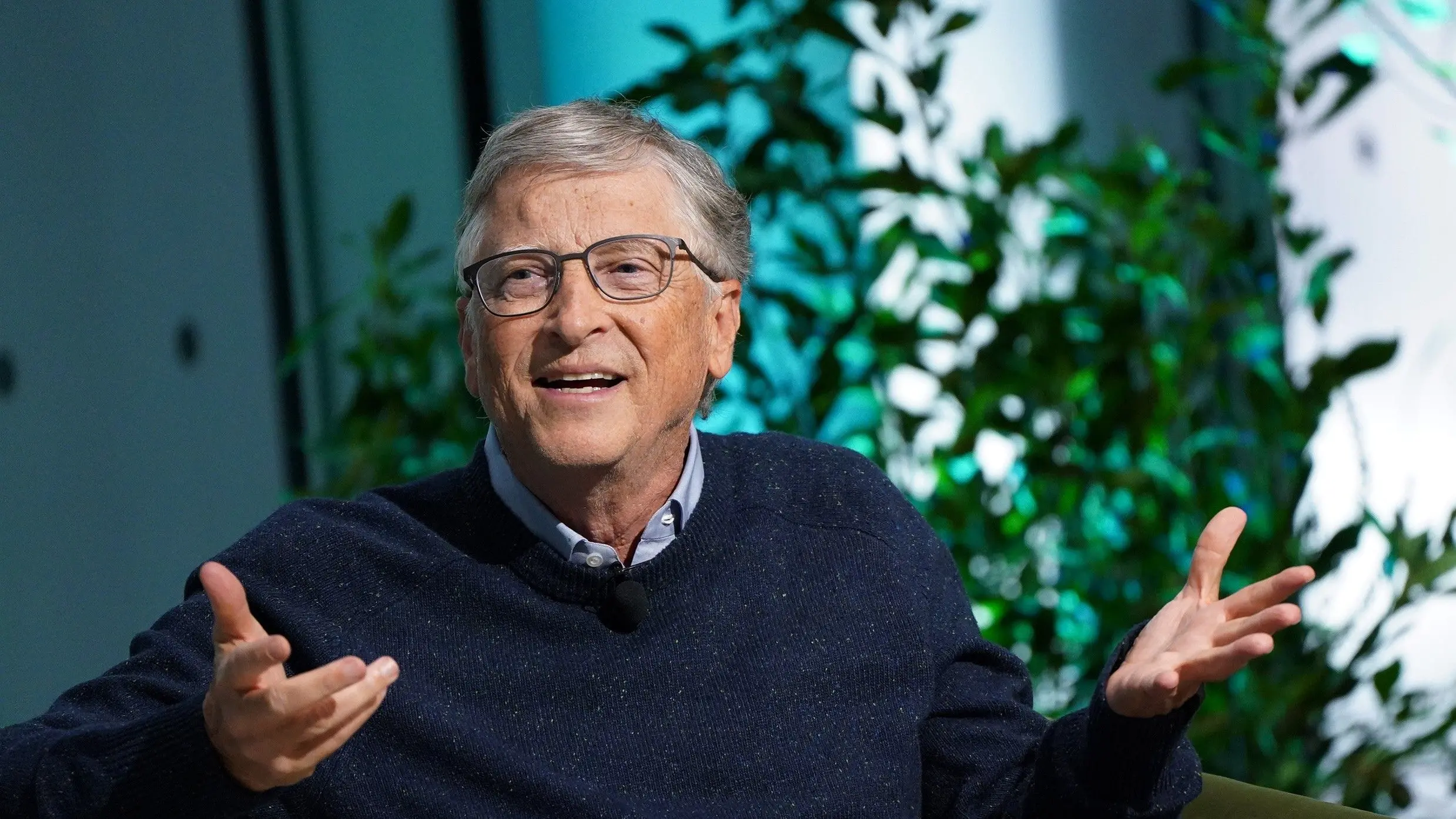
In a recent interview, Microsoft co-founder Bill Gates shared his perspective on the future of artificial intelligence and its impact on the workforce. While acknowledging that AI will indeed replace a significant number of jobs, Gates made a striking exception: professional sports. According to Gates, no audience will ever want to watch computers play against each other, no matter how advanced AI becomes. This bold statement has sparked discussions about the boundaries of automation and the enduring value of human competition.
The context of Gates' comments
Gates made these remarks during a conversation about AI’s rapid advancement and its potential to disrupt white-collar and blue-collar jobs alike. He noted that many routine tasks, from data entry to customer service, will likely be automated in the coming decades. However, he drew a firm line at entertainment that relies on human physicality, emotion, and unpredictability. 'People want to see the drama of a human athlete pushing their limits, the sweat, the tears, the unexpected moments that no algorithm can script,' Gates said.
Why sports are immune to AI replacement
The reasoning behind Gates’ claim rests on the fundamental nature of sports as a human spectacle. Unlike chess or video games, where AI can already outperform human champions, traditional sports require physical human action. The thrill comes from witnessing the limits of the human body and the psychological battles between competitors. An AI-driven robot might be able to run faster or jump higher, but the narrative of human struggle and achievement would be lost. Fans identify with athletes who overcome adversity, not with perfectly optimized machines.
Moreover, the element of risk is integral to sports. Humans can get injured, make errors, and experience emotions that affect their performance. These variables create suspense and engagement. A computer athlete would be predictable and lack the spontaneous storytelling that makes sports compelling. Even in esports, where humans play digital games, the attraction lies in human skill and strategy, not the AI behind the game.
Historical perspective on automation and entertainment
Gates’ view aligns with historical patterns where technology enhanced rather than replaced human performance in entertainment. For example, the invention of photography did not eliminate painting; it pushed artists into new realms. Similarly, AI will likely become a tool for coaches, trainers, and analysts to improve athlete performance, but it won't replace the athlete on the field. The relationship between humans and machines in sports is collaborative, not substitutive.
The rise of AI in other fields has already raised concerns about job displacement. Gates has previously warned about the need for social safety nets and retraining programs. In his book 'How to Avoid a Climate Disaster' and various public appearances, he has advocated for a carefully managed transition to an AI-driven economy. Yet, he remains optimistic that certain human-centric domains will remain untouched.
Differentiating between tasks and careers
Gates emphasized that AI will primarily replace tasks, not entire careers. Many jobs consist of multiple tasks, and AI will automate some of those, freeing humans to focus on higher-level responsibilities. But for jobs where the core product is a human performance, such as sports, entertainment, or art, the role of AI is limited. 'An AI could write a symphony that sounds like Beethoven, but it cannot feel the emotion of performing it on stage,' Gates remarked.
This distinction is crucial for understanding the future of work. While AI may become a better diagnostician than a doctor, it cannot replace the bedside manner; while it may generate legal documents, it cannot argue a case with passion. Sports fall squarely into the category of careers where the human element is non-negotiable.
The rise of AI in sports analytics
Although Gates believes AI will not replace athletes, it is already transforming the sports industry behind the scenes. Teams use AI to analyze player performance, devise strategies, and even prevent injuries. For example, in basketball, AI systems can track player movements and suggest optimal shooting positions. In soccer, AI helps scouts identify talent. However, these applications augment rather than replace human athletes. The final decision and execution remain in human hands. Gates acknowledged that AI will become an essential tool for coaches and managers, but the spotlight will stay on the athletes.
Public reaction and debate
Gates’ statement has ignited debate among technologists, sports fans, and economists. Some argue that as AI improves, virtual sports might become popular, like robot soccer or drone races. Others counter that such events would remain niche, similar to auto racing versus track and field. The core of sports is human storytelling, and that cannot be replicated by machines. Social media reactions ranged from agreement to speculation about the future of sports entertainment in a fully automated world.
A prominent sports commentator noted that even in esports, where AI can now defeat human players, the most watched competitions are between human players. 'We want to see humans make mistakes, pull off upsets, and show emotion. That's what draws millions of viewers,' he said.
Implications for the future of work
Gates’ observations have broader implications for education and career planning. As AI continues to advance, young people might focus on careers that require uniquely human skills: creativity, empathy, physical dexterity, and leadership. Jobs like professional athlete, artist, therapist, and teacher are less likely to be fully automated. However, Gates also warned that the transition will be painful for many workers, and governments must invest in safety nets and retraining.
The conversation around AI and jobs often neglects the emotional and experiential aspects of work. People do not only work for efficiency; they seek meaning, connection, and identity. Sports exemplify this. An athlete's identity is tied to their physical prowess and competitive spirit. An AI cannot share that identity.
Gates’ stance is a reminder that while AI is powerful, it has inherent limitations. The future will likely see a split between automated efficiency-driven sectors and human-centric experiential sectors. Sports will remain firmly in the latter, providing entertainment, inspiration, and a celebration of human achievement.
Source:Windows Central News