

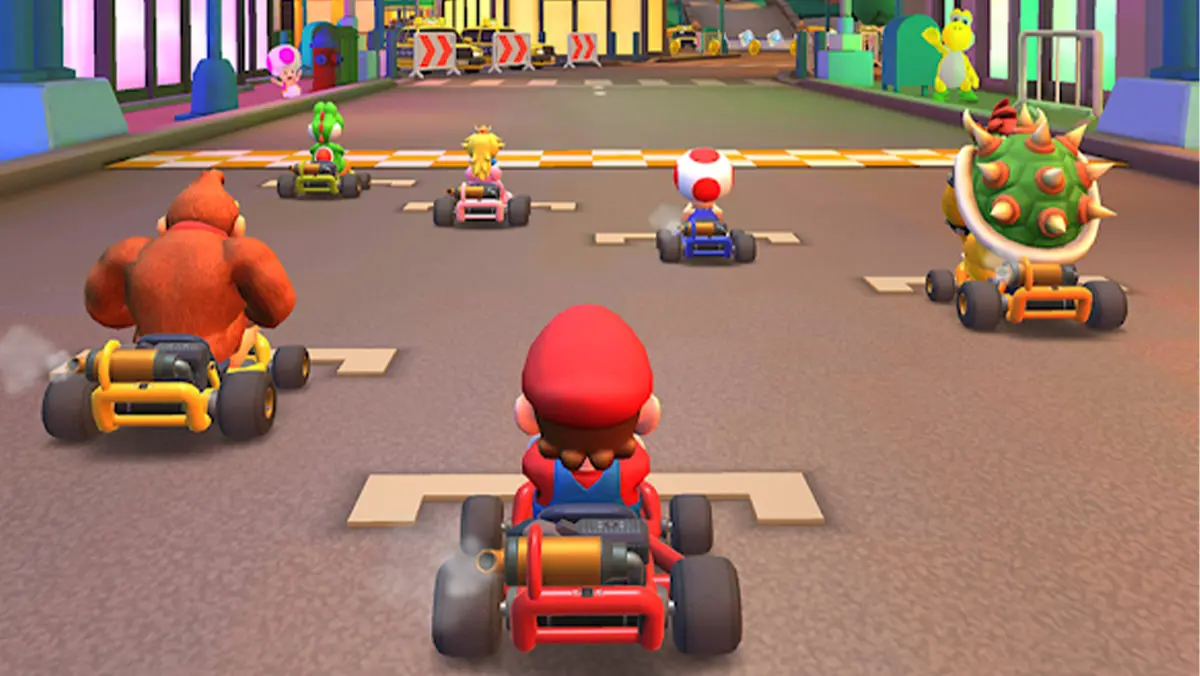
YouTube has long been a hub for creative content, from tutorials and music videos to live streams and vlogs. But in a surprising twist, two innovative creators—Atlas Arcade and Animated Subtitles—have turned the platform into a playable game console. Their latest project: a Mario Kart-like experience that runs entirely within a YouTube video. No Nintendo Switch, no emulator, no downloads required. Just a browser and a keyboard.
How Does It Work?
The magic lies in YouTube's 360-degree spherical video feature. Originally designed for immersive VR-style content, this feature allows viewers to change their perspective by dragging the video or using on-screen controls. The creators repurposed this technology to simulate steering: by moving the view left or right, your character—Mario, Luigi, Princess Peach, Toad, Yoshi, Wario, or Bowser—swerves on Rainbow Road. On desktop, you can use the A and D keys (or arrow keys) for finer control.
The video itself is a minute-long track filled with obstacles like bananas and shells, though you cannot pick up items or race against opponents. It's a stripped-down but delightful proof-of-concept that raises intriguing questions about the future of interactive video.
The Role of Subtitles
One of the most clever tricks is the use of YouTube's subtitle menu. Normally used for accessibility or translations, the creators turned it into a character selector. By picking a different subtitle track (labeled with each character's name), the video swaps the on-screen racer. This seamless integration of existing platform features demonstrates a deep understanding of YouTube's capabilities.
Background: The History of Mario Kart
Nintendo's Mario Kart series debuted in 1992 with Super Mario Kart on the Super Nintendo. It popularized the kart racing genre, blending beloved characters with whimsical tracks and power-ups. Over the years, the franchise has appeared on nearly every Nintendo console, from the Nintendo 64 (Mario Kart 64) to the Switch (Mario Kart 8 Deluxe). The series is known for its addictive gameplay, skill-based drifting mechanics, and chaotic multiplayer modes.
Rainbow Road, the track used in this YouTube experiment, is a fan-favorite staple. First appearing in Super Mario Kart, it is famous for its colorful, slippery turns and lack of guardrails, often leading to falls off the track. The nostalgia factor is strong, and the YouTube version captures the essence of that iconic stage—even if the execution is simpler.
YouTube as a Gaming Platform
This is not the first attempt to turn YouTube into a game. Previous experiments include interactive choose-your-own-adventure stories, puzzle videos where viewers click to solve mysteries, and even simple arcade games using annotations (now deprecated). However, the 360-degree video hack is particularly clever because it leverages a native feature without external plugins or frameworks.
Atlas Arcade and Animated Subtitles have a history of pushing boundaries. Atlas Arcade specializes in browser-based mini-games and interactive media, while Animated Subtitles focuses on creative subtitle usage. Their collaboration exemplifies how niche expertise can yield surprising innovations.
The Limitations and Potential
As the creators admit, this is not a replacement for the real Mario Kart. The experience is short (one minute), lacks items, and has no AI opponents. The steering is limited to left/right movement, and the track is linear. Yet the achievement is noteworthy: it proves that YouTube can serve as a rudimentary game engine.
The broader implication is that video platforms could evolve into more interactive spaces. Imagine educational videos where you choose the next lesson, or music videos where you control the camera angle. YouTube's infrastructure already supports branching based on user input (via end screens and cards), but this project directly manipulates the video itself.
Technical Deep Dive
YouTube's 360-degree video encoding uses equirectangular projection, where a spherical environment is flattened into a rectangular frame. The player then renders only the portion corresponding to the viewer's orientation. By scripting specific camera movements in response to keyboard inputs (a capability added via YouTube's JavaScript API for embedded players, or possibly through the video's own metadata), the creators simulated steering.
The subtitle trick works because YouTube allows multiple subtitle tracks to be associated with different timings or languages. By attaching character-specific video overlays or scene changes to each subtitle track, the video essentially becomes modular. This is a clever use of a feature originally intended for accessibility.
Reception and Community Reaction
Since its release, the video has garnered hundreds of thousands of views and widespread praise for its creativity. Fans have taken to social media to share their experiences, and some have even requested expansions—longer tracks, multiplayer support, or power-ups. While the creators have not announced any updates, the project has inspired other developers to experiment with interactive video.
The timing is also notable: with the anticipated release of the Nintendo Switch 2 and a new Mario Kart title, the YouTube version offers a free, accessible taste of the franchise for those who cannot afford the console. It also highlights the ongoing trend of fan-made tributes that keep classic games alive in new ways.
Broader Implications for Interactive Content
This project sits at the intersection of gaming, video, and web technology. As platforms like YouTube mature, we may see more such hybrids—especially with the rise of WebXR, WebGPU, and cloud gaming. For now, it serves as a reminder that innovation often comes from constrained environments.
The creators have published a short behind-the-scenes video explaining their process, which has further fueled interest. They emphasized that no external tools were used beyond standard video editing and YouTube's built-in features. This low-barrier approach democratizes game development, allowing anyone with video editing skills to create interactive experiences.
For those eager to try it, simply load the video on a desktop browser (mobile support is limited due to touch controls) and start steering. The experience is rough but charming—a testament to what can be accomplished with imagination and a few clever hacks.
In summary, the Mario Kart YouTube experiment is a delightful oddity that showcases the untapped potential of video platforms. It may not replace your Switch, but it offers a fun five-minute distraction and a glimpse into the future of interactive media.
Source:Android Authority News