

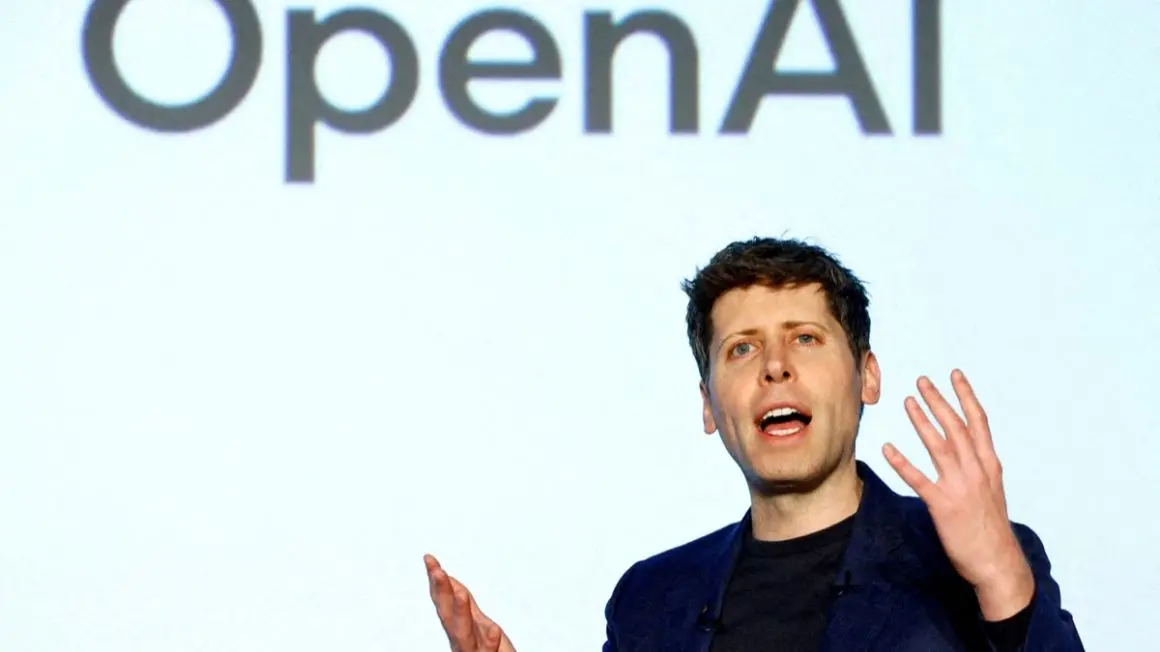
In a move that underscores the growing tension between creative expression and corporate interests, Amazon MGM Studios has abruptly canceled the production of the highly anticipated biopic Artificial, which chronicles the life of OpenAI CEO Sam Altman. The decision came just days after Amazon announced a staggering $50 billion strategic investment in OpenAI, the parent company of ChatGPT and other revolutionary AI models. The film, directed by acclaimed Italian filmmaker Luca Guadagnino, was nearly completed after months of filming and post-production work, with a reported budget of $40 million.
Guadagnino, known for his critically acclaimed works such as Call Me by Your Name and Challengers, revealed in an interview with the Italian television program Otto e mezzo that he had anticipated the cancellation as soon as the investment was made public. "I cannot really talk about it because we are still in negotiations, but these industrial policies are certainly not new," he said, expressing disappointment but not surprise. He drew a parallel to the fate of The Reagans, a CBS miniseries about former President Ronald Reagan that was canceled in 2003 after controversy over its depiction of the Reagan family. Similarly, he noted that The Apprentice, a 2024 film about Donald Trump's early years directed by Ali Abbasi, was initially rejected by major studios and distributors before being picked up by independent Briarcliff Entertainment.
The Corporate Calculus Behind the Cancellation
The decision by Amazon MGM to pull the plug on Artificial highlights the increasingly blurred lines between Hollywood studios and the tech giants that own them. Amazon's investment in OpenAI is part of a broader trend of Big Tech companies pouring billions into artificial intelligence research and infrastructure. Amazon Web Services (AWS) will now collaborate with OpenAI to develop new AI models for their engineering teams, a partnership that positions Amazon as a key player in the AI arms race alongside rivals like Microsoft and Google. In this context, a critical biopic about the central figure of OpenAI, Sam Altman, could be seen as commercially inconvenient.
Luca Guadagnino acknowledged this reality, stating that the problem is not artificial intelligence itself but the concentration of power in the hands of a few oligarchs. "For me, the problem is not artificial intelligence in itself. What matters most to me are the people. It is radically transforming the face of society — not only in terms of consumption and our relationship with these tools, but also the very identity of a country like the United States and the world — with the emergence of this small oligarchy that exercises truly radical control," he declared. His remarks reflect a growing unease among creatives about the influence of tech billionaires over cultural production.
Sam Altman: From Startup Founder to AI Visionary
To understand the significance of Artificial, it is necessary to revisit the career of Sam Altman. Born in 1985 in St. Louis, Missouri, Altman became a prominent figure in the tech world early on. He dropped out of Stanford University to work on Loopt, a location-based social networking app, which was acquired by Green Dot Corporation in 2012. He then became president of the startup accelerator Y Combinator in 2014, where he oversaw investments in companies like Airbnb, Stripe, and Dropbox. In 2015, he co-founded OpenAI as a non-profit research organization dedicated to ensuring that artificial general intelligence (AGI) benefits all of humanity. However, the organization's structure shifted dramatically over time. In 2019, OpenAI created a capped-profit entity and accepted a $1 billion investment from Microsoft. By 2023, Altman was briefly ousted as CEO by the board, only to be reinstated days later after massive employee backlash and negotiations with investors. The incident exposed deep rifts within the AI community about safety, profit motives, and governance.
Today, OpenAI is valued at over $80 billion and its technologies power hundreds of applications. Altman has become a global celebrity, testifying before Congress, meeting with world leaders, and appearing on magazine covers. His complex personality — part futurist, part salesman, part philosopher — made him a natural subject for a biopic. Guadagnino's film reportedly focused on Altman's rise, his role at the heart of the AI revolution, and the ethical dilemmas surrounding the technology.
Luca Guadagnino: A Director Drawn to Complex Figures
Guadagnino, born in Palermo and raised in Ethiopia, has built a reputation for intimate, psychologically complex films. His 2017 masterpiece Call Me by Your Name won the Academy Award for Best Adapted Screenplay and earned critical praise for its nuanced portrayal of first love. Subsequent works like Suspiria (2018), a horror reimagining, and Bones and All (2022), a cannibal romance, have cemented his status as a director of fearless ambition. Challengers, released in 2024, explored the dynamics of competitive tennis and complicated relationships. His decision to tackle the Silicon Valley titan Sam Altman surprised many, but Guadagnino explained that he is fascinated by people who wield influence over society's direction.
In interviews before the cancellation, Guadagnino described Artificial as a film that would examine not only Altman's life but also the broader implications of artificial intelligence for human relationships, labor, and creativity. He intended to include scenes depicting the chaotic boardroom coup of November 2023, when Altman was fired and then hastily rehired. The script was based on extensive interviews with former OpenAI employees, journalists, and industry insiders. The film reportedly featured a nuanced portrayal that neither heroified nor vilified Altman, but rather presented him as a visionary grappling with the immense powers he helped unleash.
The Growing Practice of Pulling Controversial Projects
The cancellation of Artificial is not an isolated incident. Hollywood has a long history of shelving projects that prove politically or economically inconvenient for parent corporations. In 2003, CBS decided not to broadcast The Reagans after conservative groups complained that it portrayed the former president as insensitive to the AIDS crisis. The miniseries was eventually purchased by Showtime. More recently, in 2024, the film The Apprentice about Donald Trump's early career struggled to find a distributor because its critical depiction of the former president clashed with the political interests of studio executives. It was ultimately released by Briarcliff Entertainment, a small independent company.
In the case of Artificial, the conflict of interest is particularly acute. Amazon, through its MGM subsidiary, owns one of the largest film and television studios in the world. Patrick Whitesell, chairman of Endeavor, noted in a recent interview that "in content, sometimes you do things that are critical of people who are your business partners. But when you're investing $50 billion in someone's company, the calculus changes." This statement captures the existential challenge that many studios face: how to maintain artistic integrity when the parent company's commercial interests are directly tied to the subject matter of a film.
Potential Path Forward: Mubi and Other Distributors
According to The Hollywood Reporter, several other distribution companies have expressed interest in picking up Artificial. The streaming service Mubi, known for its curated selection of independent and art-house films, is reportedly the most enthusiastic potential buyer. However, Netflix, A24, and Warner Bros. have all declined to participate, likely due to fear of alienating Amazon or OpenAI. Guadagnino is currently in negotiations to find a new home for the film, and insiders believe that a deal could be finalized within weeks. If Mubi acquires the rights, the film would likely premiere at a major film festival, such as Venice or Toronto, to generate buzz.
The director remains committed to finishing the project and making it available to audiences. He told Otto e mezzo that he considers Artificial his most important work to date, because it grapples with issues that will define the next century. "Art should not exist to make money for the richest people in the world. Art should exist to tell the truth, as we see it," he said. The fate of Artificial is now a symbol of the delicate balance between art, technology, and power. As AI continues to reshape industries and cultural production, stories like this will likely become more common, forcing creators, studios, and audiences to decide what kind of world they want to live in.
Meanwhile, the AI oligarchy that Guadagnino warns about is tightening its grip. Jeff Bezos, founder of Amazon, has long been interested in artificial intelligence. His company's investment in OpenAI positions it to challenge Google and Microsoft in the race to dominate AI services. Critics argue that such concentration of power undermines democratic oversight and stifles dissenting voices. In the coming years, as AI capabilities expand, the conflict between those who control the technology and those who create the stories about it is likely to intensify.
Source:CNEWS News