

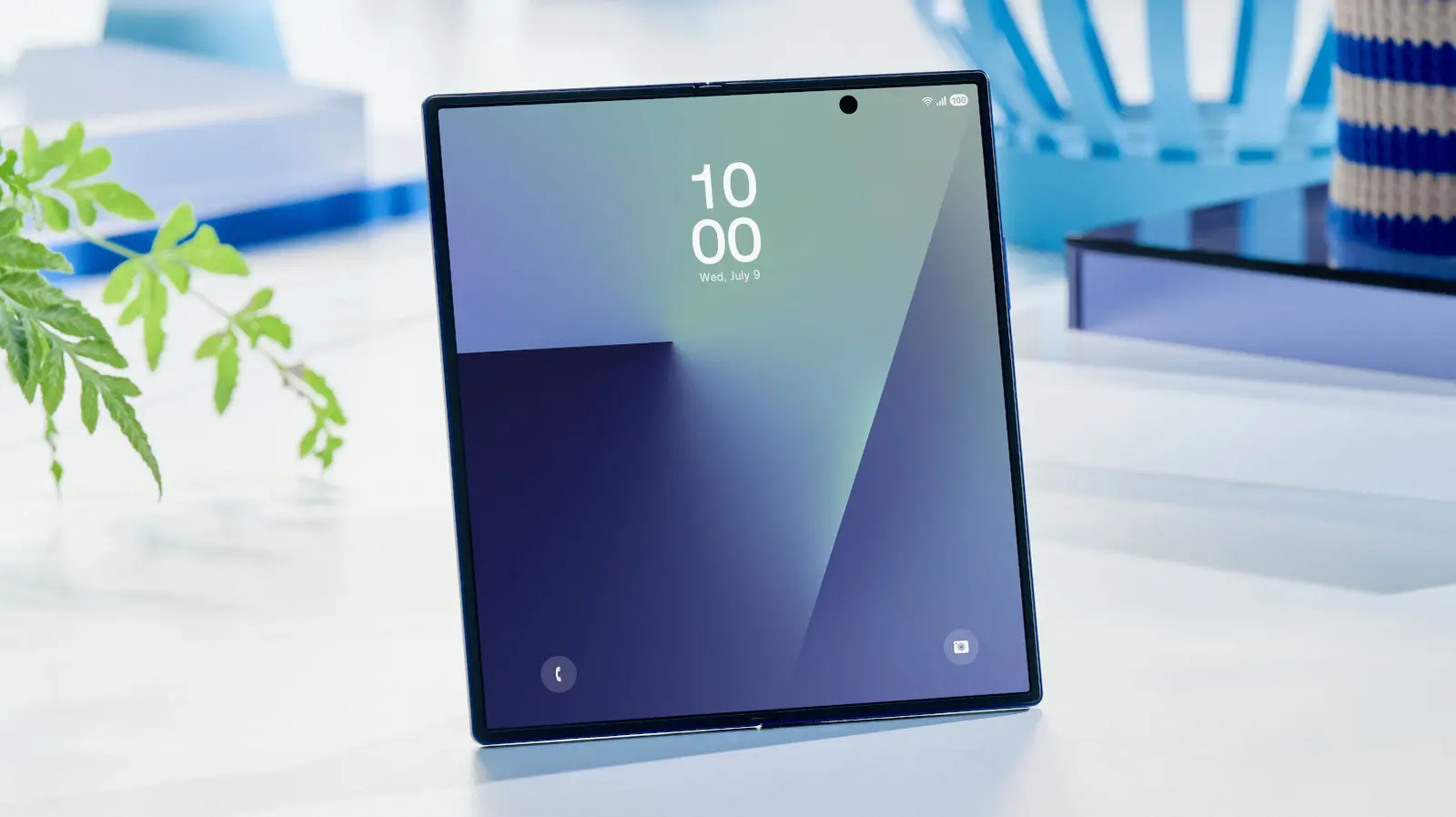
Samsung has officially introduced its latest breakthrough in foldable display technology, named Flex Titanium, which is poised to debut with the next generation of Galaxy foldable devices. This new technology promises a significant leap in durability and a notably less noticeable crease, addressing two of the most persistent criticisms of foldable phones. According to the company, the Flex Titanium display is the result of "seven generations of foldable innovation and engineering expertise," strongly suggesting it will launch with the Galaxy Z Fold 8 and Galaxy Z Flip 8 at the upcoming Unpacked event scheduled for July 22.
The new display technology incorporates two key components designed to work in tandem. First, a titanium alloy film is placed beneath the OLED panel, providing an extraordinary 20 times greater mechanical stiffness compared to previous solutions. This film serves as a protective layer that significantly reduces the risk of damage from impact or pressure during everyday use. Second, a titanium plate sits underneath the alloy film, offering stable support when the device is unfolded while retaining the flexibility needed to withstand repeated folding cycles. The titanium plate incorporates advanced hole processing technology that eliminates air gaps between the module and its adhesive, allowing the display to bend smoothly at the hinge area without creating weak points.
Kyung-Jin Yoo, Executive Vice President of Samsung Display, explained that the "micro-patterned holes" in the folding section of the titanium plate are engineered to provide both flexibility and robust durability. This precise engineering ensures that the display can maintain its structural integrity over hundreds of thousands of folds while presenting a nearly seamless surface when opened. The micro-patterned holes are arranged in a specific pattern that distributes stress evenly across the hinge area, preventing the formation of creases that have plagued earlier foldable displays.
The announcement comes at a crucial time in the foldable smartphone market, where competition has intensified with offerings from companies like Google, Motorola, and various Chinese manufacturers. Samsung has been the dominant player since the original Galaxy Fold launched in 2019, but rivals have made significant strides in reducing crease visibility and improving durability. The Flex Titanium technology appears to be Samsung's direct response to these competitive pressures, leveraging its extensive experience across seven generations of foldable devices to reclaim the performance crown.
At CES earlier this year, attendees witnessed a demonstration of Samsung's "seamless" foldable display exhibit, which showcased a device with an virtually invisible crease at the center. The exhibit placed this new technology side by side with an older Samsung foldable, making the older model's visible crease appear messy and outdated by comparison. This demonstration gave an early glimpse of what consumers can expect from the Flex Titanium technology. Additionally, a leaked video purportedly showing the Galaxy Z Fold 8 Ultra surfaced on 9to5Google, revealing a completely smooth screen with no visible crease, further fueling anticipation for the upcoming Unpacked event.
The development of Flex Titanium represents a culmination of years of research into foldable display materials and structures. Early foldable phones relied on plastic-based displays that were prone to scratching and creasing, and protective layers often peeled off over time. Samsung gradually improved the technology by introducing ultra-thin glass (UTG) and reinforced hinge mechanisms, but the crease remained a visible flaw. The new titanium-based approach addresses the problem at a fundamental level by strengthening the substrate beneath the display, preventing the layers from separating and forming that characteristic ridge.
Beyond the crease issue, durability has been another major hurdle for foldable devices. Users have reported issues with dust ingress, screen failures at the fold line, and hinge malfunctions after months of use. The titanium alloy film and plate combination is expected to significantly improve resistance to these types of damage. Titanium is known for its exceptional strength-to-weight ratio and corrosion resistance, making it an ideal material for a component that must withstand both impact and repeated bending. By using a titanium alloy film that is 20 times stiffer than previous materials, Samsung is effectively armoring the display against the everyday stresses that can lead to premature failure.
The hole processing technology used to create micro-patterns in the titanium plate is another engineering marvel. These precise holes allow the plate to flex in the hinge region while maintaining rigidity elsewhere. The elimination of air gaps also reduces the chance of dust or debris getting trapped under the display, which can cause bubbles or cracks over time. Samsung has not disclosed the exact size or pattern of these micro-holes, but they are likely optimized through computer modeling to balance flexibility, strength, and optical clarity.
Industry analysts note that Samsung's continued investment in foldable technology is vital for the company's mobile strategy. While the broader smartphone market has stagnated, foldable devices represent a premium growth segment where Samsung can differentiate itself from competitors like Apple, which has yet to release a foldable iPhone. The Flex Titanium technology could give Samsung a significant advantage in this niche, potentially driving upgrade cycles among early adopters and tech enthusiasts who value cutting-edge design.
However, the technology is not without potential downsides. Titanium is more expensive than the materials used in current displays, which could drive up the cost of the Galaxy Z Fold 8 and Flip 8. Samsung will need to balance the enhanced durability and crease reduction against pricing that remains competitive with existing foldables and traditional flagship phones. Additionally, the new structure might impact repairability, as specialized tools and expertise could be required to replace or service the display layer.
The Unpacked event on July 22 is expected to be the stage where Samsung officially unveils the Galaxy Z Fold 8 and Galaxy Z Flip 8, alongside possibly a Galaxy Z Fold 8 Ultra model with an even larger screen. The leaked video of the Fold 8 Ultra suggested a device with a near-invisible crease, aligning perfectly with the capabilities of Flex Titanium. Samsung is also likely to highlight software optimizations that take advantage of the larger unfolded screen, such as enhanced multitasking capabilities and support for the S Pen stylus.
The launch of Flex Titanium also has implications beyond smartphones. The same display technology could eventually be adapted for larger foldable devices like tablets, laptops, or even rollable screens. Samsung has been exploring these form factors for years, and advances in foldable display durability will be critical for bringing them to mass market. For now, however, the focus remains on the upcoming foldable phones and how they will perform in real-world conditions once consumers get their hands on them.
As the industry counts down the days to Unpacked, there is a palpable sense of anticipation. The Flex Titanium technology represents a genuine step forward in solving the trade-offs that have long accompanied foldable phones. If Samsung delivers on its promises of a display that is both harder to damage and resistant to creases, it could cement foldable devices as a mainstream alternative to traditional slab phones. The next few weeks will likely reveal whether the technology lives up to its billing when it finally reaches the hands of reviewers and early adopters.
Source:Engadget News