

Joe Tsai Makes the Case for Open-Source AI
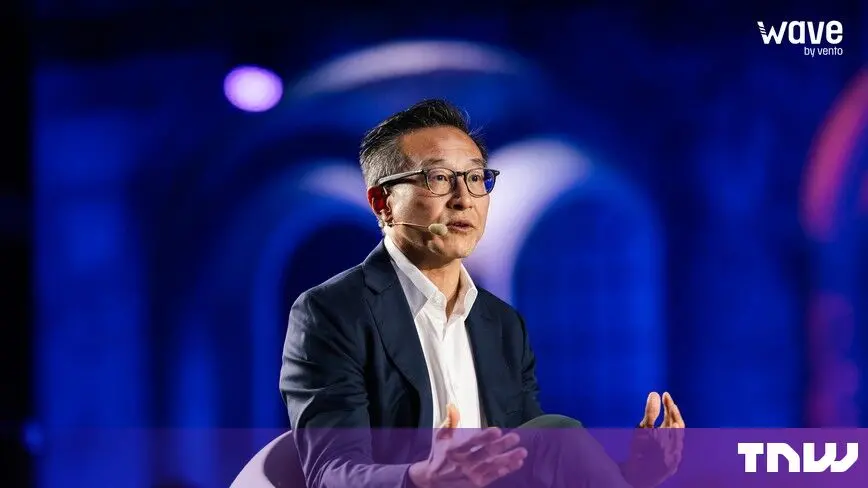
Alibaba co-founder and chairman Joe Tsai told an audience of founders and investors in Turin that open-source artificial intelligence is the only way for Europe to become independent in the technology. He argued that AI sovereignty, a phrase increasingly used by European policymakers, will remain out of reach if the continent depends on closed models controlled by companies in the United States or China. In his view, open-source AI gives Europe a practical route to build, train, and run its own systems without being locked into another country's technical stack. "Open source is the opportunity for Europe," Tsai said. "That's the approach Europe can take to truly be independent. We talk about technology independence, we talk about AI sovereignty in Europe. I think the open source approach is the only way to go."
Alibaba's Two Businesses: E-Commerce and Full-Stack AI
Tsai, who co-founded Alibaba in 1999, said the company grew very large and lost focus over its first two decades. In 2023, it narrowed its strategy to two core businesses: e-commerce and what he described as full-stack AI. That full-stack approach runs from computing infrastructure at the bottom to AI models in the middle and applications at the top. It is a vertically integrated bet that Alibaba believes can differentiate it from companies that focus on only one layer of the AI stack.
To fund that push, Tsai said Alibaba uses about $25bn a year of free cash flow generated by its e-commerce operations. The company has doubled its capital spending on computing infrastructure every year for the past three years, he added. That level of investment has put pressure on profits. In August, reports noted that Alibaba's AI spending had cut its quarterly profit by 75%. The trade-off reflects a broader reality in the AI race: building frontier systems and the data centres to support them requires enormous, sustained capital.
By Tsai's estimate, US hyperscalers together will invest around $1tn this year, a scale China does not match. He said AI is already very good at saving people time, and he placed the market for knowledge-worker productivity at about $50tn. That figure helps explain why Alibaba and other technology companies are willing to accept lower short-term profits while they build infrastructure and models that could capture a share of a much larger long-term opportunity.
Scarcity, Chip Curbs, and Chinese Innovation
The interviewer asked whether limits on China, including US restrictions on chip supplies, had pushed its companies to innovate. Tsai said they had, and compared the situation to growing up without rich parents. "If you are scraping all along, that drives you," he said. The comment captures a view common among Chinese technology leaders: constraints can force efficiency, creativity, and a focus on engineering workarounds that might not happen in more comfortable conditions.
Tsai said Chinese companies open-source their work on model design and inference efficiency, and they continue to publish papers. Closed US labs, by contrast, no longer publish in the same way, he said, because they do not want to share their advances. That divergence matters for Europe. If open-weight models from China and elsewhere are available, European companies can inspect, adapt, and deploy them locally. If the most capable models are closed and accessible only through APIs controlled by a handful of foreign companies, Europe's options narrow.
Tsai also pointed to China's industrial base as a source of strength. China accounts for about 30% of global industrial production, he said, and its factories hold valuable data for training models. Its complete supply chains for electric vehicles, batteries, and robots give it a further edge. In AI, data from real-world industrial settings can be as important as generic internet text. Factories generate sensor readings, images, process logs, and operational know-how that can be used to train models for predictive maintenance, quality control, robotics, and logistics.
What Europe Should Do
Asked how Europe can compete with the United States and China, Tsai said the talent is already there. Europeans make up 20% to 30% of the staff at some US frontier labs, he estimated. "It is not a talent problem," Tsai said. The challenge, in his view, is not a shortage of skilled researchers and engineers but a matter of demand, deployment, and infrastructure.
Europe should look at demand, he argued. Its industrial companies, including those around Turin, hold factory data they would not want to send to a closed model. They could take open models, train them further on that proprietary data, and run them on their own systems. This approach would allow them to keep sensitive data inside their own environments while still benefiting from advances in AI. It would also reduce reliance on external providers that might change terms, raise prices, or limit access.
No country should fully trust another country's technology, Tsai said. A change of government or circumstances could see it switched off. That applies to American and Chinese technology alike, he said, so having several choices matters. The warning echoes concerns raised by European officials who have argued that the continent risks being cut off from critical AI capabilities if it does not build its own. For companies, the lesson is to avoid single points of failure in their AI supply chain, from chips to models to cloud services.
Open Weights and the Recipe Analogy
Tsai compared open-weight models to a recipe that anyone can take and improve. A company can run one in its own data centre and train it on its own data. It then no longer depends on the original developer, he said. It also avoids paying for access to closed models. That combination of independence and cost control is attractive to European manufacturers, healthcare providers, financial institutions, and public-sector organisations that handle sensitive information.
The open-weight ecosystem has been expanding. A Paris-based AI lab released a large open-weight model, adding to a growing set of options that companies can download and adapt. Such releases do not automatically solve Europe's competitiveness problem, but they give European firms a starting point that does not require permission from a foreign vendor. They can fine-tune models on local languages, industry jargon, and regulated data, then deploy them in their own facilities or private clouds.
Computing Power Remains the Missing Piece
The missing piece, Tsai said, is computing power. Europe needs to "get serious" about building data centres, he argued, so it can train and run models on its own infrastructure. Without sufficient compute, open models are less useful, and European companies remain dependent on foreign cloud providers. Data centres require land, power, cooling, chips, and skilled operators. They also require long-term investment and permitting decisions that can take years.
Alibaba itself has been expanding its data-centre footprint. In June, its cloud unit opened data centres in France. That move reflects the global nature of the AI infrastructure race, but Tsai's message to Europe was not that Alibaba should provide all the answers. It was that Europe should build its own capacity. Compute sovereignty and model sovereignty go together. A country or region that can train and serve models locally is less vulnerable to external pressure and better able to capture the economic benefits of AI.
The Second-Generation Problem
The interviewer said part of the problem lies with the investment industry. He recalled a music-streaming co-founder telling him that Europe's real trouble starts when it misses a second generation of technology. Europe has no companies that spend their cash flows the way US hyperscalers or large Chinese technology groups do, he said, and finance is not filling that gap. The point is not that Europe lacks startups. It is that Europe often produces successful first-generation companies but fails to build the large, capital-intensive platforms that dominate the next wave.
AI may be that next wave. It demands huge investments in chips, data centres, energy, and talent. It also rewards companies that can integrate models into existing products and workflows. Europe's industrial base gives it a potential advantage if those companies can adopt AI at scale. But without local compute and a vibrant open-model ecosystem, that advantage could be eroded by dependence on foreign platforms.
AI Will Become Invisible
Asked whether they would have the same conversation in five years, Tsai said AI would by then be part of every business, the way the internet is today. "We're not going to say AI anymore," he said. The implication is that AI will fade into the background as a general-purpose technology. Companies will not boast about using AI any more than they boast about using electricity or the internet. They will simply use it to operate factories, manage supply chains, serve customers, and develop products.
If that future arrives, the policy choices made now will determine who controls the underlying infrastructure. Open-source models, local data centres, and the ability to train on proprietary data are the ingredients Tsai believes Europe needs. The talent, he said, is already present. The missing elements are compute, demand-side adoption, and the financial structures that can sustain long-term investment. The race is not only about building the best model. It is about ensuring that Europe can run the models it needs on its own terms.