

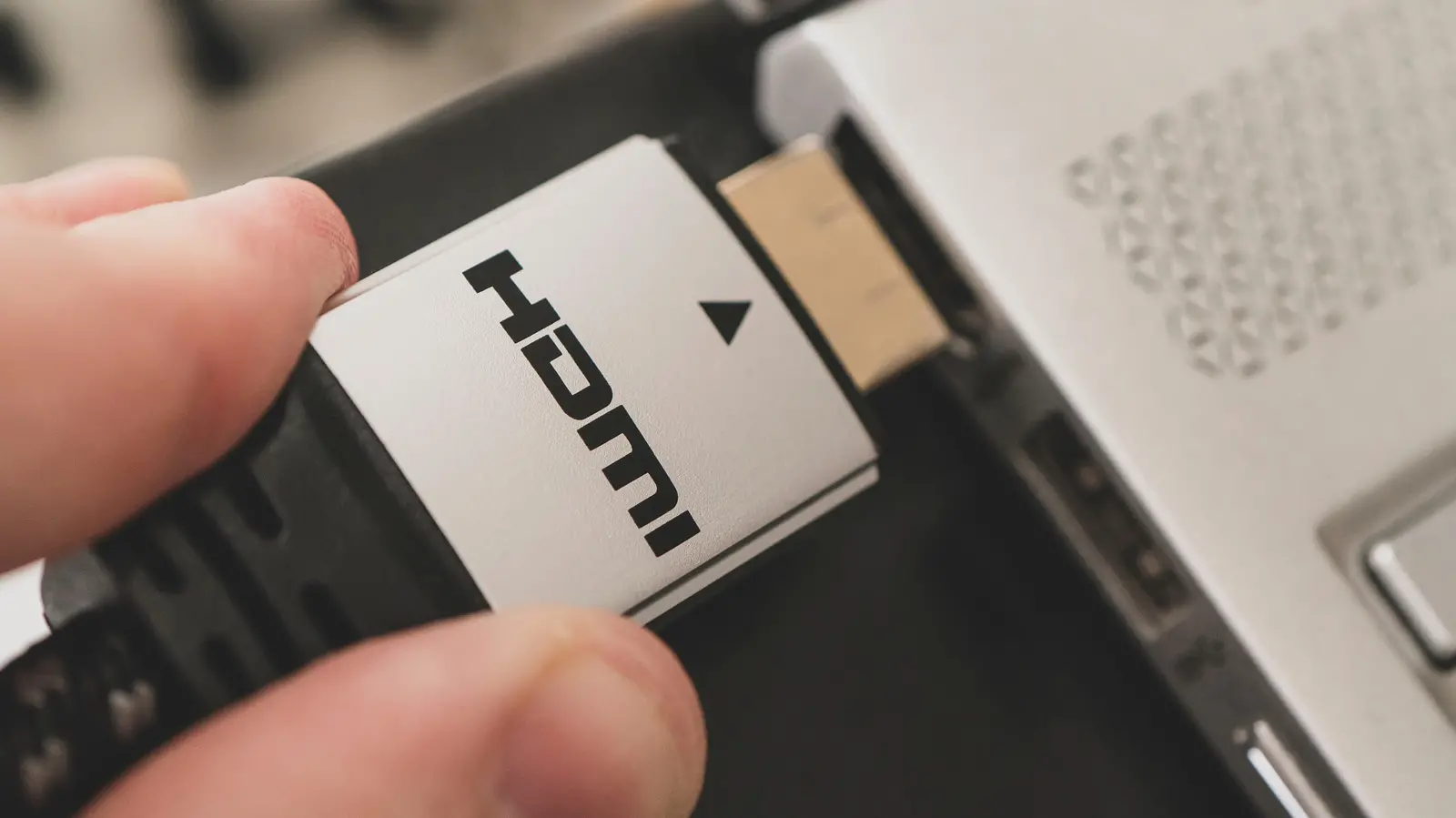
In June 2025, the HDMI Forum finally unveiled the long-awaited specifications for HDMI version 2.2, the most significant update to the HDMI standard in nearly a decade. Enthusiasts and industry insiders alike had been eagerly awaiting details on the successor to HDMI 2.1, which debuted in 2017. With promises of dramatically higher data transfer speeds, support for ultra-high-resolution displays, and vastly improved refresh rate capabilities, HDMI 2.2 sets a new benchmark for digital audio and video transmission.
Now, over a year after the initial announcement, the question on everyone's mind is: When will we actually be able to buy devices that use HDMI 2.2? According to Rob Tobias, CEO and President of HDMI Licensing Administrator, the answer may come as early as 2027. Speaking on the sidelines of Computex 2026, Tobias revealed that manufacturers are currently testing new chips that will serve as the backbone of HDMI 2.2 technology. He drew a parallel to the rollout of HDMI 2.1, which took over two years from its 2017 announcement to reach consumers in the form of compatible devices. Tobias expects a similar timeline for HDMI 2.2, pushing the first wave of products into late 2027.
While Tobias declined to specify which types of devices would debut first, historical patterns suggest that the initial releases will likely be high-end televisions from industry leaders such as Samsung and LG. These manufacturers have consistently been at the forefront of adopting new display standards. It is also important for consumers to note that HDMI 2.2 will require a new cable – the Ultra96 cable – to achieve its maximum performance. The new cable is designed to handle the increased bandwidth of 96 Gb/s, which is double that of HDMI 2.1's 48 Gb/s. Without this cable, users will not be able to take full advantage of the higher resolutions and refresh rates that HDMI 2.2 promises, such as 12K at 120 Hz and 16K at 60 Hz.
The jump from HDMI 2.1 to 2.2 is not merely incremental; it represents a fundamental leap in capability. HDMI 2.1 itself offered a maximum bandwidth of 48 Gb/s, which supported 8K at 60 Hz and 4K at 120 Hz, along with dynamic HDR and enhanced Audio Return Channel (eARC). For most consumers in 2026, those specifications are more than adequate. The vast majority of content is still distributed in 4K or even 1080p, and gaming consoles have only recently begun to push 4K at 120 frames per second. However, the technology industry is always looking ahead. Professional applications, such as post-production studios, medical imaging, and high-end simulation environments, require far more headroom. HDMI 2.2's ability to handle 12K and 16K resolutions opens up new possibilities for these fields, and it future-proofs consumer devices for the next wave of ultra-high-definition content.
The Evolution of HDMI: A Brief History
The High-Definition Multimedia Interface (HDMI) has come a long way since its introduction in 2002. Developed by a consortium of major electronics companies, HDMI was designed to replace older analog standards like VGA and component video, as well as digital interfaces such as DVI. The first version, HDMI 1.0, supported up to 4.95 Gb/s of bandwidth, enough for 1080p video at 60 Hz and 8-channel audio. Over the next decade, the standard evolved through eight iterations of the HDMI 1.x series, each adding new features like support for higher resolutions, 3D video, and Ethernet over HDMI. The final version of the 1.x line, HDMI 1.4b, appeared in 2011 and could handle 4K at 30 Hz.
The year 2013 marked the arrival of HDMI 2.0, which increased bandwidth to 18 Gb/s and added support for 4K at 60 Hz. This was a notable improvement, but it was quickly succeeded by HDMI 2.0a in 2015, which introduced support for high dynamic range (HDR) metadata, and HDMI 2.0b in 2016, which added support for hybrid log-gamma (HLG) HDR. The biggest jump came in 2017 with HDMI 2.1, which boosted bandwidth to 48 Gb/s and introduced support for 8K at 60 Hz and 4K at 120 Hz, along with dynamic HDR, eARC, and variable refresh rate (VRR) for gaming.
For nearly a decade, HDMI 2.1 remained the gold standard. Its capabilities have proven sufficient for the vast majority of consumer and professional applications. Even in 2026, most home theaters and gaming setups rely on HDMI 2.1 without feeling limited. However, the HDMI Forum recognized that the industry was approaching a ceiling. The demand for higher resolution displays – 8K is becoming more common, and 12K prototypes exist – along with the increasing popularity of high-frame-rate content, made it necessary to develop a new standard with a significantly higher performance ceiling.
What HDMI 2.2 Brings to the Table
HDMI 2.2 is not just about raw bandwidth; it introduces a suite of new features designed to support the next generation of display technology. The cornerstone is the 96 Gb/s bandwidth, achieved through improved encoding techniques and higher-speed signaling. This enables support for up to 12K resolution at 120 Hz, and even 16K at 60 Hz, using uncompressed video. For comparison, 12K is roughly four times the pixel count of 6K, and 16K is four times 8K. Such resolutions are currently beyond the reach of most consumers, but they are becoming increasingly relevant in professional fields like digital cinema, virtual reality, and scientific visualization.
Beyond resolution, HDMI 2.2 also improves support for dynamic HDR, with new metadata formats that can adjust brightness and color on a per-frame basis. It also enhances the Audio Return Channel, enabling higher-bandwidth audio formats without the need for a separate optical cable. Additionally, the standard includes new features for gaming, such as lower latency modes and better support for VRR at very high frame rates. Importantly, HDMI 2.2 maintains backward compatibility with older versions, so users can plug an HDMI 2.0 or 2.1 device into a 2.2 port, and it will work at the older device's maximum capabilities.
The introduction of the Ultra96 cable is a critical component of the new standard. This cable is engineered to handle the 96 Gb/s data rate over distances up to several meters without signal degradation. It uses higher-quality shielding and thicker conductors than previous cables, and it is certified by the HDMI Forum to ensure performance. Consumers who want to take full advantage of HDMI 2.2 will need to invest in these new cables, which are likely to be more expensive than standard HDMI cables. However, for those who do not need the maximum bandwidth, existing Premium High Speed or Ultra High Speed cables may still work at lower resolutions and frame rates.
The market for HDMI 2.2 devices will likely start with high-end televisions, as noted by Tobias. Brands like Samsung, LG, and Sony have historically been early adopters of new HDMI standards. Their 2027 flagship models could feature HDMI 2.2 ports, initially as a differentiator for their most expensive sets. As the ecosystem matures, we can expect to see the standard trickle down to mid-range TVs, monitors, projectors, and eventually gaming consoles and PC graphics cards. Sony and Microsoft have not yet announced plans for HDMI 2.2 in their next-generation consoles, but it is a safe bet that future iterations will incorporate the new standard.
Another important factor is the role of content creators. For HDMI 2.2 to become truly mainstream, there needs to be content that can take advantage of its capabilities. Streaming services like Netflix and YouTube already offer 4K and even some 8K content, but 12K and 16K are still a long way from being delivered to homes. However, the standard also benefits lower resolutions by enabling higher frame rates and better HDR. Even if 12K content remains rare for years, HDMI 2.2 can improve the experience for 4K and 8K displays by allowing higher refresh rates and more accurate color reproduction.
The transition from HDMI 2.1 to 2.2 is not something that needs to happen overnight. HDMI 2.1 remains an excellent standard that will serve the vast majority of users for years to come. But as display technology advances – with MicroLED, OLED, and mini-LED panels becoming more capable – the demand for higher bandwidth will grow. The introduction of HDMI 2.2 ensures that the industry has a roadmap for the future, and that manufacturers can begin designing products that will remain relevant through the next decade. The first devices arriving in 2027 will likely be just the beginning of a long and gradual adoption cycle.
Source:SlashGear News