

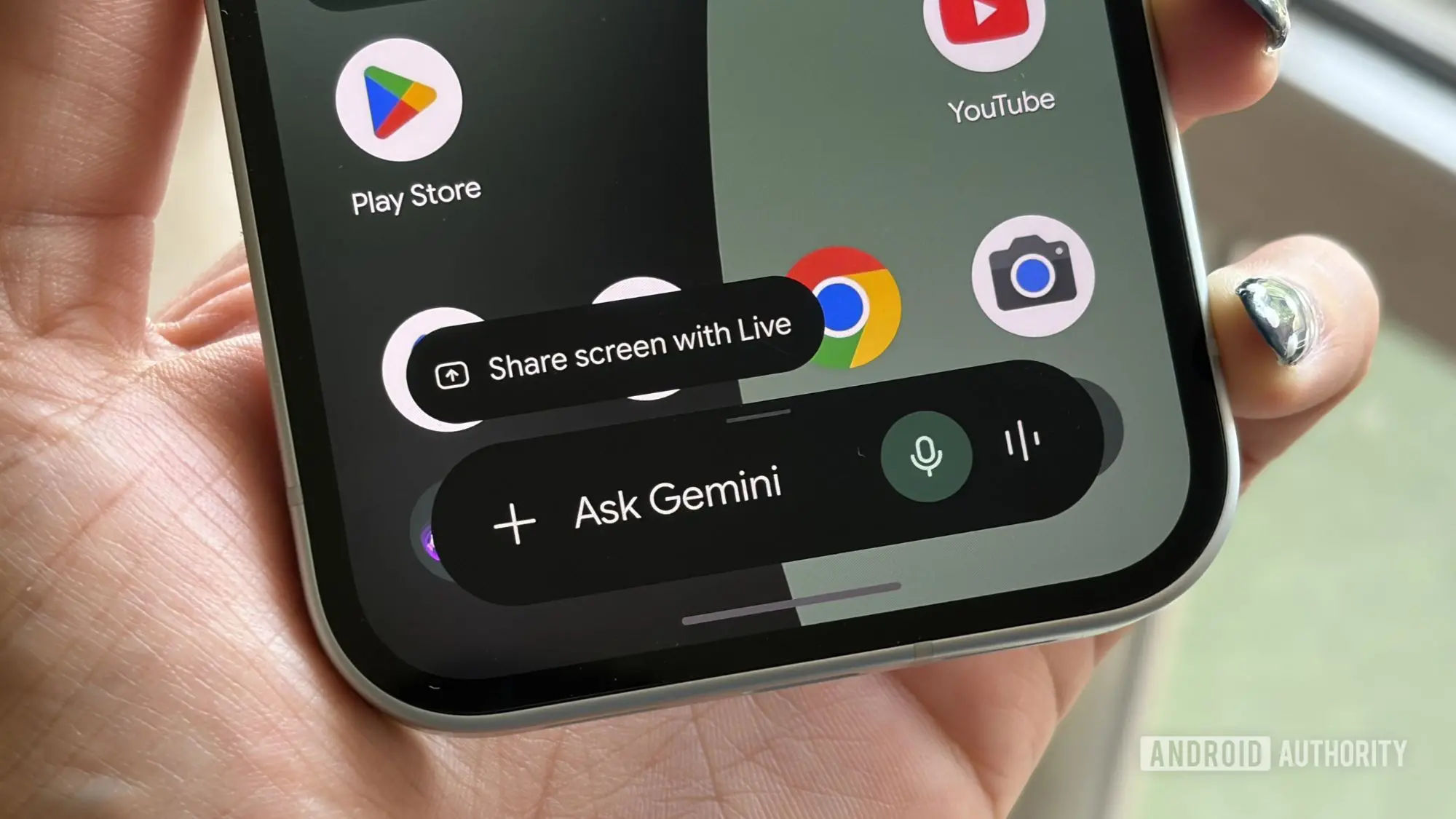
The Google Play Store hosts millions of apps, spanning productivity tools, games, utilities, and more. Yet this vast library poses a challenge: finding the right app can feel like searching for a needle in a haystack. Google's recent integration of Play Store capabilities into its Gemini AI assistant directly addresses this problem, allowing users to discover, install, and even make purchases within a chat conversation.
How the Integration Works
Unveiled in May 2026 and now rolling out, the Google Play connected app for Gemini brings a conversational layer to app discovery. Instead of manually browsing categories or reading endless reviews, users can simply ask Gemini for recommendations. For example, a query like "Find a productivity app to help me with meal planning" triggers the AI to analyze the request and suggest relevant apps from the Play Store. Tapping an app icon opens the detailed Play Store page, where installation can be completed. Additionally, users can ask about in-app purchases, such as "Show me in-app purchases for [App Name]" or request to buy a Google Play gift card, enabling digital transactions directly through the chat interface.
The integration builds on Google's broader strategy of embedding its AI into everyday tasks. Gemini, launched as a competitor to OpenAI's ChatGPT and other large language models, has steadily expanded its toolset. This marks one of the first deep integrations with a major app ecosystem, beyond simple web searches or document summaries.
Requirements and Setup
To use the feature, Google imposes several conditions. Users must be at least 18 years old and have the Google Play Store app installed on their Android device. They need to be signed into Gemini with a personal Google Account (not a Workspace account for schools or businesses). Crucially, the "Keep Activity" toggle must be turned on in Gemini settings, which allows the AI to remember conversation context and provide personalized suggestions.
Connecting Google Play to Gemini is straightforward. Open the Gemini app, confirm you're signed into the same account used for the Play Store, and ask Gemini to find an app. If the connection hasn't been established yet, Gemini will prompt you to link the accounts via on-screen instructions. This seamless setup mirrors other Google integrations like Google Calendar or Gmail.
Expanding the Role of AI in App Discovery
App discovery has long been a pain point for mobile users. Traditional search within the Play Store relies on keywords, categories, and curated lists, which can feel impersonal and overwhelming. AI assistants offer a more intuitive approach by understanding natural language queries and inferring intent. For instance, instead of typing "meal planner app" and sifting through results, a user can describe their needs in context: "I need an app that helps me plan weekly meals based on leftovers and dietary restrictions." Gemini can parse that complexity and return targeted suggestions.
This integration also draws from Google's extensive knowledge graph and data on app performance, user reviews, and download statistics. By combining AI reasoning with Play Store metadata, Gemini can recommend apps that are not only relevant but also well-regarded. The system can learn over time, refining suggestions based on previous installations or expressed preferences (provided "Keep Activity" is enabled).
Beyond discovery, the ability to make in-app purchases via chat streamlines transactions. Users no longer need to navigate multiple screens; they can simply type a command and confirm purchases. This could be particularly useful for buying game currencies, subscription add-ons, or one-time upgrades. However, it also raises questions about impulse spending and parental controls. Google has not detailed specific safeguards, but the age requirement and personal account limitation provide a baseline.
Historical Context and Competition
The announcement follows a trend of AI assistants embedding themselves deeper into mobile ecosystems. Apple's Siri has long offered app launch capabilities but limited discovery and purchasing. Amazon's Alexa can find and install skills, but those are limited to Amazon's ecosystem. Meanwhile, third-party chatbots like ChatGPT have added plugin integrations for various services, but none have achieved the system-level integration Google is now offering.
Google's move is strategic. By making Gemini the default assistant on many Android devices and tying it directly to the Play Store, Google encourages users to adopt its AI for everyday tasks. This also reinforces the Play Store's centrality in the Android experience. For developers, it provides a new channel for app exposure, potentially reducing reliance on paid advertising or ASO (App Store Optimization).
Privacy implications are important to consider. Enabling "Keep Activity" means Gemini stores conversation history and app usage data, which Google says is used to improve recommendations. Users can review and delete this activity at any time. The company emphasizes that data is treated according to its privacy policy and is not sold to third parties. Nevertheless, privacy-conscious users may be wary of allowing an AI to track their app preferences and purchase history.
Technical Implementation and Limitations
The integration uses the existing Google Play Store API and Gemini's natural language processing capabilities. When a user makes a request, Gemini sends a query to Play Store services, which return a list of relevant apps. The AI then presents them in a conversational format, often with brief descriptions, ratings, and download counts. For in-app purchases, Gemini uses Google Play Billing to process transactions, ensuring security and consistency with other Google payment methods.
Early reports indicate that the feature works best for well-known apps or popular categories. Niche or newly released apps might not appear if they lack sufficient metadata or user engagement. Google is likely to improve coverage as the AI gathers more training data. Additionally, the feature is initially available only in English and in select countries, though expansion is expected.
One limitation is that Gemini cannot actually install apps on its own; it only opens the Play Store page for the user to tap the install button. This is likely a security and design decision to maintain user control. Similarly, in-app purchases require explicit confirmation through standard Play Store dialogs. These guardrails prevent accidental actions or unauthorized spending.
Broader Implications for AI Assistants
The Play Store integration represents a milestone in making AI assistants more than just information retrieval tools. By enabling actions—installing apps, making purchases—Gemini crosses into the realm of a digital agent. This aligns with Google's vision of an "ambient computing" future where AI proactively helps users achieve tasks across services. Similar integrations with Google Maps, Google Calendar, and Gmail have already hinted at this direction, but the Play Store addition is more commercially significant.
For competitors like Apple, Amazon, and Microsoft, the pressure is on to deepen their own AI integrations. Apple's upcoming Siri enhancements may include deeper App Store connectivity, while Amazon could integrate Alexa with its own app store for Fire devices. Microsoft, with Copilot, already ties into Windows app stores. The race is to create the most seamless experience that keeps users locked into the respective ecosystem.
In conclusion, the Google Play connected app for Gemini is a thoughtful expansion that addresses a real user pain point. It demonstrates how AI can transform mundane tasks into conversational interactions, potentially saving time and reducing friction. As the rollout continues, user feedback will refine the system, and future updates may bring more sophisticated capabilities, such as multi-app recommendations or contextual suggestions based on current phone usage. For now, Android users can begin experimenting with this new way to discover and install apps, right in their chat thread. The requirement to enable activity tracking may be a hurdle for some, but the convenience of asking Gemini to find the perfect app might outweigh privacy reservations for the majority.
Source:Android Authority News