

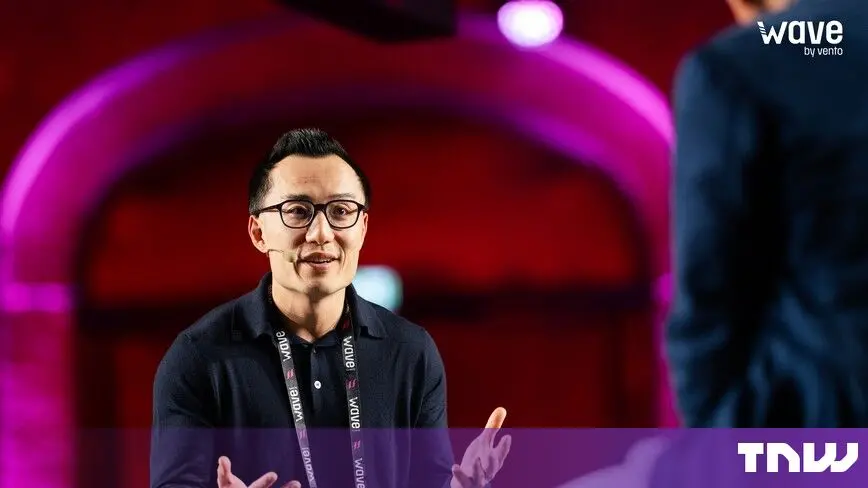
DoorDash co-founder and chief executive Tony Xu has a counterintuitive prediction for the age of artificial intelligence: as AI agents become more common, demand for physical delivery networks and even human labour will rise, not fall. Speaking at a technology event in Turin, Xu argued that the most useful AI agents will gravitate toward recurring tasks that people need done again and again – and many of those tasks have a physical component, such as shopping, eating, picking something up, or returning a package.
His remarks came during a session titled 'Inside the Making of DoorDash', where he discussed the company's origins, its expanding logistics network, and the role of automation. Xu said AI agents have probably already overtaken humans in the number of things they do on the internet. To be useful, he explained, they look for recurring tasks that people ask them to do repeatedly. One of the most useful things an agent can handle is something in daily life that tends to have a physical component, like shopping or eating or picking something up or returning something.
As the number of agents keeps growing, so will the demand for physical networks and for human labour, he said. In September, DoorDash launched an ordering agent that runs inside Apple Messages. That product allows customers to interact with the delivery platform through a conversational interface, a sign of how AI agents may become a new front door for commerce.
From Palo Alto driveways to a global platform
Xu insisted that the goal of DoorDash was never food delivery. It was to help local business owners like his mother, who moved from China to the United States. In 2013, he said, almost no restaurants in the US offered delivery. The company began by doing deliveries itself. Xu and his co-founders drove their own cheap cars around Palo Alto, where they studied, and completed the first few hundred deliveries themselves. They kept going for two years.
He recalled that his Y Combinator application estimated $100 million of revenue in year seven, a figure he now calls made up. He was off by a couple of orders of magnitude, he said. The lesson was not about the accuracy of the projection but about the need to start somewhere. When there is no data, Xu said, a company has to start from a point of view. Then it should ship something fast and collect information. DoorDash keeps the stakes low so anyone in the company can test an idea with customers without approval.
That philosophy helped the company expand from a small Palo Alto experiment into a logistics giant. DoorDash now operates in 40 countries, and Xu said it had to learn each one from scratch. Streets in cities such as Rome, Turin, or London are not laid out on a grid. Homes are denser, with more apartments. There are also far more small, family-run restaurants and shops than in the United States. Each market has its own rhythm, its own regulations, and its own customer expectations.
Robots, drones, and the platform behind them
DoorDash has moved well beyond human couriers. Its Dot robot can travel on the road, in bike lanes, and on the pavement. Xu called it the world's first commercial autonomous vehicle of its kind. It is running in Phoenix and has made live deliveries to tens of thousands of customers, he said. The company also unveiled its own drone system in September. Other players are moving in the same direction: earlier in the week, Deliveroo began putting delivery robots on pavements in five UK towns.
But Xu warned that building autonomous vehicles is like building three to five companies at once. They need software, hardware, policy and permits, and operations. Vehicles break down and sometimes need rescuing. The complexity is not just technical; it is regulatory, logistical, and financial. The most important piece, he said, is the platform behind the machines. For every order, that platform decides whether a land robot, a drone, or a human Dasher should take it. A person and a robot can also share one route, blending automation with human judgment.
Xu was blunt about what customers want. No customers care about the technology, he said. They just care about getting what they ordered. That focus on the outcome rather than the novelty explains why DoorDash invests in multiple modes of delivery rather than betting on a single futuristic solution. The aim is a seamless last-mile network that can handle anything from a hot meal to a forgotten phone charger.
AI agents and the future of work
The idea that AI agents will increase demand for human labour may seem counterintuitive. But Xu's argument rests on a simple observation: digital agents can scale infinitely, but physical fulfilment cannot. If millions of AI agents are ordering groceries, arranging returns, or buying gifts, someone or something still has to pick, pack, and deliver those items. In the short term, that means more demand for couriers, drivers, and warehouse workers. In the longer term, it means more demand for robots, drones, and autonomous vehicles – and for the human technicians, operators, and support staff who keep them running.
This creates a hybrid future. AI agents may handle the discovery, ordering, and payment. Physical networks will handle the movement. Human labour will be needed where dexterity, judgment, or customer interaction is still hard to automate. Xu's comments suggest that the delivery industry will not simply shrink as AI grows. Instead, it may expand as AI makes it easier for people to ask for more things, more often.
Last-mile economics and the discipline of low margins
DoorDash board member Diego Piacentini, a former senior executive at a major e-commerce company, led the interview. He noted that DoorDash measures its margins in basis points, which forces attention to detail and a lack of waste. Building a business with low margins is very hard, he said. That pressure shapes everything from route planning to robot design. Every basis point matters when the cost of a delivery can be the difference between profit and loss.
Xu said that in five years, he wants DoorDash to be a last-mile network that can deliver anything. Every city holds tens of millions of items, he said, and no digital product yet knows where they all are. That is a massive data problem, but also a massive opportunity. If DoorDash can map local inventory and match it with AI-driven demand, it could become the default layer for physical commerce in cities around the world.
Asked about his mistakes, Xu said most came when he did not trust his gut, on products and on hiring. He also sits on Meta's board. The best boards ask tough questions without acting as if they run the business, he said. Founders spend 70 hours a week or more on their companies, he said, and board members about 10 hours a quarter. That asymmetry means founders must ultimately make the call, while boards provide perspective and challenge.
The conversation painted a picture of a company that is neither purely a food delivery app nor purely a robotics lab. DoorDash is trying to build a flexible physical network that can absorb whatever AI agents throw at it. The bet is that as digital demand becomes more automated, the physical world will become more valuable, not less. That is why Xu believes AI agents will raise demand for human labour – at least for the labour that moves things from one place to another.