

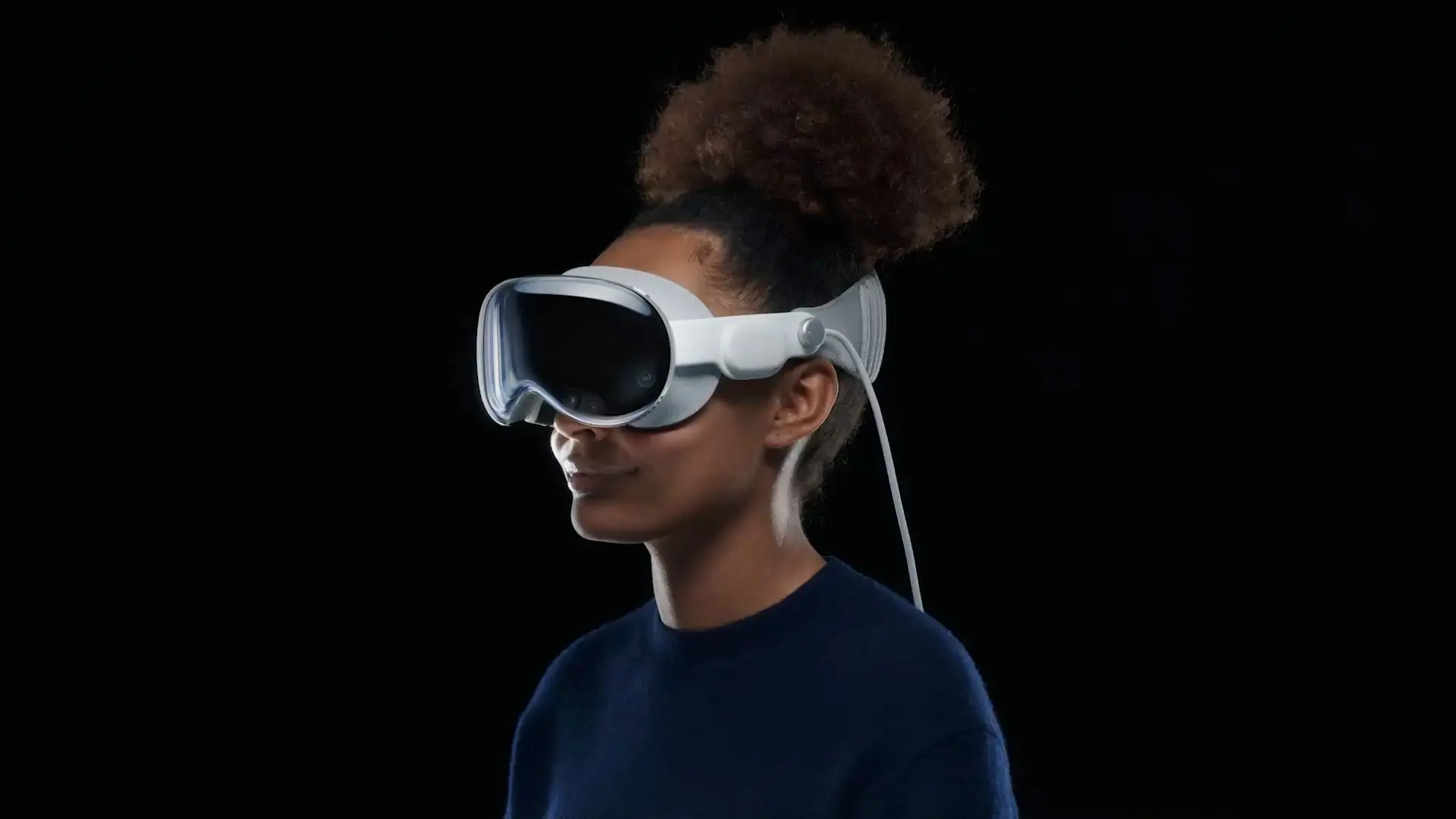
Apple Vision Pro is Apple's entry into spatial computing, blending augmented reality and virtual reality in a single headset. First introduced in February 2024, the device received a major refresh in October 2025 with the M5 chip, bringing improved performance, higher refresh rates, and a more comfortable Dual Knit Band. As of June 2026, the price has risen to $3,700 due to the global memory crisis.
Should You Buy the Vision Pro?
The Vision Pro is a premium device with a premium price tag that may be prohibitive for many consumers. Reviews have made it clear that this headset does not easily fit into existing workflows for most people, and some users have even regretted their purchase. That said, the Vision Pro excels at watching movies, viewing 3D videos, and serving as a display for a Mac. If you are a content consumer or a Mac user looking for a portable, private large display, it can be a transformative experience.
Comfort remains a consideration. At over 1.3 pounds, the Vision Pro is heavy, and fatigue can set in quickly. Apple improved comfort with the Dual Knit Band launched alongside the M5 chip, which adds a top strap and counterweights to better distribute weight. There is also an external battery pack to contend with, and the headset is not easy to travel with, especially with Apple's dedicated Travel Case.
The Vision Pro is undoubtedly Apple's most technically advanced product and an incredible feat of engineering. It is impressive when first viewed, but those considering a purchase should try it at the Apple Store and do a lot of research on what can be done with it before buying. The headset has a limited number of dedicated apps and games, so it is not a general-purpose device for everyone.
Apple refreshed the Vision Pro with an M5 chip in October 2025, making now a good time to buy. Another update is not expected for at least two years, and development on a next-generation headset is currently paused. Apple raised the price from $3,499 to $3,699 in June 2026 because of the ongoing global memory crisis.
Apple Vision Pro Overview
Apple Vision Pro is Apple's augmented and virtual reality headset, a major new product category. It is a mixed reality headset that displays augmented reality content overlaid on the world around you and immersive entirely virtual content. Notably, the headset is not see-through; everything you see is digital. For augmented reality, cameras map out what's in front of you and translate that into a digital image augmented by virtual elements. For virtual reality, the cameras are shut off, and you can be fully immersed in what is displayed on the headset's screens. The Digital Crown lets you control the shift between real and immersive views.
Design-wise, the Vision Pro resembles a high-end pair of ski goggles. It features a singular piece of laminated glass for the front that melds into an aluminum alloy frame. A soft, fitted Light Seal attaches magnetically to the frame and conforms to your face to block out light. Two Audio Straps with built-in speakers deliver spatial audio and connect to a 3D knitted headband. The M5 model includes a Dual Knit Band with a second strap over the top of the head, designed to be breathable, cushiony, and stretchy, with a Fit Dial for a secure fit.
Inside, there are two micro-OLED displays delivering over 4K resolution to each eye, totaling 23 million pixels. An external EyeSight display projects an image of your eyes so people can tell whether you are using the headset in an immersive mode or can see your surroundings. Glasses wearers can use custom prescription Zeiss Optical Inserts that attach magnetically.
How It Works
The Vision Pro uses 12 cameras and five sensors to map the external environment, track hand gestures, and monitor eye movements. There are no physical controllers; navigation is done through eye tracking, hand gestures, and voice commands. You look at an app to highlight it and tap your fingers to open it. Optic ID scans your iris for authentication, similar to Face ID or Touch ID, and is used for unlocking the device, making purchases, and replacing passwords.
The device is powered by two Apple silicon chips: the M5 chip, also used in MacBook Pro, and the R1 chip, which processes input from cameras, sensors, and microphones. The R1 streams images to the displays within 12 milliseconds, providing a virtually lag-free view. There is also a thermal system to manage heat quietly.
A built-in 3D camera lets you capture spatial photos and videos. When recording, an animation on the external display makes it clear that recording is happening. The Vision Pro can also convert 2D photos to 3D using depth information.
Display and Audio
The display is one of the Vision Pro's standout features. The custom micro-OLED panels offer 23 million pixels, more than a 4K TV. The M5 chip renders 10 percent more pixels for crisper text and more detailed visuals, and the refresh rate has been increased to up to 120Hz, reducing motion blur and improving the experience when using the Vision Pro as a Mac display.
Audio is delivered through dual-driver speaker pods positioned next to each ear. The speakers support spatial audio and adapt sound to the room's acoustics. Six microphones are available for calls and voice commands. You can also pair AirPods Pro 2 (USB-C) or AirPods Pro 3 for 20-bit, 48 kHz lossless audio with ultra-low latency.
Connectivity and Storage
The Vision Pro supports Wi-Fi 6 but lacks Wi-Fi 6E support. It has 16GB of RAM. Storage options include 256GB, 512GB, and 1TB. The base model starts at $3,700.
Battery Life
Due to weight constraints, the battery is not built into the headset. Instead, a braided cable connects to a battery pack worn at the hip. The M5 Vision Pro offers up to 2.5 hours of general use and three hours of video playback. The battery pack can be swapped for additional power, and the headset can also be plugged into a power adapter for all-day use.
visionOS
visionOS is the operating system for the Vision Pro. It features a three-dimensional interface with apps that react dynamically to natural light and shadow. You can position apps anywhere in your space and resize them. Navigation is done with eye movements, hand gestures, and voice. The Digital Crown adjusts immersion levels, and users can choose to see content in their real surroundings or in virtual Environments.
visionOS includes a dedicated App Store with apps designed for the device and can also run iPhone and iPad apps. It supports Bluetooth accessories like keyboards, trackpads, and game controllers. The Vision Pro can connect to a Mac and serve as a private 4K display, with Wide and Ultrawide modes available in visionOS 2.2.
FaceTime is redesigned for Vision Pro, using a digital Persona to represent the wearer. The Cinema Environment creates a personal theater experience, and Apple Immersive Videos offer 180-degree 3D 8K recordings. Streaming services like Apple TV+ and Disney+ are available, and the headset supports Apple Arcade with Bluetooth game controllers.
visionOS 26
visionOS 26, released in September 2025, adds persistent widgets that can be placed anywhere. Personas have more lifelike hair, eyelashes, and complexion. Users can share experiences with other Vision Pro owners in the same room, view their iPhone while wearing the headset, and enjoy a Jupiter Environment. Spatial Scenes add depth to 2D images, and a look-to-scroll feature in Safari allows for hands-free browsing.
visionOS 27
visionOS 27, expected in September, introduces Siri AI, a smarter assistant that can hold conversations and perform complex tasks across apps. Siri appears as a floating 3D bubble and can see what you are looking at. Visual Intelligence allows asking about objects in your environment. Other features include Image Playground, intelligent Safari organization, AI-powered password updates, and enhanced Freeform collaboration.
visionOS 27 also adds Dwell Control for eye-based selections, screen recordings in unfoveated format, and 3D panoramas. A new Thórsmörk Environment features an Icelandic aurora. The update includes an improved look with curved windows, a redesigned Control Center, and faster Wi-Fi connections.
Mac Integration
The Vision Pro can act as a display for a Mac, providing a single, large virtual display. With visionOS 2.2, Wide and Ultrawide modes expand the screen space, with Ultrawide equivalent to two 4K displays side by side. Mac users can also use Vision Pro apps alongside their Mac interface for a multi-window experience.
Reviews and Reception
Reviewers were impressed with the Dual Knit Band's comfort, noting it reduces pressure on the face and neck strain. The M5 chip delivers more consistent performance with no lag or stuttering, faster spatial persona generation, and rendering of 10 percent more pixels. Content appears sharper and more in focus. The 120Hz refresh rate provides smoother visuals, though reviewers say it is not a dramatic difference from the previous model.
How to Buy
The M5 Vision Pro is available from Apple's online store and retail locations in Australia, Canada, China, France, Germany, Hong Kong, Japan, Korea, Taiwan, the U.K., the United Arab Emirates, and the United States. The ordering process requires a Face ID scan for proper Light Seal and headband fit. Zeiss reading lenses cost $99, and prescription lens inserts cost $149, requiring a valid U.S. prescription.
What's in the Box
The Vision Pro ships with a Dual Knit Band (small, medium, or large), a Light Seal, two Light Seal Cushions, a Cover, a Polishing Cloth, a battery, a USB-C charging cable, and a USB-C power adapter.
No Trade-Ins
Apple is not accepting trade-ins for the M2 Vision Pro toward the M5 model. There is no trade-in option available.
Medical Warnings
Apple warns that certain medical conditions could be exacerbated by the Vision Pro, including heart conditions, migraines, dizziness, eye or vision conditions, psychological conditions, inner ear conditions, dry eyes, skin allergies, seizures, and balance issues. Pregnant individuals should exercise caution. The headset and battery pack could interfere with pacemakers, hearing aids, and defibrillators.
What's Next for Vision Pro
Apple is reportedly pausing development on a next-generation Vision Pro to focus on smart glasses. These glasses, similar to Meta Ray-Bans, will have no display but will include speakers, microphones, and a camera. They are expected to launch in late 2026 or 2027, according to analysts. A cheaper, lighter headset may come later, but it is unlikely before late 2028 or 2029.
Apple's long-term AR/VR plans include AR smart glasses with in-lens displays, but that project was halted in January 2025. Apple analyst Ming-Chi Kuo believes Apple could release XR glasses in 2028. Apple has also explored using the Vision Pro for health applications, such as detecting depression, anxiety, and even heart failure through eye tracking. Contact lenses are a possible but not guaranteed product for the 2030s.
Source:MacRumors News