

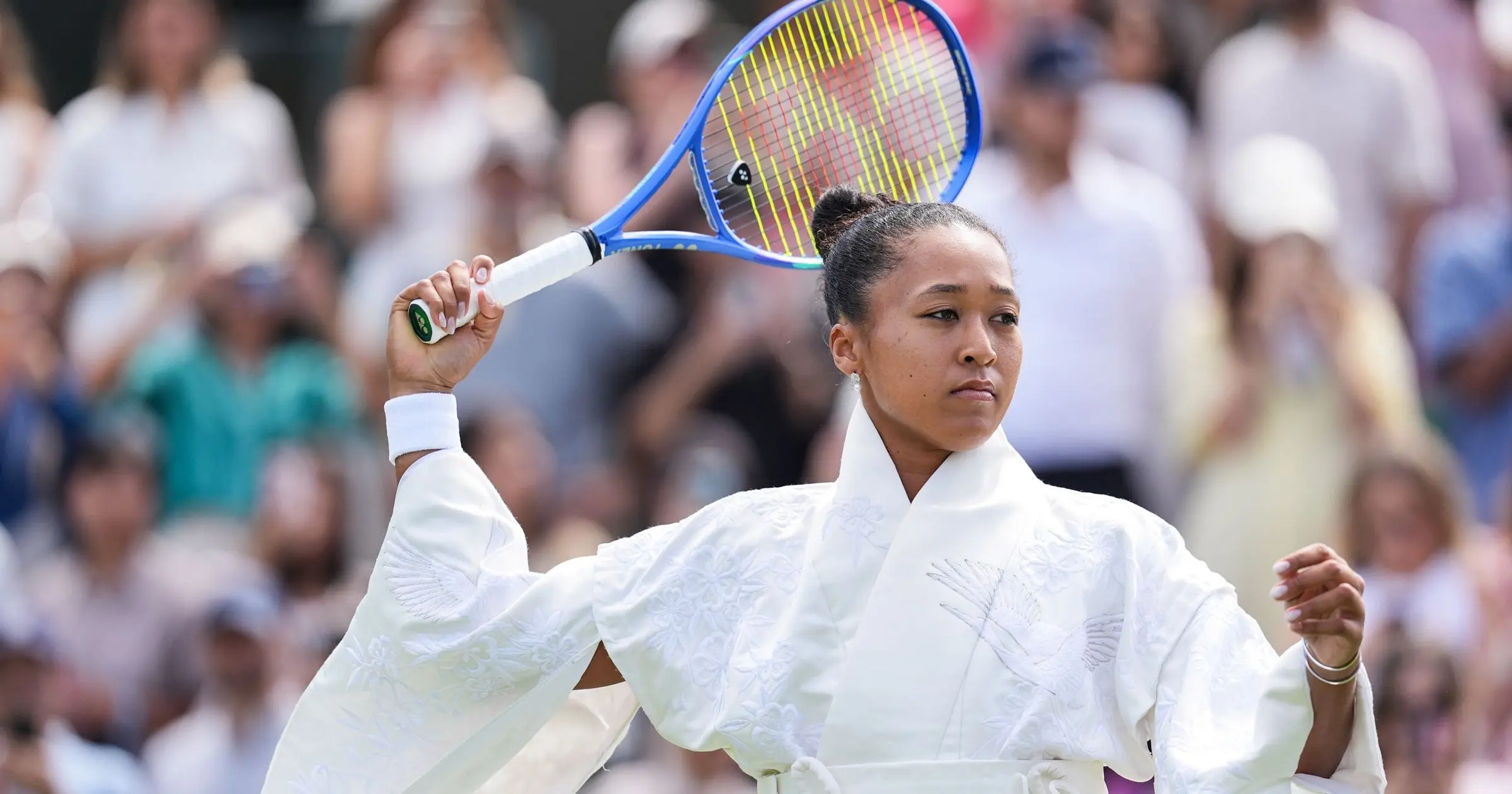
For one, it is a familiar stage. For the other, it is a breakthrough. Four-time Grand Slam champion Naomi Osaka (28) faces world No.1 Aryna Sabalenka for the fourth time this season, while qualifier Shintaro Mochizuki (23, ranked 151) makes his first fourth-round appearance against Jannik Sinner. Both Japanese players step onto Wimbledon's Centre Court on Sunday, united by nationality but divided by experience and style.
Osaka, a former world No.1, has struggled on grass throughout her career. This year, however, she has shown notable improvement, attributing it to enhanced footwork and a more composed mindset. She lost to Sabalenka in the round of 16 at Indian Wells, Madrid, and Roland Garros, each time pushing the Belarusian but falling short. At Wimbledon, the faster surface could offer new opportunities. Her powerful groundstrokes and serve remain potent, but Sabalenka's aggressive baseline game tests her consistency.
Mochizuki's path is even more improbable. He entered Wimbledon through qualifying, having never previously advanced past the second round of a major. His game defies modern trends: a short stature (1.75m), he relies on variety, touch, and net play rather than raw power. He captured the Wimbledon junior title in 2019, the first for a Japanese boy, and has since developed a unique style that thrives on grass. In his third-round win over Rafael Jodar, he approached the net 87 times.
The duo's friendship has grown since the United Cup earlier this year. Osaka described Mochizuki as a "big sister-little brother" relationship, joking that he was the only player who dared to approach her. They bond over onigiri rice balls, with Mochizuki's mother even preparing them for Osaka. "It's really nice having another Japanese player pushing through, it motivates me to keep going," Osaka said.
Mochizuki's road to this moment has been challenging. After junior success, he struggled with expectations and coaching advice that urged him to hit harder. "I tried, but it didn't work," he recalled. "It took me two or three years to get back to my tennis. Now I think it's good." Against Sinner, he plans to disrupt the Italian's rhythm with low balls, slices, and frequent charges to the net.
Osaka, meanwhile, will rely on her trademark power. Her kimono-inspired outfits at Wimbledon have drawn attention, blending tradition with modernity. She remains one of the sport's most marketable figures but insists her focus is on performance. "I feel I'm moving better on grass than before," she stated. "That gives me confidence against Sabalenka."
Historically, Japanese players have achieved sporadic success at Wimbledon. Kimiko Date reached the semifinals in 1996, and Kei Nishikori made the quarterfinals in 2018 and 2019. No Japanese woman has won the singles title. Osaka's best result here was the third round in 2018 and 2021. Mochizuki's run is already the deepest for a Japanese man since Nishikori's 2019 quarterfinal.
Sabalenka enters as the reigning Australian Open champion and a two-time semifinalist at Wimbledon. Her aggressive style, booming serve, and relentless power make her a formidable opponent on grass. Sinner, the reigning world No.1, has won three Grand Slams and recently added the Halle title on grass. He is the heavy favourite but acknowledges the unpredictability of facing a stylist like Mochizuki.
The matches promise contrasting narratives. Osaka vs Sabalenka is a clash of equals in power, where the difference may be mental resilience. Mochizuki vs Sinner is a battle of philosophy: modern dominance versus classical craft. Both Japanese players carry the weight of a nation eager for a first Wimbledon champion, but they also carry each other's support.
Off the court, their camaraderie offers a refreshing counterpoint to the tension. Osaka has requested onigiri from Mochizuki's mother, and the two often share meals and laughs. "I even asked his mom to prepare some for me to try," Osaka said. "And since I'm winning, she has to make more!"
Whether they win or lose, Osaka and Mochizuki have already made history. For Japan, their simultaneous run to the second week is a milestone. For the tennis world, it is a reminder that variety still exists. The outcome may hinge on whether Mochizuki can execute his game plan against the relentless Sinner, and if Osaka can finally solve the Sabalenka puzzle on grass.
As the sun sets over the All England Club, two Japanese players will step onto Centre Court. One has been there before; the other is living a dream. Together, they represent a nation's hope and a sport's enduring diversity.
Source:Eurosport News